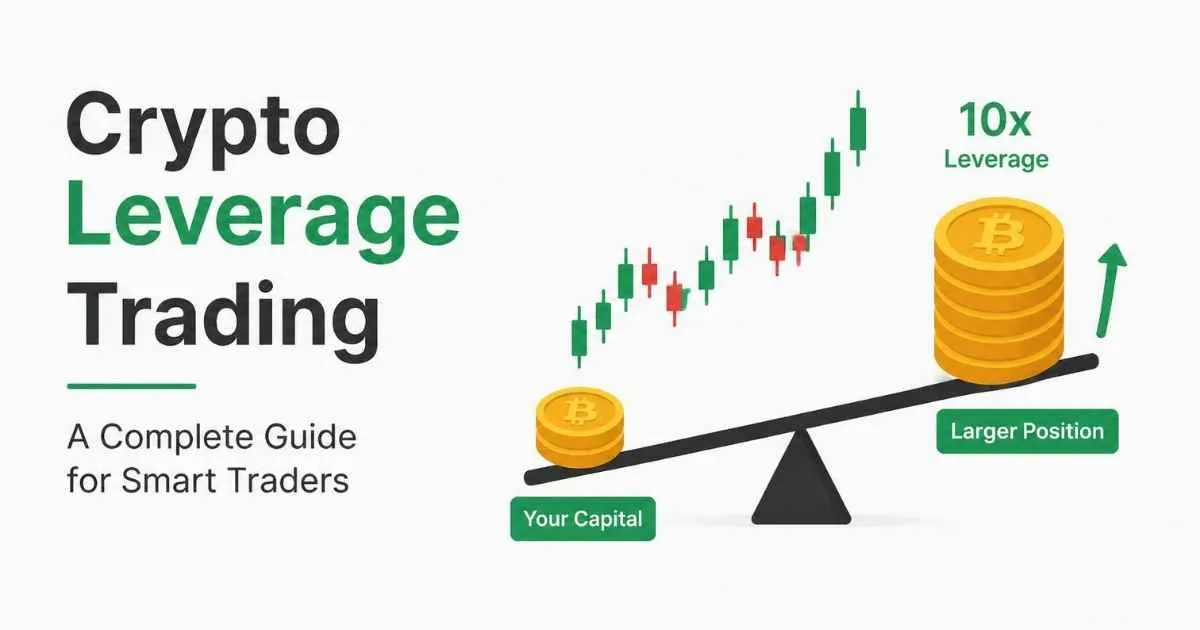

Leverage trading in crypto sounds exciting. You put in $1,000 and control $30,000 worth of assets. The upside is real — but so is the downside.
Most beginners jump in without understanding how fast a leveraged position can collapse. This guide breaks down exactly how it works, what you're risking, and how experienced traders actually manage it.
What Is Crypto Leverage Trading?
Leverage lets you borrow capital from a trading platform to open a larger position than your balance alone allows.
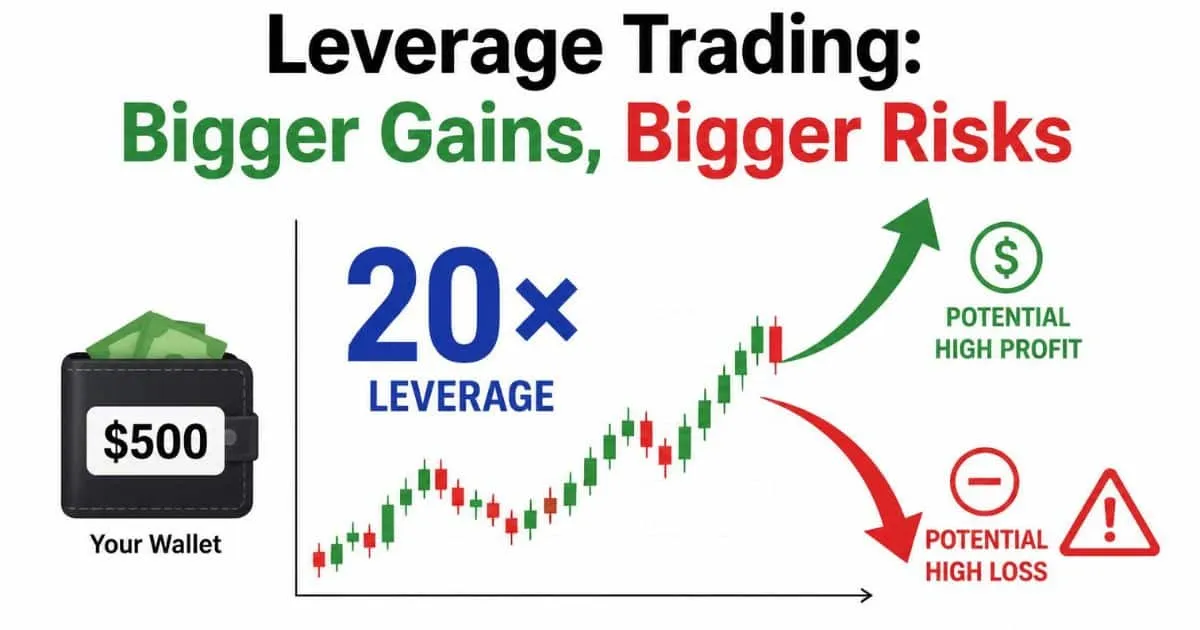
If you use 10x leverage on a $500 deposit, you're controlling a $5,000 position. At 30x, that same $500 controls $15,000 in exposure.
Platforms like Crypto30x are built around this concept — offering traders amplified market access across major cryptocurrencies like Bitcoin, Ethereum, and XRP.
The mechanics are simple:
- Margin = the collateral you put up
- Leverage = the multiplier applied to your position
- Liquidation = what happens when losses eat through your margin
That last point is where most people get hurt.
How 30x Leverage Actually Works
Here's a concrete example.
You deposit $1,000 and open a Bitcoin long position with 30x leverage. Your total exposure is $30,000.
Bitcoin drops 3.5%.
On a regular $1,000 trade, that's a $35 loss — manageable.
At 30x leverage, that same 3.5% move equals $1,050 in losses. Your margin is wiped out before the candle even closes.
That's the reality of high leverage. The market doesn't have to crash. Normal intraday price swings are enough to trigger liquidation.
Platforms built for this type of trading typically include:
- Real-time price tracking across Bitcoin, ETH, XRP, Dogecoin, and altcoins
- Profit and loss calculators to model trade outcomes before entering
- Savings and compound interest tools to plan capital allocation
These tools exist because leverage trading demands precision planning, not gut instinct.
Why Traders Use High Leverage Anyway
Leverage isn't just a way to lose money faster. For experienced traders, it's a capital efficiency tool.
If you're confident in a short-term price move, leverage lets you generate meaningful returns without tying up large amounts of cash.
A trader with a strong technical setup might risk $200 on a leveraged position to target $600 in profit. Without leverage, they'd need much more capital to generate the same dollar return.
That said, the traders who use leverage well share a few habits:
- They define their exit before entering. Stop-loss levels are set in advance, not after the position goes against them.
- They use a small fraction of leverage available. A platform offering 30x doesn't mean you should use 30x.
- They size positions based on risk, not hope. Risking more than 1–2% of total capital on any single trade is unusual for disciplined traders.
- They test withdrawals early. Before committing serious capital, they verify that they can actually get money out.
Common Mistakes That Kill Leveraged Positions
Most losses in leveraged crypto trading come from a short list of predictable errors.
Using maximum leverage:
Just because it's available doesn't mean it's smart. Higher leverage narrows your liquidation threshold significantly.
Ignoring funding rates:
Holding leveraged positions overnight costs money. On volatile assets, those fees compound quickly.
Trading illiquid assets at high leverage:
Low-liquidity tokens like smaller altcoins can move sharply on thin order books. Leverage makes those swings catastrophic.
Letting emotions drive decisions:
A position going against you doesn't automatically mean it should be held or doubled down on. Revenge trading — entering larger positions after a loss to "make it back" — is one of the most common account-killers.
Not understanding the platform's liquidation model:
Some exchanges liquidate you at exactly 100% margin loss. Others have maintenance margin requirements that trigger earlier. Knowing this in advance matters.
Resources like crypto30xx.it.com break down how platform mechanics work, including leverage calculations, asset-specific volatility behavior, and margin management tools. Worth reviewing before you risk real capital
Is Leverage Trading Right for You?
Honest answer: most people who try it lose money initially.
That's not a reason to avoid it entirely. It is a reason to treat it as a skill you develop, not a shortcut you take.
Start with lower leverage - 2x or 5x-— until you understand how liquidation feels in practice. Study how volatility affects your margin in real time. Track every trade and review what went wrong.
Experienced traders don't approach Crypto 30x strategies with hope. They approach them with systems.
If you want to explore how different leverage settings affect your profit and loss, platforms like crypto30xx.it.com include calculators specifically designed to model trade outcomes before you enter a position — a practical starting point for anyone building a leverage trading strategy.




















Sign in to leave a comment.