

The first budget I ever made was a mess. I had a spreadsheet, three color codes, a rent payment due in four days, and the kind of optimism you only get before reality hits. By the second week, I had already forgotten a software subscription, underestimated groceries, and convinced myself that a few food delivery orders were “networking expenses” because I worked around startups in San Francisco. That experience taught me something useful: beginners do not fail at budgeting because they are bad with money. They fail because most advice starts too abstractly. It talks about discipline before it talks about mechanics.
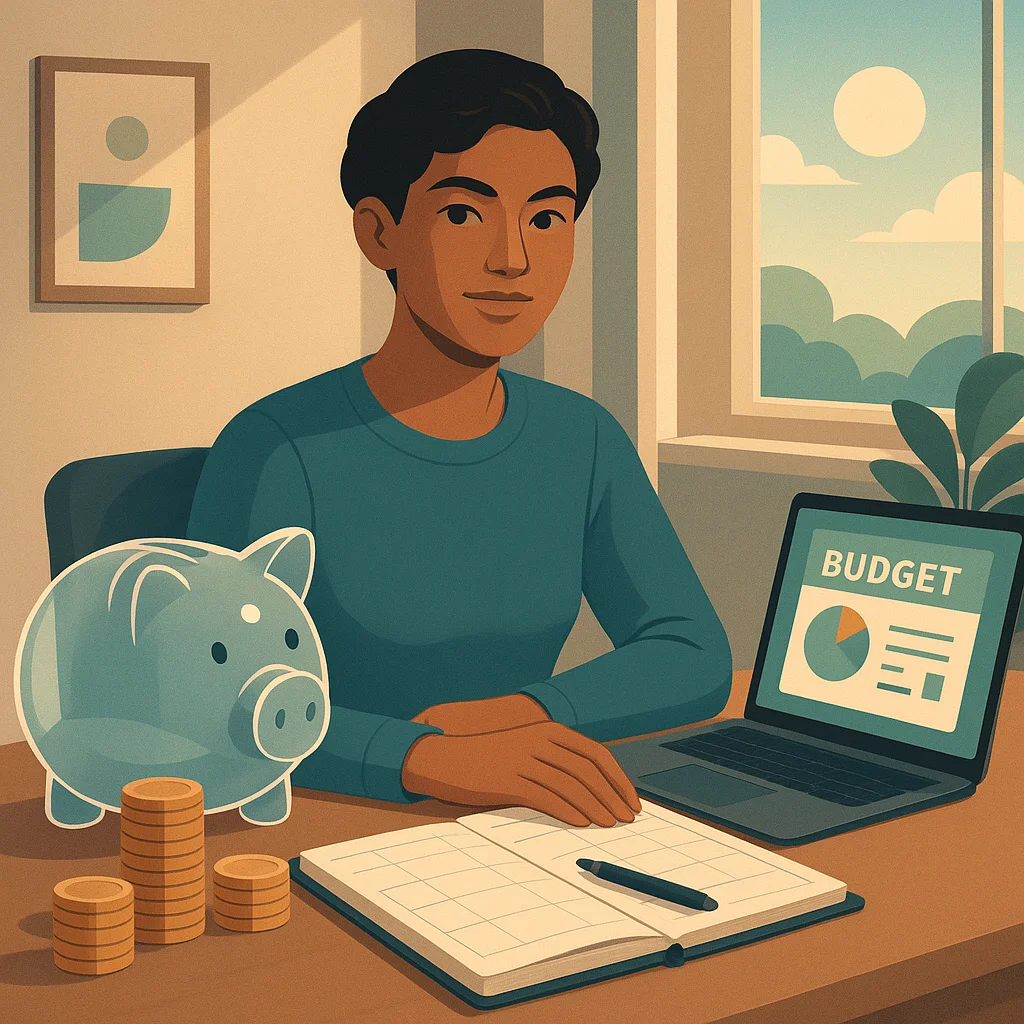
Budgeting is not punishment. It is visibility. When you can see where your money goes, you gain options. You can cut spending without panic, build savings without guessing, and decide whether a side hustle is truly helping or just masking a cash-flow problem. That matters more than ever. Prices remain elevated in many everyday categories, subscription creep is real, and income for many workers now comes from a mix of salary, freelance gigs, creator payments, and app-based work. A beginner needs a system that works in that reality, not one designed for a perfectly predictable paycheck.
There is plenty of simple advice out there. Mint’s budgeting tips for beginners emphasizes tracking expenses and setting goals, and that remains sound. The Pueblo Chieftain’s beginner’s guide to budgeting success similarly focuses on creating a realistic plan. I agree with both, but the real breakthrough for beginners comes when those ideas become a repeatable weekly habit. If you are starting from zero, the goal is not to create a perfect budget. The goal is to build a money system you will still use three months from now.
A budget is not a moral scorecard. It is a decision-making tool that turns vague financial stress into specific next steps.
Start with a cash-flow map, not a guilt list
Most new budgeters begin by asking, “What should I cut?” That is the wrong first question. Start with, “What is my money doing now?” A cash-flow map is simpler than it sounds. You list all income sources, all fixed bills, all variable essentials, all debt payments, and all flexible spending. The point is to capture movement, not judge it. If your income changes month to month, use a conservative baseline based on your lowest recent month rather than your best one.
When I coach friends through their first budget, I ask them to pull the last 60 to 90 days of transactions. That window is long enough to catch forgotten expenses: annual app renewals, rideshare spikes, event tickets, late-night convenience spending, and “small” digital purchases that compound fast. According to the U.S. Bureau of Labor Statistics Consumer Expenditure Survey, housing, transportation, food, personal insurance, and healthcare remain among the largest household spending categories. Beginners often obsess over coffee while ignoring their true cost centers. The data says the big leaks are usually bigger than the clichés.
Your first pass should separate money into four buckets.
- Income: salary, freelance payments, tips, side hustle sales, creator revenue, child support, or irregular contract work.
- Fixed essentials: rent, insurance premiums, minimum debt payments, phone bill, transit pass, childcare.
- Variable essentials: groceries, utilities, gas, medications, household basics.
- Flexible spending: dining out, entertainment, shopping, hobbies, impulse purchases, convenience fees.
This exercise usually changes behavior immediately, because it replaces assumptions with evidence. A beginner who says, “I barely spend on extras,” may discover they spent hundreds on delivery markups, app subscriptions, and weekend spending that felt harmless in isolation. Another may realize the real issue is not overspending at all, but inconsistent income timing. That distinction matters. One problem calls for trimming; the other calls for a buffer.
If you want a broader primer, WriteUpCafe has a useful companion piece in Beginners Guide to Budgeting Tips: Build Financial Confidence, which reinforces the habit-building side of money management. But before confidence comes clarity, and clarity starts with a plain, honest map of your cash flow.
Choose a budgeting method that matches your life stage
There is no universal best budget. There is only the best budget for your income pattern, personality, and financial pressure points. Newcomers get overwhelmed because they think they need a sophisticated system on day one. You do not. You need a method simple enough to maintain and flexible enough to survive real life.
The most common frameworks work for different kinds of people. The 50/30/20 model is popular because it is intuitive: roughly 50% for needs, 30% for wants, 20% for savings and debt payoff. But that ratio is hard to hit in expensive cities or during a debt-paydown phase. Zero-based budgeting gives every dollar a job, which is excellent for detail-oriented people and anyone trying to break paycheck-to-paycheck cycles. The envelope or category-cap approach works well for overspenders who need hard limits on restaurants, shopping, or entertainment. For gig workers, a percentage-based system tied to each payment can be even more practical.
Here is how I usually break it down for beginners:
- Use 50/30/20 if your income is stable and you need a simple starting framework.
- Use zero-based budgeting if your spending feels chaotic and you want every dollar assigned before the month begins.
- Use category caps or envelopes if your issue is impulse spending in a few specific areas.
- Use percentage splits per paycheck if your income is irregular and you need flexibility.
The mistake is treating the method like an identity. If one approach stops working, change it. I have switched systems several times depending on whether I was freelancing heavily, traveling for conferences, or focusing on building emergency savings. Budgeting should adapt to your season of life. A renter with student loans, a new parent, and a rideshare driver juggling multiple apps do not need the same setup.
Current budgeting conversations also reflect a broader shift in how people earn. Side hustles are no longer fringe. Many households use them to stabilize income or accelerate savings goals. That means your budget should account for taxes, income volatility, and uneven payment schedules. Another WriteUpCafe resource, Practical Budgeting Tips for Beginners to Master Personal Finance, is helpful on the mechanics of making a simple plan workable. The key is to choose a system that reduces friction rather than adding more of it.
The best budget is the one you can follow on a tired Tuesday, not the one that looks impressive in a template.
Build your first budget around fixed costs, then attack the variables
Once you know your numbers and have chosen a method, the order of operations matters. Beginners often spend too much time trimming tiny discretionary purchases while ignoring structural costs that shape the whole month. Start with fixed costs because they determine your financial breathing room. If rent, insurance, minimum debt payments, and transportation consume most of your income, no amount of coupon clipping will solve the core problem.
Calculate your fixed-cost ratio first. Add all recurring obligations and divide by your monthly take-home pay. If that number is high, your budget will feel tight no matter how motivated you are. There is no perfect universal threshold, but many financial planners view lower fixed-cost burdens as healthier because they leave room for savings and shocks. A beginner with a 70% fixed-cost ratio needs a different strategy than someone at 45%. The first person may need to renegotiate bills, reduce housing or car costs over time, or increase income. The second has more room to optimize spending categories.
Then move to variable expenses. This is where quick wins often appear.
- Groceries often improve with a simple weekly plan and one main store trip.
- Dining and delivery can drop sharply when you set a weekly cap instead of a vague monthly hope.
- Transportation costs become more visible when you compare transit, driving, parking, and rideshare in one category.
- Subscriptions are easier to manage when you review them as a group rather than one by one.
One practical rule I use is the “three-level cut.” First, remove what you do not value. Second, reduce what you like but overuse. Third, redesign what is structurally expensive. That could mean canceling forgotten subscriptions, limiting takeout to once a week, and later moving to a cheaper phone plan or revisiting housing choices when a lease ends. The first two changes create momentum. The third creates lasting impact.
Reports from consumer-finance writers and budgeting guides frequently stress realistic targets, and that is exactly right. If you slash every flexible category to the bone, you will likely rebound into overspending. A good beginner budget leaves room for a life. It simply makes that life intentional. I learned this the hard way while trying to save aggressively during a period of freelance uncertainty. The weeks I allowed a modest social budget, I stayed on plan. The weeks I tried to be perfect, I usually blew past my limits by Friday.
Use automation and weekly reviews to make budgeting stick
A budget fails when it depends entirely on memory and willpower. The most effective beginner move is automation. If your savings transfer, bill payments, and debt minimums happen automatically, you reduce the number of decisions that can go wrong. Automation does not replace awareness, but it creates a sturdy default. That is especially valuable if you are balancing a day job with side-hustle income and do not want your financial system to become another source of admin fatigue.
Set up your money flow in sequence. Income lands in your primary account. Fixed bills are paid from there on schedule. Savings transfers happen shortly after payday, not at the end of the month when “leftover” money rarely exists. Spending money for flexible categories can remain in checking, or you can move it to a separate account if that helps create boundaries. If you earn irregularly, automate percentages rather than fixed dollar amounts whenever possible.
What matters just as much is the weekly review. This is the habit that turns a budget from a static document into a living system. Mine takes about 20 minutes on Sunday evening. I check account balances, review transactions, compare category spending against plan, and adjust the next week if needed. That one ritual has saved me from overdrafts, accidental double spending, and the classic freelancer problem of forgetting tax set-asides after a strong month.
A beginner’s weekly review should cover:
- What came in this week?
- What went out that was planned?
- What went out that was unplanned?
- Which category is drifting off target?
- What needs to change before next week?
This is also where technology can help, though the tool matters less than the habit. Some people use spreadsheets. Others prefer apps that categorize transactions automatically. If you use digital tools, remember that auto-categorization is often wrong on the first pass. Review it. Correct it. The value comes from accurate patterns, not pretty dashboards.
For readers who want a more current angle on budgeting habits and money confidence, Beginners Guide to Budgeting Tips for 2026: Master Your Money with Confidence offers a useful adjacent read. The broader lesson is simple: consistency beats intensity. A brief weekly review done 40 times a year will outperform a perfect monthly budget abandoned after February.
What has changed recently for beginners in 2026
Budgeting in 2026 is not the same as budgeting a few years ago. The biggest shift is that more people are managing uneven income streams alongside persistent cost pressure. Inflation has cooled from its peak, but many prices did not rewind. Rent remains painful in many metros, insurance costs have risen in several categories, and digital spending has become sneakier. Consumers now manage recurring subscriptions across entertainment, software, cloud storage, wellness apps, AI tools, meal services, and creator platforms. The result is that small monthly charges can quietly harden into a major line item.
Another change is the normalization of side hustle income. That is a positive development, but it creates a trap for beginners: treating extra income as permission to spend more rather than stabilize finances. If you drive on weekends, freelance online, sell digital products, or pick up consulting work, the first job of that money should usually be strategic. Build an emergency cushion. Cover irregular annual expenses. Fund tax reserves if the income is self-employed. Then decide what portion can support lifestyle upgrades.
Digital payments have also changed spending psychology. Tap-to-pay, one-click checkout, and in-app purchasing reduce friction, which is convenient but expensive when your budget is still forming. Many beginners are not overspending because they lack intelligence; they are overspending because the transaction experience has been engineered to feel invisible. That is why category caps and weekly reviews matter more now.
Recent beginner guides continue to emphasize fundamentals, and they are right to do so. The basics have not changed: know your income, track your spending, set goals, and review regularly. What has changed is the environment around those basics. The modern beginner budget must account for recurring digital charges, variable income, and the emotional temptation to use side-hustle cash as “fun money” before core priorities are funded.
In 2026, the hardest part of budgeting is not math. It is noticing how many financial decisions happen automatically unless you interrupt them.
That is why I advise beginners to create a short “money firewall” list: no new subscriptions without canceling one, no lifestyle upgrades from one strong month of side-hustle income, and no skipping weekly reviews during busy periods. Busy is when budgets drift.
Set goals that are specific enough to survive real life
A budget without a goal quickly becomes a chore. The strongest beginner budgets are attached to something concrete: a $1,000 starter emergency fund, paying off a credit card, building a one-month buffer, saving for a move, or creating enough breathing room to reduce reliance on high-interest debt. Vague goals such as “be better with money” do not create urgency. Specific goals do.
The trick is to rank goals in sequence. Trying to save aggressively, pay down every debt, invest heavily, and fund travel all at once usually leads to diluted progress and frustration. I prefer a simple order for most beginners. First, get current on essential bills. Second, build a starter emergency fund. Third, capture any employer retirement match if available. Fourth, focus on high-interest debt reduction. Fifth, expand savings targets and longer-term investing as your cash flow improves. Your exact order may differ, but your budget should reflect priorities clearly.
Good goals also need deadlines and monthly funding amounts. If you want $1,200 in six months, your budget needs a line item of $200 a month. If you want to pay off a $3,000 balance in ten months, your budget needs roughly $300 a month plus interest considerations. This is where budgeting becomes motivating. You stop asking, “Where did my money go?” and start asking, “How fast can I fund what matters?”
I have seen side hustles transform this stage for beginners. A modest freelance project, resale activity, tutoring gig, or weekend delivery shift can accelerate a goal dramatically if the money is assigned in advance. Unassigned extra income tends to disappear. Assigned extra income creates momentum. That is why many people feel richer after getting a side hustle but still do not build savings. The income increased; the plan did not.
If you need a simple rule, use this one: every dollar should either support today, protect tomorrow, or buy something you genuinely value. If it does none of those, question it. Budgeting gets easier when spending aligns with purpose rather than impulse.
Common beginner mistakes and the fixes that work fast
The most common budgeting mistakes are predictable, which is good news because predictable problems are fixable. The first is using gross income instead of take-home pay. Your budget should be based on what actually reaches your account. The second is forgetting non-monthly expenses such as annual subscriptions, gifts, travel, car maintenance, or quarterly taxes for freelance work. These are not surprises. They are irregular but expected, and your budget should treat them that way.
The third mistake is making categories too broad. “Miscellaneous” becomes a black hole. Split it into useful buckets. Another frequent error is setting unrealistic spending cuts because you are motivated after checking your balances. Motivation fades. Systems remain. If you spent $600 eating out last month, your next target probably should not be $50. Aim for progress with enough room to succeed.
Here are the fixes I have found most effective:
- Create a sinking-fund section for non-monthly expenses and contribute a little every month.
- Rename vague categories into specific ones you can act on, such as dining, subscriptions, transit, and personal care.
- Use a 24-hour rule for non-essential purchases over a threshold you choose.
- Review side-hustle income separately so taxes and business costs do not get mixed into spending money.
- Track by week as well as month because monthly budgets often hide overspending until it is too late.
The final mistake is emotional: treating one bad week as proof that budgeting does not work. It does work, but it reveals reality, and reality is sometimes messy. A blown category is not failure. It is feedback. Adjust. Reallocate. Learn what triggered the overspend. Then keep going. The people who become good at budgeting are not the ones who never slip. They are the ones who recover quickly.
That has been true in my own life and among nearly everyone I know in the gig economy. Income fluctuates. Expenses surprise you. Plans change. A budget is not there to make life perfectly tidy. It is there to make sure your money still serves you when life is not tidy at all.
If you are just beginning, keep it simple for the first month. Track everything. Set a few realistic limits. Automate what you can. Review weekly. Then refine. That is how budgeting stops feeling like restriction and starts feeling like control.



























Sign in to leave a comment.