
In the hyper-competitive world of online retail, the "build it and they will come" philosophy is a recipe for a quiet storefront. Most E-commerce brands begin their journey by leaning heavily on paid acquisition—Facebook Ads, Google PPC, and influencer sponsorships. While these are effective for initial validation, they create a dangerous dependency. The moment you stop spending, the traffic stops flowing.
Scaling an e-commerce business to the seven or eight-figure mark requires a fundamental shift in strategy. It requires building a "Digital Asset" that earns traffic rather than buying it. This is precisely why growing brands eventually hire SEO experts to lead their long-term growth.
The Problem with "Linear" Scaling
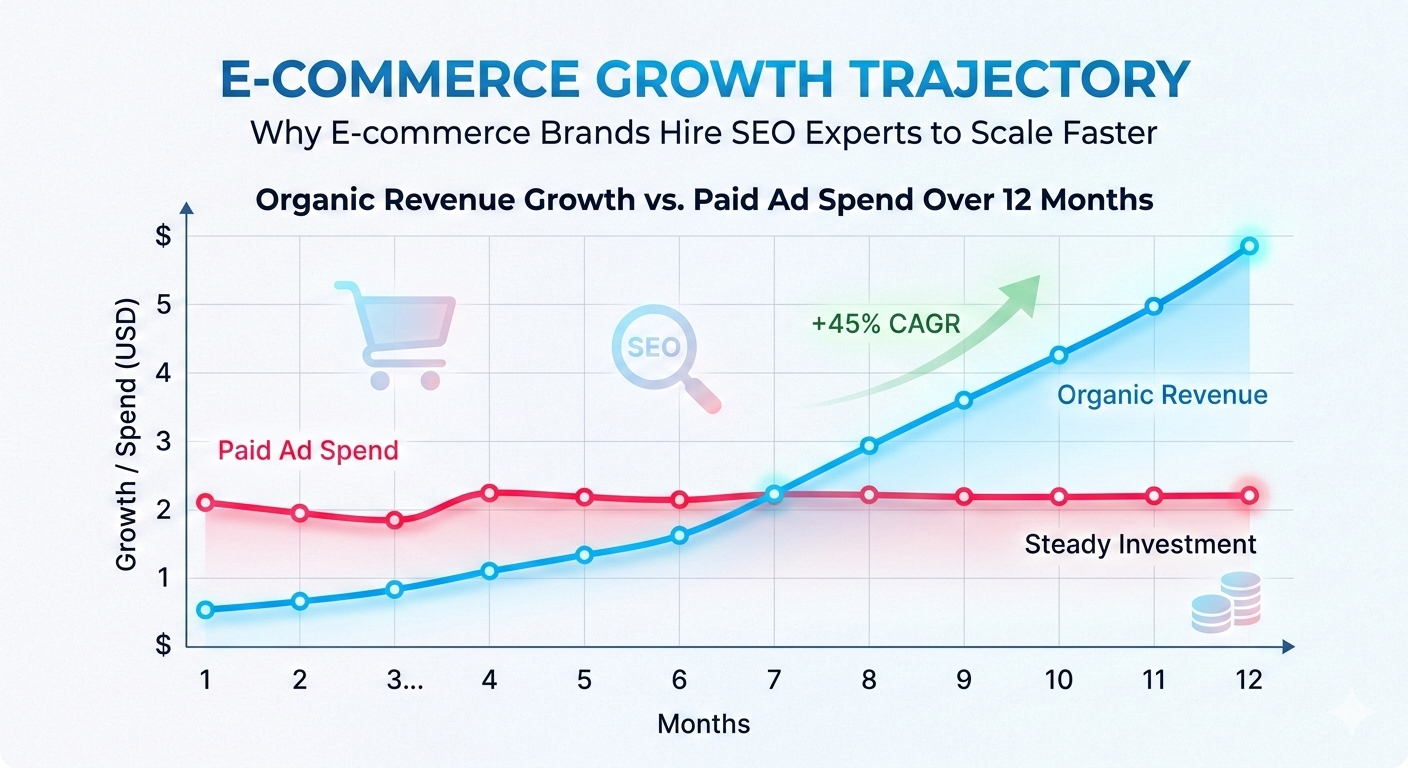
Paid ads scale linearly: if you want double the customers, you generally have to double your ad spend. However, SEO scales exponentially. A well-optimized category page or a high-intent blog post can bring in thousands of visitors a month for years, with the only ongoing cost being periodic maintenance.
By investing in professional SEO services, brands effectively lower their Customer Acquisition Cost (CAC) over time. When organic search begins to contribute 30% to 50% of your total revenue, your profit margins widen, allowing you to outbid competitors who are stuck in a "pay-to-play" loop.
Beyond the Keywords: The Technical Moat
E-commerce SEO is significantly more complex than standard blogging. You are dealing with faceted navigation (filters for size, color, and price), thousands of product variations, and the constant risk of "Duplicate Content."
If your site creates a unique URL for every possible filter combination, you will quickly exhaust your "Crawl Budget." Google’s bots will spend all their time crawling useless filter pages instead of your high-margin product pages. Professional experts implement "Canonicalization" and "Robots.txt" strategies that guide search engines to the most valuable parts of your site. This technical foundation acts as a "moat," protecting your rankings from algorithm shifts.
Winning the "Zero-Click" and AI Search Era
Google’s Search Generative Experience (SGE) and AI-driven summaries are changing how shoppers find products. Users no longer just search for "running shoes"; they ask, "What are the best waterproof running shoes for wide feet under $150?"
A standard marketing generalist might target the broad term, but an SEO specialist targets the intent. They structure your product data using "Schema Markup" (JSON-LD) so that your price, star ratings, and stock levels appear directly in the search results. This "Rich Snippet" visibility often leads to a higher Click-Through Rate (CTR) than the #1 organic spot.
Content as a Conversion Tool
SEO isn't just about getting people to the site; it’s about what they do once they arrive. An expert-led strategy involves creating "Bottom-of-Funnel" content. This includes:
- Comparison Pages: (Your Brand vs. Competitor)
- Buying Guides: (How to Choose the Right Size/Material)
- Problem-Solving Articles: (How to Fix X Using Our Product)
This type of content builds the "Trust" (the 'T' in Google’s E-E-A-T framework) necessary to turn a casual browser into a repeat buyer. At Digipie Technologies, we’ve observed that stores focusing on "Topical Authority" rather than just "Keyword Volume" tend to see a 40% higher retention rate because they provide genuine value before the transaction even happens.
The Role of Digital PR
E-commerce growth is heavily tied to "Brand Mentions." In 2026, Google views a backlink from a reputable fashion magazine or a tech review site as a massive vote of confidence. Professional SEO services include "Digital PR"—reaching out to journalists and niche influencers to get your products featured in gift guides and "Best of" lists. These aren't just links; they are endorsements that drive direct referral traffic and massive SEO authority.
E-commerce Growth FAQ
1. Why shouldn't I just stick to Google Ads if they are working?
Google Ads are excellent for short-term wins, but they offer zero "equity." If a new competitor with a massive budget enters your niche, your ad costs will skyrocket. When you hire SEO experts, you are building an organic machine that protects your market share regardless of what happens in the ad auction.
2. How does "Schema Markup" help my online store?
Schema is a piece of code that tells search engines exactly what your page is about. For e-commerce, it allows Google to display your "Price," "Availability," and "Review Stars" directly on the search results page. This makes your listing look more professional and can significantly increase your sales without needing more traffic.
3. What is the "Crawl Budget" and why does it matter?
Google only spends a limited amount of time on your site. If you have a large store with thousands of products and "thin" filter pages, the bots might leave before they find your newest arrivals. Professional SEO services optimize your site structure to ensure the most important pages are indexed and updated frequently.


























Sign in to leave a comment.