

Embedded finance has quietly rearranged where a loan begins. A decade ago, a borrower walked into a branch or filled out an online form on a bank's own site. Today, the loan is offered inside a retailer's checkout, a software platform's dashboard, or a marketplace's seller portal, and it is approved before the buyer finishes typing a shipping address. The lender that funds the credit is often invisible to the person taking it. That shift is why software for loan management has become a distribution question, not just an operations one.
The economics are already visible. The buy now, pay later channel alone reached an estimated $70 billion in transaction value in 2025 and has grown roughly 20 percent a year since 2021, according to the Federal Reserve Bank of Richmond. Point-of-sale credit is no longer a fringe product. For lenders, the uncomfortable implication is direct: whoever owns software for loan management that can price, approve, and book a loan in the moment of purchase owns the borrower relationship. Everyone else rents it, or loses it.
What Software for Loan Management Actually Runs
The phrase covers more than an approval engine. A loan management system software platform is the system of record for a loan from application through payoff or charge-off. It holds the borrower profile, the credit decision and its reasons, the amortization schedule, the payment history, the fees, and the compliance artifacts tied to each of those events.
Older installations split that work across disconnected tools: one for origination, a spreadsheet or legacy core for servicing, a separate collections module, and a reporting layer stitched together by hand. Every handoff between them introduced delay and a place for data to drift. Modern loan management software consolidates those functions into one record, so the servicing team sees exactly what the underwriting model decided, and the compliance team sees both.
That consolidation matters most at the moment, as embedded finance depends on. A credit offer that appears inside a partner's checkout leaves no time to transfer an application between four systems. The decision, the disclosures, and the booked account all have to happen against a single source of truth, in one pass. A lender running commercial loan management software that already unifies these functions spends its energy on credit strategy instead of reconciling records after the fact.
Why Point-of-Sale Lending Rewrites the Timeline
Embedded lending puts the credit offer where the demand already is. A contractor buying equipment gets financing on the supplier's order page. A small business gets a working-capital advance inside the accounting software it uses every day. The borrower never shops for a lender, so the lender never gets a second chance to compete on rate or terms.
Grand View Research values the embedded lending market at $21.52 billion in 2025 and projects it toward $250.89 billion by 2033, with small and mid-sized enterprises the largest borrower segment and platform providers holding the majority of the market. Those numbers describe a channel that rewards speed and punishes friction. A checkout will wait a few seconds for a decision. It will not wait for a manual review queue.
This is the pressure that separates loan management platforms built for the era from those retrofitted into it. A decision that returns in two seconds keeps the sale. A decision that returns tomorrow forfeits it to a competitor whose stack answered in time. The timeline is no longer set by the lender's operations. It is set by the partner's user experience.
API-First Origination Is the Real Requirement
"API-first" is often treated as a technical detail. It is the business model. When origination is built API-first, a partner platform can request a credit decision, receive an approval with terms, and book the loan through documented endpoints without a human on the lender's side touching the transaction. The lender's software becomes a service the partner calls, not a destination the borrower visits.
That design carries three consequences worth naming. First, integration time drops from months of custom work to weeks of configuration, so a lender can sign more distribution partners in the same period. Second, the same endpoints that serve one partner serve the next, so growth does not require rebuilding the connection each time. Third, the decision logic stays centralized, so pricing, risk rules, and compliance checks apply identically, no matter which storefront generated the application.
McKinsey's analysis of embedded finance in Europe frames the stakes. The channel accounted for 5 to 6 percent of retail and SME lending revenues in 2023 and could reach 20 to 25 percent by 2030. A fifth of lending revenue shifting to a channel that only rewards API-ready lenders is not a trend to watch. It is a redistribution already underway, and the loan manager software a bank runs decides which side of it the bank lands on.
Servicing and Collections Do Not Get Simpler
Origination gets the attention because it touches the sale. Servicing is where the loan lives for years, and embedded finance multiplies the operational load rather than reducing it. A lender booking thousands of small point-of-sale loans through a dozen partners now services a portfolio that is larger, more fragmented, and more automated than a traditional book of a few hundred larger loans.
Effective loan management software handles that scale without adding headcount in proportion. Payments post automatically. Statements are generated on schedule. Delinquency triggers escalate through defined steps rather than waiting for someone to notice. When a borrower disputes a charge that originated inside a partner's app, the servicing team can trace the loan back to its exact origination context because the record was never split.
Collections carries its own weight here. The same automation that approves a loan in seconds has to manage a missed payment with the disclosures and timing that consumer protection rules require. A system that can originate fast but collect only through manual effort simply moves the bottleneck downstream, where it becomes a compliance exposure rather than a lost sale. Configurable workflows help: a first missed payment might trigger a reminder, a second a hardship offer, a third a formal notice, each step logged and each communication template versioned. That structure keeps a growing portfolio inside policy without asking collectors to remember which of a dozen partner programs a given loan belongs to.
Integration Depth Decides Who Wins Partnerships
A lender's growth in embedded finance is capped by how easily it connects to the places lending happens. That makes integration the quiet determinant of market share. Commercial loan management software earns its place by connecting cleanly to credit bureaus, bank-data aggregators, core banking systems, payment rails, and the partner storefronts that generate applications.
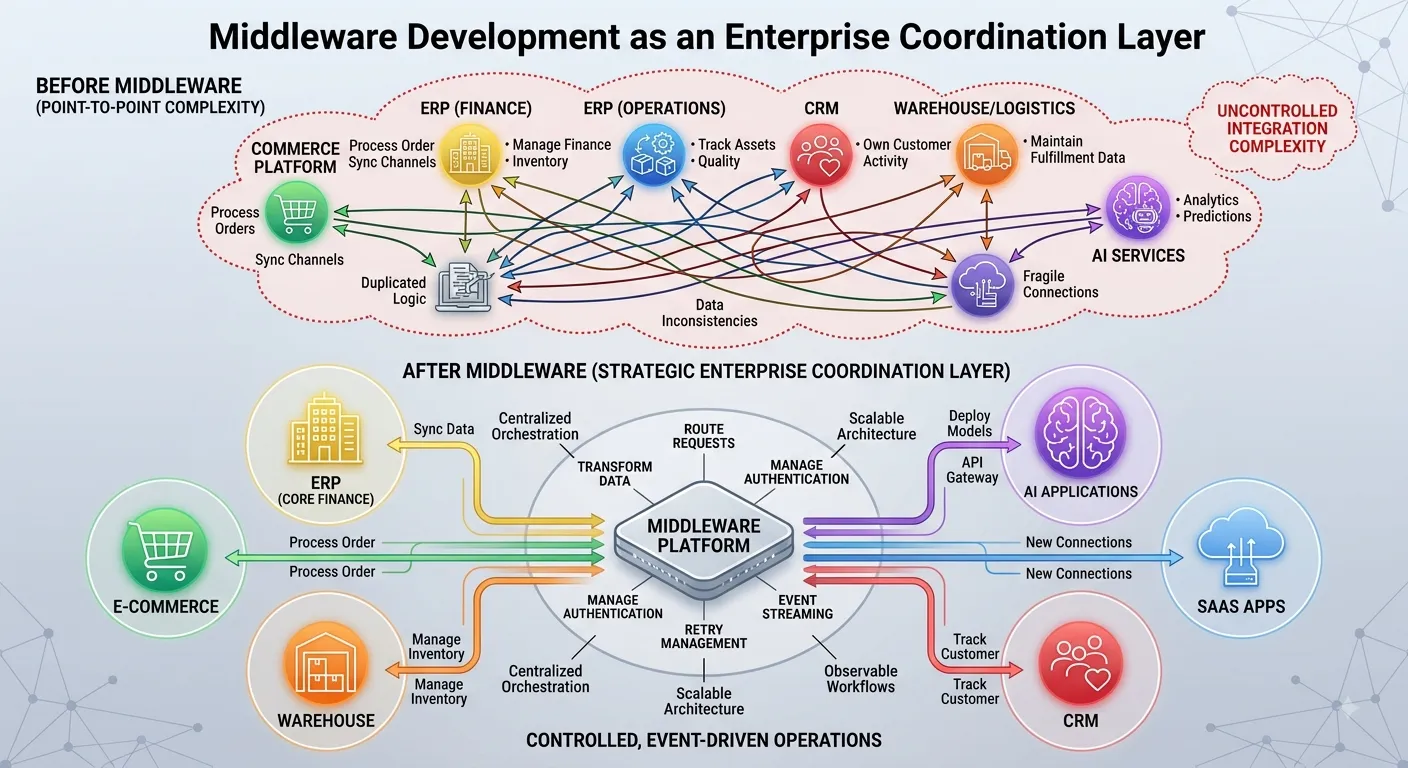
Consider what a partner evaluates when choosing which lender to embed. They compare integration effort, decision speed, and the reliability of the connection under load. A lender that requires a bespoke six-month build loses to one whose sandbox a developer can wire up in an afternoon. Secure data-sharing between institutions and third parties is becoming table stakes across banking, and the lenders positioned to benefit are the ones whose systems already speak that language natively rather than through brittle middleware.
The depth of integration also shapes the credit itself. A platform that pulls real-time bank-transaction data through an aggregator can underwrite a thin-file borrower a bureau score would decline. That is not a feature; it is a competitive edge that a shallow integration cannot reproduce.
Compliance Has to Run at the Same Speed as Approval
Fast credit does not suspend the rules. Every automated decision still has to produce the required disclosures, honor fair-lending obligations, and generate an adverse-action notice with real reasons when it declines an applicant. When approval happens in two seconds inside a partner's checkout, those obligations have to fire in the same two seconds.
This is where loan management system software earns or loses regulatory trust. The platform has to log the inputs to every decision, retain the model version that produced it, and make the whole chain auditable long after the loan closes. Regulators examining an embedded-lending program will ask how a decision was reached across thousands of automated approvals. A system that cannot reconstruct that reasoning turns speed into liability.
The multi-partner structure raises the bar further. A lender operating through many storefronts has to apply consistent underwriting and disclosure standards across all of them, because the regulatory responsibility stays with the lender regardless of where the application originated. Centralized decision logic, the same API-first design that drives distribution, is also what keeps compliance uniform. The architecture that wins partnerships is the architecture that survives an exam.
The Cost of Standing Still
Doing nothing is itself a decision, and it has a price. A lender that keeps origination on a branch-and-form timeline while competitors book loans at checkout does not lose customers one at a time. It loses whole distribution channels at once, because a single partner integration routes thousands of applications to whichever lender the platform embedded.
The CFPB's most recent market study makes the scale concrete. Across six major providers, lenders originated 335.8 million BNPL loans totaling $45.2 billion in a single year, extended to roughly 53.6 million consumers. That volume did not flow through traditional application desks. It flowed through embedded, automated, API-driven systems, and it is the volume a slower lender never sees.
Rebuilding for that world is not trivial. Legacy cores resist real-time APIs, data models were never designed for partner-driven origination, and compliance teams accustomed to batch review have to operate at machine speed. The lenders moving now are treating the platform decision as strategic rather than as an IT upgrade, because the window to claim distribution partners is open only while the market is still forming.
Achieva’s LoansNeo is built for exactly this shift, giving lenders API-first loan management software that runs origination, servicing, collections, and compliance on a single Salesforce-native record. The point is not more features. It is one system of record fast enough to answer a checkout and complete enough to hold the loan for its full life.
Embedded finance has moved the starting line of a loan to wherever the borrower already is, and the lenders keeping pace are the ones whose software for loan management can decide, disclose, and book in the seconds a point of sale allows. The channel is redistributing lending revenue toward whoever is ready for it, and readiness is a platform question. Lenders evaluating API-first loan management software should judge it on decision speed under real load, integration depth with the partners that drive volume, and whether compliance runs at the same tempo as approval. The market will not wait for a slower stack, and the distribution moving to real-time lenders today is unlikely to move back.



























Sign in to leave a comment.