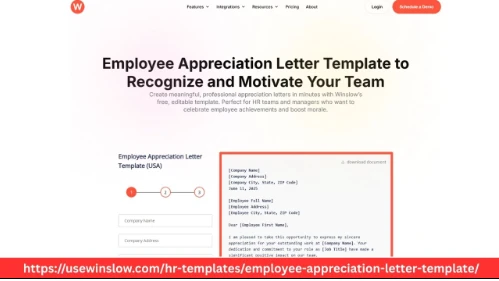

In today’s dynamic work culture, where employee retention and motivation are key to business success, appreciation is more than just a kind gesture — it is a strategic imperative. Recognizing employees for their efforts not only uplifts morale but also fosters a culture of loyalty and engagement. For small businesses and self-employed entrepreneurs managing HR processes internally, using a consistent Employee Appreciation Letter Template can help maintain professionalism and save valuable time.
At Winslow, we understand the importance of internal HR efficiency. This blog provides a detailed informational guide on how an Employee Appreciation Letter Template can become a game-changer for small businesses and self-starters.
Why Employee Appreciation Matters
A Gallup study highlights that employees who feel recognized are more productive, engaged, and loyal. For smaller businesses with limited resources, fostering such outcomes through simple initiatives like appreciation letters can deliver high ROI.
Key benefits of regular appreciation include:
- Increased employee motivation
- Improved team morale
- Lower turnover rates
- Enhanced workplace culture
- Greater employee productivity
For internal HR departments, a well-documented Employee Appreciation Letter Template helps institutionalize this culture of recognition.
The Role of a Template in HR Operations
Creating unique letters for every situation can be time-consuming. That’s where having a reusable Employee Appreciation Letter Template proves useful. It provides a standardized format, ensuring consistency, professionalism, and clarity in communication.
An effective template offers:
- A ready-to-use structure
- Personalization options for specific achievements
- Time efficiency for HR personnel
- Professional branding in correspondence
At Winslow, our recommended templates are optimized to ensure all important elements are covered while offering flexibility to suit various appreciation scenarios.
Key Components of a Strong Employee Appreciation Letter Template
Here’s a breakdown of what every internal Employee Appreciation Letter Template should include:
1. Header and Branding
- Company name and logo
- Date of issuance
- Recipient's full name and position
2. Opening Greeting
- Use a warm, respectful tone.
- Personalize with the employee’s name.
3. Expression of Gratitude
- Clearly state what the employee is being appreciated for.
- Mention specific achievements or efforts.
4. Impact Statement
- Explain how the employee’s work contributed to the company’s success or team objectives.
5. Future Encouragement
- Express optimism about the employee’s future contributions.
- Reinforce continued support from the company.
6. Closing and Signature
- End on a positive note.
- Include the sender's name, title, and contact details.
Sample Employee Appreciation Letter Template by Winslow
Here’s a sample format that can be used by internal HR teams:
[Winslow Letterhead or Logo]
Date: [Insert Date]
To: [Employee’s Full Name]
Position: [Employee’s Designation]
Subject: Heartfelt Appreciation for Your Outstanding Performance
Dear [Employee’s First Name],
On behalf of everyone at Winslow, I would like to sincerely thank you for your exceptional contributions and unwavering dedication. Your recent work on [mention specific project or task] has been exemplary and speaks volumes about your commitment to excellence.
Your efforts have made a significant impact on our team and helped us achieve [mention any goals or positive outcomes]. Your attention to detail, creativity, and collaborative spirit are truly valued.
We are proud to have you as part of the Winslow team. Your performance sets a strong example for others and reflects the core values we stand by.
Keep up the great work, and we look forward to seeing your continued growth and success with us.
Warm regards,
[Name of HR Manager or Supervisor]
[Title]
Winslow
Tips for Using the Template Effectively
- Personalize: Even though the template provides structure, personalization makes it meaningful. Always mention specific contributions.
- Timeliness: Deliver the letter soon after the achievement or milestone.
- Delivery Method: Depending on company culture, you can present it via email, print it, or share it during team meetings.
- Archive Records: Keep a digital copy in the employee’s file to document recognition history.
Common Scenarios for Using Appreciation Letters
- Project Completion: For successfully delivering a major project or initiative.
- Exceeding KPIs: For surpassing performance benchmarks or sales targets.
- Team Support: For collaborative efforts that elevate team performance.
- Work Anniversaries: To mark employment milestones.
- Customer Feedback: For receiving outstanding reviews or client praise.
The Employee Appreciation Letter Template from Winslow can be adapted to fit all these scenarios with ease.
Digital Tools to Make It Seamless
With tools offered by Winslow, small businesses and self-employed entrepreneurs can automate the creation and management of appreciation letters. Winslow’s HR automation features include:
- Template management
- Employee records integration
- Bulk letter generation
- Scheduled appreciation workflows
- Email and print-friendly formats
This streamlines the recognition process and reduces manual errors, helping small HR teams stay productive.
Final Thoughts
Showing appreciation isn’t just good manners — it’s good business. For growing teams and busy HR departments, having a ready-to-use Employee Appreciation Letter Template can make a big difference. It reinforces positive behavior, aligns with company values, and helps build a culture of recognition without overwhelming internal resources.
























Sign in to leave a comment.