

In today’s data-driven, rapidly evolving digital landscape, success doesn’t come from technology alone—it comes from how that technology is experienced by its users. Whether you’re a hospital deploying new clinical software or an enterprise streamlining operations, your success hinges on how intuitively your systems support real-world workflows.
That’s where user-centric software solutions come in. By focusing on the needs, behaviors, and goals of end users—doctors, nurses, analysts, patients, or operations teams—organizations can unlock a higher return on investment, reduce operational friction, and drive adoption from day one.
Here’s how a user-centric approach can transform outcomes in healthcare and enterprise IT environments, and why it should be at the core of your next digital project.

1. What Is a User-Centric Software Solution?
A user-centric solution is designed with the end user’s needs, workflows, and cognitive patterns as its foundation. It doesn't start with features or code—it starts with people.
Core characteristics include:
- Workflow-aligned design: Interfaces mirror how users actually work, not how systems are architected
- Minimal learning curve: Tools are intuitive, even for non-technical users
- Adaptive systems: Interfaces respond to context, user roles, and device types
- Built-in feedback loops: Software evolves based on user insights and changing needs
Instead of forcing users to adapt to rigid systems, user-centric solutions adapt to the users—improving both efficiency and satisfaction.
2. Why It Matters: The Business & Clinical Case
User experience (UX) is not just a design consideration—it’s a business and operational imperative. Here’s why:
- A Forrester study found that every $1 invested in UX brings returns of up to $100, largely due to increased productivity and reduced error rates.
- According to the Journal of the American Medical Association (JAMA), poor EHR usability is directly linked to clinical burnout and documentation errors.
- In enterprise environments, the IDC reports that nearly 30% of digital transformation projects fail due to lack of user alignment and poor interface design.
For healthcare providers, this means patient outcomes and compliance may suffer. For enterprises, this translates into stalled adoption, higher training costs, and lost productivity.
3. User-Centric Design in Action: Healthcare Use Cases
In healthcare, where precision, speed, and clarity are critical, user-centric solutions can improve both clinical care and system adoption:
- Physician Dashboards: Tailored views that highlight relevant patient data, reducing cognitive load
- Nurse Workflow Systems: Interfaces aligned with shift patterns, enabling faster documentation and fewer errors
- Patient Portals: Simple navigation, clear language, and secure access improve engagement and compliance
- Telehealth Platforms: Device-responsive and easy-to-use tools encourage repeat use by patients and providers alike
A 2022 study published in JMIR Human Factors found that health systems using user-centered clinical decision tools saw a 19% reduction in diagnostic delays and a 23% increase in provider satisfaction.
4. Enterprise Benefits: Efficiency, Adoption, and Agility
In IT and enterprise settings, user-centric software streamlines workflows across departments and improves business agility:
- Faster Onboarding: Simple interfaces mean less training, reducing time-to-productivity
- Fewer Errors: Interfaces that guide user input reduce operational and compliance risks
- Higher Adoption Rates: Employees are more likely to embrace systems they find intuitive and useful
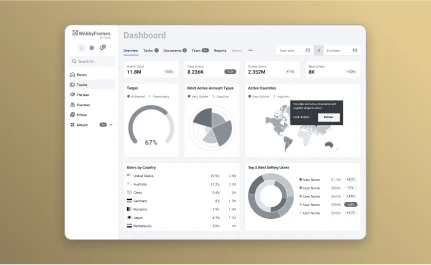
- Data-Driven Decisions: Integrated dashboards and clear visualizations enable timely strategic decisions
User-centric systems are also easier to scale. As organizations grow or change, modular, role-based interfaces can evolve without overhauling the entire application.
5. Proven Impact: What the Research Says
The benefits of user-centric software aren’t theoretical—they’re proven across industries:
- Google’s research shows that intuitive digital experiences increase trust and long-term engagement
- McKinsey found that organizations prioritizing UX in development see up to 50% fewer support calls and 60% faster deployment
- In a Stanford Medicine case study, hospitals that reengineered their IT tools with user input reported 50% higher satisfaction scores among clinicians
6. Building User-Centric Software: A Strategic Process
Creating user-centric systems requires more than visual design—it demands a strategic development approach:
- Stakeholder Discovery: Understand workflows, challenges, and goals
- Rapid Prototyping: Create wireframes and mockups based on real user behavior
- Iterative Feedback: Test with end users to uncover usability friction early
- Development: Build flexible, scalable software using agile, modular frameworks
- Post-Deployment Evolution: Analyze usage patterns and refine features based on real-world interaction
At Aryabh Consulting, this process is deeply embedded in how we approach both healthcare and enterprise software solutions.
Our Approach: From Alignment to Long-Term Value
We entered the software development space with a mission: to build solutions that solve real problems for real users. In highly regulated and high-impact industries like healthcare and enterprise IT, we’ve seen firsthand how misaligned software can hinder—not help—teams on the ground.
That’s why our consulting-first approach starts with understanding how your people work, and how systems can empower—not overwhelm—them.
We focus on:
- Contextual research and workflow analysis
- Intuitive, compliant system design tailored to diverse user roles
- Continuous improvement and post-deployment support to ensure evolving alignment with your goals
By staying close to users, we help organizations stay far ahead of disruption.
Final Thoughts: When Users Win, Everyone Wins
User-centric software isn’t just more pleasant—it’s more powerful. In healthcare, it leads to safer, faster, and more patient-focused care. In IT and enterprise settings, it enables smarter decisions, greater agility, and reduced friction across teams.
In a digital age where experiences shape outcomes, building software around your users isn't optional—it's essential.




























Sign in to leave a comment.