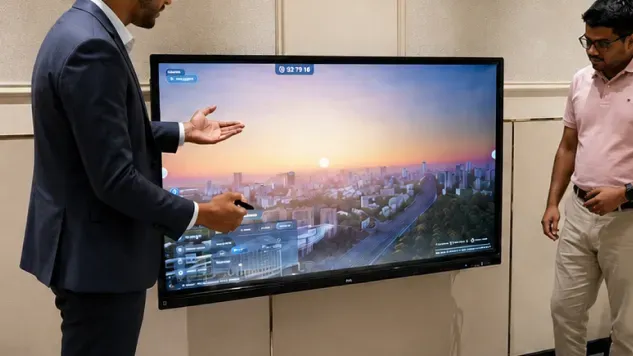

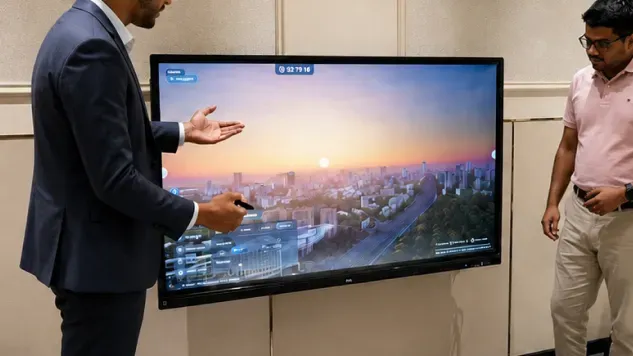
There's a particular silence that happens in a good sales gallery — the moment a buyer stops asking transactional questions like "what's the price per square foot" and starts asking emotional ones, like "what would it feel like to wake up here." That shift doesn't happen by accident. It happens when a gallery is designed as an experience, not a presentation. End-to-end proptech solutions that take this seriously don't just inform buyers — they move them.
Most sales galleries inform. Few actually move someone toward a decision they feel good about, not just one they can justify on paper.
Information Convinces the Mind. Experience Convinces the Heart.
A spec sheet can tell a buyer that a project has 35 lifestyle amenities and a 90,000 sq. ft. landscaped podium. What it can't do is make them feel the difference between owning an apartment and owning a life surrounded by green space, water features, and quiet. That emotional gap is exactly what undermines a lot of otherwise solid sales pitches — buyers leave informed but not moved, and "informed but not moved" rarely converts into a booking the same day.
Designing an Emotional Through-Line, Not Just a Feature List
When Puravankara entered Mumbai's luxury market with Purva Panorama in Thane, the project had every reason to lean purely on scale — three towers, 55 floors, 12.75 acres. But the most memorable element of the build wasn't a number. It was a tree.
The site's heritage banyan tree ecosystem was woven directly into the podium planning, and V-Estate's visualization made sure buyers didn't just hear about it — they experienced how sustainability, landscape, and luxury living were designed to coexist. That single design choice did more emotional work than any spec sheet could, because it told buyers something true about the development's character before a single word of marketing copy did.
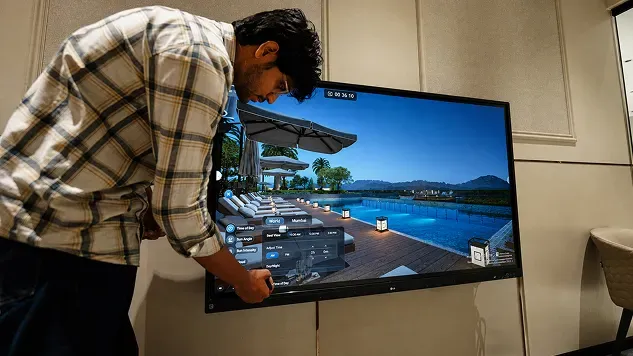
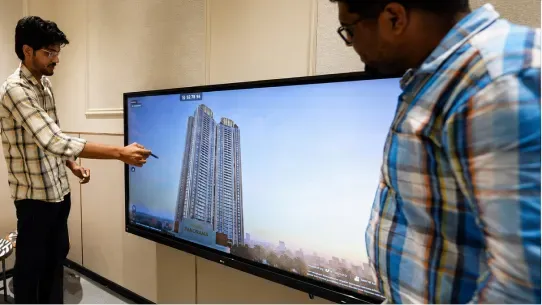
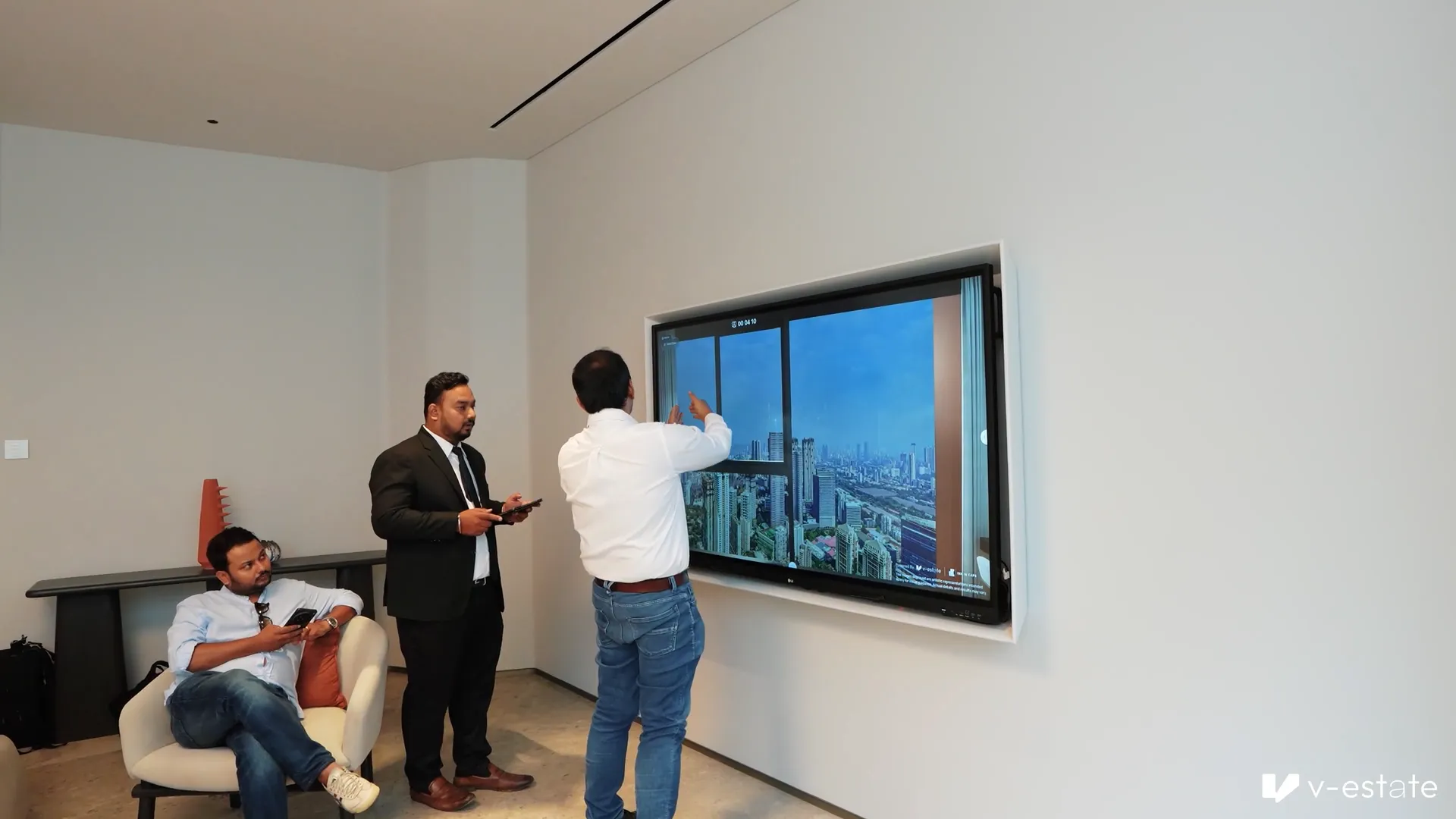
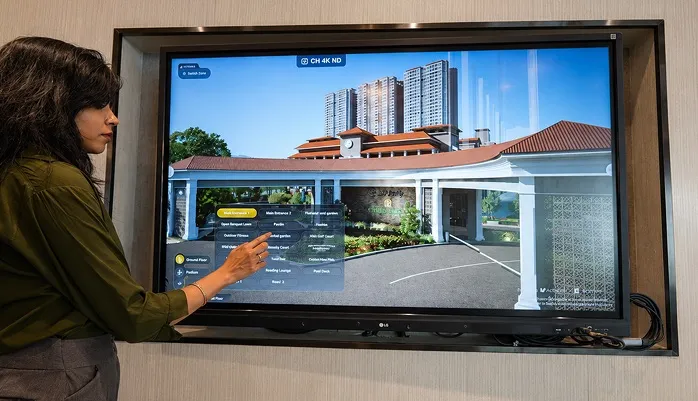
The amenities zone carried that same emotional intent forward. Garden residences within a high-rise tower are a genuinely difficult thing to sell on paper — most buyers associate "ground-connected living" with a bungalow, not a tower. V-Estate's immersive visualization let buyers experience that contradiction resolved: private garden-facing living, with full residential privacy, inside a vertical luxury development. The infinity pool with mountain-facing views and the elevated leisure decks weren't just shown — they were walked through, zone by zone, at the buyer's own pace.
Even the retail high street carried emotional weight, with the project's signature golden façade accents recreated through advanced photorealistic texture workflows — a detail that signals premium quality the instant a buyer sees it, long before a sales executive says the word "luxury."
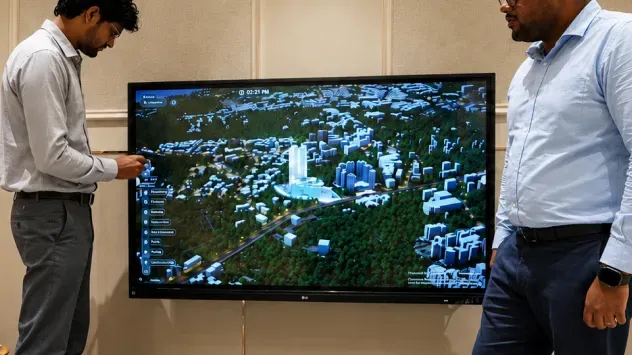
The result wasn't just admiration. It was momentum: 35+ high-intent interactive customer demonstrations conducted daily, and a stronger experiential foothold for Puravankara's debut in one of India's most competitive luxury markets. Read the complete experience design in the Purva Panorama case study.
Why "End-to-End" Means Emotional Consistency, Not Just Technical Coverage
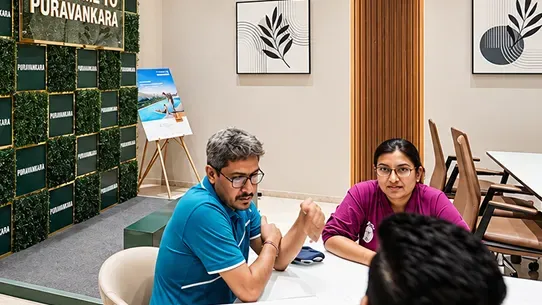
It's easy to assume end-to-end simply means covering more ground — architecture, amenities, retail, sales pods, all under one system. That's true operationally. But the deeper value is emotional consistency: every zone in the gallery reinforces the same feeling, instead of competing for the buyer's attention with disconnected information. As discussed in PropTech vs traditional sales: why interactive tools are winning the market, the developers pulling ahead aren't just adding interactive tools — they're using them to remove the gap between a buyer's imagination and the actual feeling of the finished space.
What This Means for How You Design Your Next Gallery
Before your next gallery build, ask a different question than "what features should we include." Ask: what's the one feeling we want every buyer to leave with? Then build every zone — architecture, amenities, retail, the closing conversation — to reinforce that same feeling, not just to display information about it.
That's the difference between a gallery buyers tour and a gallery buyers remember.
Want a sales gallery designed around how buyers should feel, not just what they should know? Book a demo with V-Estate and let's design an end-to-end experience your buyers genuinely connect with.
























Sign in to leave a comment.