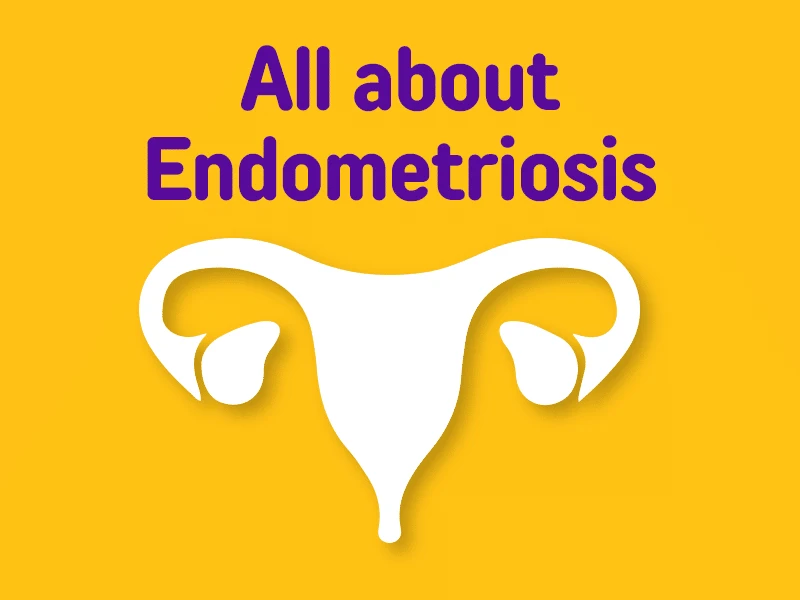

Endometriosis is a painful medical condition that affects females. It occurs when tissue similar to the tissue lining of the endometrium grows outside the uterus. Usually, the tissue affects the pelvic area but can be found anywhere in the body - especially in the ovaries, fallopian tubes, tissues that support the uterus and the outside of the uterus. It can also form in other places, such as the digestive tract, the lungs, and the area around the heart.
The endometrial-like tissue functions as endometrial tissue do. It grows, breaks down and bleeds with every menstrual cycle. But since this tissue has nowhere to go and exit from the body, it gets trapped into your pelvis. Your menstrual cycle's hormonal changes affect the misdirected endometrial tissue, causing it to become swollen and painful.
Endometriomas can form when endometriosis affects the ovaries. Surrounding tissue can become distressing, leading to the formation of scar tissue and adhesions — bands of fibrous tissue that can aggravate pelvic tissues and organs to stick together.
With endometriosis, one may experience mild to severe pain, specifically during the menstrual cycle and can face fertility problems. Overall, endometriosis can impact the quality of life because one may experience other things, other than pain, such as:
Medical costTrouble maintaining social life because of distressTrouble carrying a pregnancyStress, anxiety or depressionUnable to work with full concentrationEndometriosis - Symptoms
Some symptoms of endometriosis are:
Periods that extend over 7 daysBlood in urine or stoolLong term lower back or pelvic painHeavy bleedingProblems like constipation, bloating and diarrhoeaPain while urinating or bowel movementsPainful crampsPain while sexual intercourseNausea and vomitingSevere migrainesBleeding between periodsInfertilityFatigueSpotting between periodsThe most common sign of endometriosis is pain, but the intensity of the pain doesn't often correlate with the severity of the illness. The pain usually goes away after menopause, when the body stops producing oestrogen. However, if a woman uses hormone therapy during menopause, her symptoms may last longer. Symptoms may be alleviated temporarily during pregnancy.
Other Medical Conditions Similar to Endometriosis
Doctors may face trouble diagnosing endometriosis due to various reasons. A prevalent reason is, other medical conditions have similar symptoms like endometriosis. Such common medical conditions are:
Irritated bowel syndromePelvic inflammatory diseaseOvarian cystsEndometriosis - Complications
The complications related to endometriosis are:
Ovarian cystsHigher risk of ovarian cancer or adenocarcinoma (endometriosis-related)Scar tissue and adhesion growthInfertility, which can affect up to 50% of women with endometriosisBladder and intestinal concernsInflammationTracking symptoms and seeking support may aid in the prevention of long-term complications. Notify your doctor if you are in severe pain or experience unexpected bleeding.
Stages of Endometriosis
Endometriosis can be categorised into four stages depending on their size and location - thickness of endometriosis implants - presence and intensity of scar tissue - presence and size of the endometrial implants in ovaries. The stages are as follows:
Stage I- MinimalStage II- MildStage III- ModerateStage IV- SevereEndometriosis - Diagnosis
Your doctor may consider going for one or more ways to diagnose endometriosis. Here are some ways endometriosis can be diagnosed:
Medical History: The doctor will ask for your symptoms and ask if there is any personal or family history of endometriosis. To determine if there are any other signs of a long-term disorder or not, your doctor may conduct a general check-up.Physical Exam: At the time of the pelvic exam, your doctor will use a speculum and light to see the vagina and cervix from inside. The doctor will also consider manually touching your abdomen to check for cysts or scars behind the uterus.
Ultrasound: The doctor will use an abdominal ultrasound or transvaginal ultrasound for diagnosis. Both ultrasound types create images of your reproductive organs. They can aid your doctor in identifying cysts connected to endometriosis, but they cannot rule out the disease.
Laparoscopy: The only sure way to identify endometriosis is to look at it directly. This is actually achieved through a minimal surgical procedure identified as laparoscopy. The tissue can be removed in the same procedure once it has been diagnosed.
Endometriosis – Treatment
Endometriosis should never be left untreated since it can heighten the risk of major health problems. Even if there is no cure for endometriosis, you can manage the symptoms with the help of your doctor. Check out a few treatments to manage the symptoms of endometriosis:
Hormone Birth Control: You can use hormonal birth control to reduce the heavy menstrual bleeding caused due to endometriosis. Your doctor can advise you to take hormonal birth control pills for 3 or more months to prevent you from getting your period.
Pain Medicine: If your symptoms are minimal, your doctor will probably advise you to take nonsteroidal anti-inflammatory medications such as ibuprofen or naproxen.
Gonadotropin-Releasing Hormone (GnRH):GnRH agonists and antagonists are used by women to prevent oestrogen from stimulating the ovaries. Estrogen is the most important hormone in the development of female sexual characteristics. Menstruation is prevented by inhibiting oestrogen synthesis, resulting in artificial menopause.
Hormone Therapy: Hormone therapy helps your body in controlling the monthly hormonal fluctuations that promote tissue development in women with endometriosis. Supplemental hormones can lessen discomfort and slow down endometriosis growth in some cases.
Surgery: Conservative surgery is for women who want to become pregnant, have severe pain and have tried but failed hormonal therapies. Conservative surgery aims to remove or eliminate endometrial growths while protecting the reproductive organs.
Natural remedies:Some natural, alternative treatments and lifestyle choices may assist handle symptoms of endometriosis. They include acupuncture, herbal medicine, avoiding caffeine, counselling and regular exercise.
Endometriosis - Causes
Doctors cannot determine the actual cause of endometriosis. There are various explanations for the reasons behind endometriosis, and some of them are:
When the period blood flows backwards via your fallopian tubes into the pelvic cavity rather than leaving your body, a process named retrograde menstruation emerges and causes endometriosis. Some consider endometriosis is hereditary. Women having light menstrual periods or a longer than usual flows have greater chances of developing endometriosis. Many believe that hormones lead the cells outside the uterus to convert into endometrial cells. Surgical scars, like the ones left behind after C-section, can lead the menstrual blood to seep into the pelvic cavity. Another notion is that endometrial cells escape the uterus through the lymphatic system. Genetics and environmental factors can be a reason that causes endometriosis. Another popular belief is that endometriosis occurs when endometrial tissue develops in tiny parts of the abdomen because cells in the abdomen are made up of embryonic cells that modify the structure and behave like endometrial cells. A weak immune system may fail to kill endometrial cells.There can be many other factors that lead to endometriosis. As of now, science has not pinpointed an exact cause of endometriosis.
Endometriosis & Infertility
The most troubling complication related to endometriosis is infertility. Nearly one-third of women with endometriosis have trouble conceiving. For a pregnancy to emerge, an egg needs to be released from the ovary, travel through the fallopian tube, become fertile by a sperm and fix itself to the uterine wall to start growth.
Endometriosis can block the fallopian tube and keep the egg and sperm from connecting by causing inflammation, thus leading to fertilization problems. It can also cause the immune system to fight the embryo and make carrying pregnancy to full-term challenging.
However, an accurate diagnosis and a suited method can surely assist these women in conceiving. You can book your appointment at the best fertility clinic - Banker IVF. Their team of experts will provide true guidance and assistance to women with endometriosis who find trouble to get pregnant.



























Sign in to leave a comment.