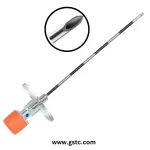

Effective pain management after major surgeries and childbirth is one of the top goals for medical professionals. The epidural needle, a highly specialised medical device, lies at the heart of medical treatment.
During my internship at a hospital, I witnessed an anesthesiologist getting ready for a cesarean. They checked the epidural needle carefully before they started, checked the depth markings, checked that the packaging was intact. “Why do you look so much at one disposable needle?” I asked, curious. They smiled and said, “A well-designed epidural needle makes catheter placement smoother and helps us work safely and confidently. "Little things can matter a lot to both doctor and patient." That moment taught me the importance of quality medical devices and their role in successful patient care.
An epidural needle: What is it?
A specialized, needle called an epidural needle is made specifically to reach the epidural space, which is a small, vital area that covers the spinal cord and is only a few millimeters broad. An epidural anesthesia needle must carefully pass through multiple layers of thick tissue and muscles without damaging the sensitive, deeper layers of the spine, in contrast to typical hypodermic needles used for everyday injections.
Why Pick Indian Producers of Medical Supplies?
Conformity to international standards: The top Indian exporters of epidural needles run cutting-edge facilities with ISO 13485 and CE certifications, ensuring that each production run complies with strict international healthcare standards.
Competitive Cost Structures: Suppliers provide highly competitive pricing models without material durability or medical safety by using domestic raw materials, skilled engineers, and effective supply chain networks.
Selection Standards for Purchasing Officers
Make sure your screening process checks the following boxes if you are assessing vendors for large orders:
Material Quality: The needle should be made of high-quality, medical-grade stainless steel.
Surgical Packaging Quality: Medical-grade packaging that can withstand long-term shelf storage and international transportation while maintaining a dependable sterile barrier.
Important Technical Features and Product Design
Leading producers of epidural needles create these devices with extremely thoughtful design features to ensure patient safety and usability:
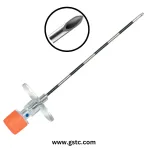
The Tuohy Bevel, or Curved Tip: The Tuohy bevel is a specialised tip used in needles. Instead of being sharply pointed, the tip is gently curled upwards. This special form helps put a flexible catheter into position at the right angle without damaging tissue and allows the needle to move easily past thick ligaments.
Clear Depth Markings: The medical professional can track the accurate depth of the needle's penetration in real time due to the clear, visible graduation markers on the needle's shaft, which are typically spaced one centimeter apart.
Tactile Feedback & Disposable Stylet: To keep tissue from blocking the open space during insertion, a solid inner core known as a stylet fits perfectly inside the needle. This arrangement guarantees that doctors may sense clear pressure changes, such as the weak "pop" when passing through the dense ligamentum flavum, providing them with instant sensation input.
Hub Translucent: The needle's back end, or hub, is usually completely transparent. This gives physicians a visual safety check by enabling them to quickly identify any cerebrospinal fluid (CSF) or blood flashback.
Principal Advantages of the Product for Clinical Use
Purchasing high-quality needles has several operational and clinical benefits for healthcare settings:
1. Improved Security for Patients
High-quality design guarantees that the needle tip strikes a balance between resistance and sharpness, significantly reducing the possibility of an accidental dural injury (also known as a "wet tap"), which can give patients painful headaches after the treatment.
2. Easy Catheter Installation
During difficult labour or surgical pain management settings, the polished inner lumen—ensures that secondary catheters flow through without pulling, fraying, or becoming cut.
Table of Technical Specifications
Needle sizes must be matched to certain patient demographics by medical purchasers. A typical breakdown of common sizes provided globally is shown below:
Gauge Needle (G)
Typical Lengths (inches/mm)
Hub Colour Coding for the Primary Patient Target
16 G 80 to 90 mm (3.5")
Standard Adults (Permits the insertion of a thicker catheter)
White, 18 G, 80–90 mm (3.5")
Most Common Adult Size (ideal flow and comfort balance)
Pink/Clear 20 G 50 mm to 90 mm Lean Adult or Child Patients Yellow
India's Strategic Role in Global Sourcing
South Asia is now the primary focus of international buying teams when it comes to purchasing high-volume, legal complied medical disposables. In particular, Indian producers of epidural needles have become significant global suppliers.
In conclusion
Modern pain management relies heavily on the epidural needle, in Gstc which demands the greatest levels of design intelligence and production precision. Every element affects patient outcomes, from the clarity of its hub to the angle of its curved bevel.


























Sign in to leave a comment.