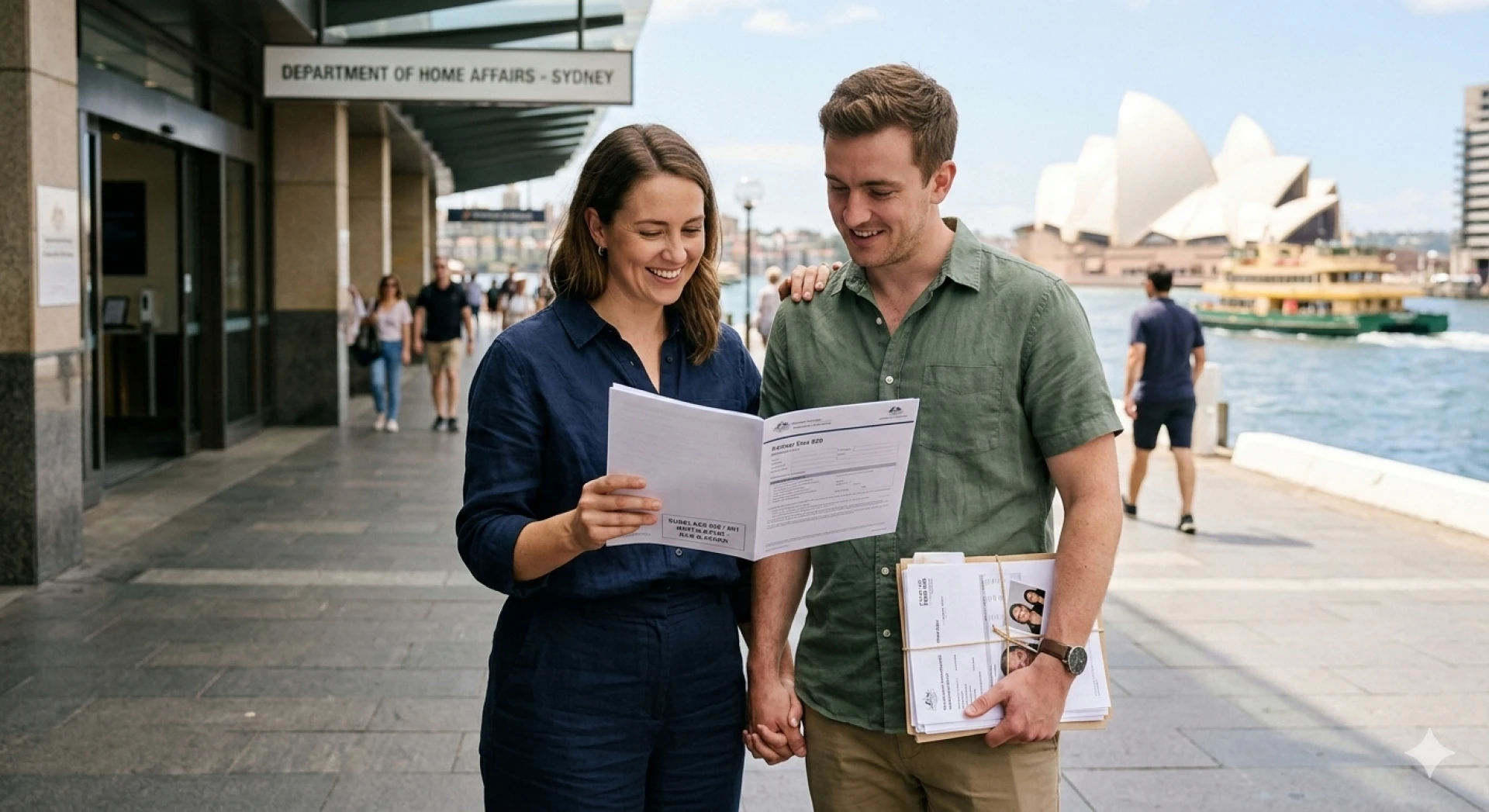

Partner visa 820 most likely, if you are in Australia — and want to have a permanent life with your Australian partner here — you will take the Partner visa 820 route. The visa is the first step in a two-step process that ultimately results in permanent residency.
Visa applications can feel overwhelming, even more so when your future together is at stake. However, when you factor it down into manageable parts and simple steps, it really is not that overwhelming at all. In this article, we will explain how the Partner visa Australia works exactly and what you need to do in preparation beforehand as well as on the way.
What is the Partner Visa 820?
Subclass 820 is a provisional visa. Spouse Visa Subclass 820 is a temporary visa in Australia spouse or de facto partner of an Australian citizen, Australian permanent resident or eligible New Zealand citizen to live in Australia while the Department of Home Affairs processes (permits) their (Permanent visa) subclass 801.
The key thing to note is you apply for the temporary (820) and permanent (801) visa together. You pay a single fee, submit a large stack of evidence and then wait for the two stages to be issued.
Key Benefits of the 820 Visa:
- While your application is processing, you can remain in Australia.
- You obtain unrestricted work and study rights.
- Medicare, which helps you pay your health care, to sign up for.
- You can come and go from Australia (albeit I think you need to check the conditions on your bridging visa).
Who We Can a Partner Visa Australia?
This is an onshore visa, meaning you must lodge your application in Australia and currently be physically present in Australia at the time. You also need a “sponsor” — that is your partner, and they have to be 18 or over.
The Department considers two broad categories of relationships:
Married Partners
Your marriage is to be legally recognized under Australian law. If you were married overseas and that marriage is legally valid in the country, it is usually recognized in Australia.
De Facto Partners
If you are not married, then you can apply as a de facto couple. Usually, you must demonstrate that you have cohabited for at least 12 months when you apply.
Note: If you do not have a full year of living together under your belt yet, you may qualify for the 12-month rule to be ignored by “registering” your relationship with an Australian state or territory government.
The Evidence of Relationships Four Pillars
Moreover, this is where most people get stuck. The government does not just take your word for it — they require evidence that your life is indeed “intertwined.” They view your relationship through four core “pillars.”
Financial Proof
They want to see you spreading the wealth. This could include:
- A joint bank account for groceries, rent and so on.
- Joint ownership of expensive items, such as a car or a house.
- Sharing a lease or mortgage.
- Utility statements (electricity, internet, water) for each of your names.
Household Life
How do you share running your home together? You can provide:
- By this point, you were getting mail at the same house.
- A statement describing how you divide the household chores (who cooks, who cleans, who shops).
- Proof that if you have children, you share responsibility for them.
Social Context
Does anyone else know you are a couple? Evidence here includes:
- Pictures of you, friends, and family over a long time.
- Joint invitation to a wedding/party.
- Travel proof (flight tickets/hotel bookings together).
- Form 888s: These are statutory declarations from Australian friends or family members who can attest to the fact that your relationship is genuine.
Nature of Commitment
This has to do with your plans. You might show:
- Wills where you leave things to one another.
- Listing each other as “next of kin” or beneficiaries on your super.
- Personal statements about how you met and your plans (buying a house, starting a family etc.).
How To Apply For Your Partner visa 820
- Current Visa Condition Check: Your current visa should not have "No Further Stay" condition. If it does so, you may need to get a waiver before being eligible to file for the 820.
- Gather Your Documents: Start early. Getting birth certificates, overseas police checks and bank statements takes time.
- Lodge Application: Very first this is done online via an Immi Account. You will submit your forms and pay the application fee (currently more than $9,000 as of 2026).
- Linking your Partner: Your partner must sign in and fill out an additional sponsorship form to connect with your application.
- Wait for a Decision: During this time, you will typically receive a Bridging Visa A (BVA). This enables you to remain lawful in Australia after your existing visa runs out.
Frequently Asked Questions Regarding Partner Visa Australia
How long does it take to get 820 visa?
This is the prediction in 2026 so processing times can change. For most applications, 12 to 22 months. If your application is “decision-ready” (you submitted everything up front), it may go faster.
What if we break up?
You must let the Department know if the relationship breaks down before the visa is granted. Nevertheless, there are provisions for “Family Violence.” If the relationship broke down due to domestic violence, you may still qualify a visa to remain in Australia.
Can I get PR immediately?
Normally, you must wait two years from the time of application to receive your permanent resident visa (Subclass 801). However, if you have been in a relationship for a significant period (generally 3+ years) or share children together the government may grant both the 820 and 801 simultaneously.
Last minute Tips for a Hassle-Free Application
So here is the thing, a Partner visa 820 application is more of a marathon than a sprint. The most common mistake people make is not enough” ongoing “evidence. Do not just post photos of your wedding; post that you have been splitting rent every month for a year now.
Organize your documents and be honest in what you say. If your history has gaps (such as two months of work-apart from each other), simply explain them in a straightforward manner. The Department wants a real story, not a perfect one.




























Sign in to leave a comment.