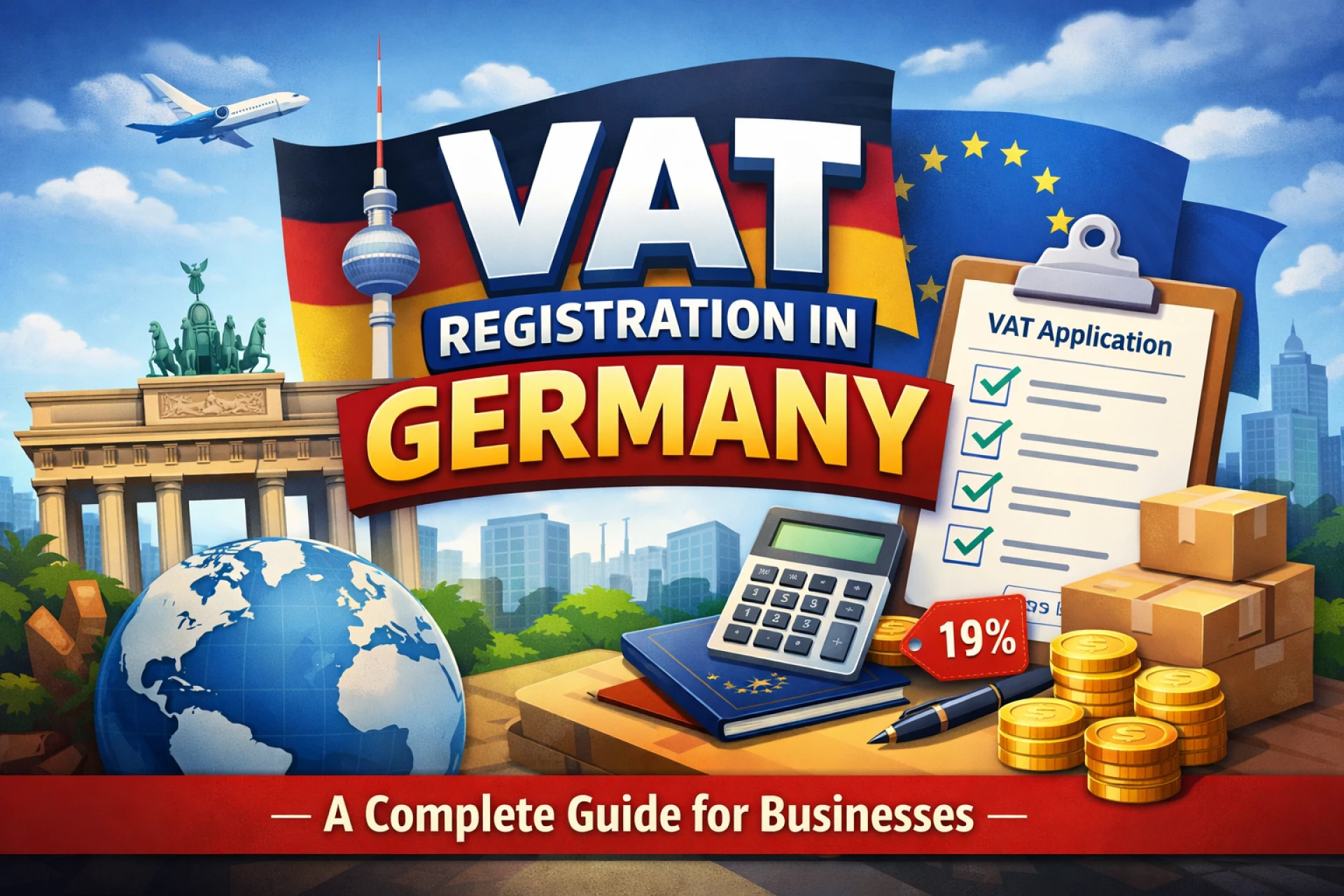

Expanding your business into Europe? Germany is one of the most lucrative markets in the European Union (EU) — but before you start selling goods or services there, understanding Value Added Tax (VAT) is essential. VAT is a consumption tax applied to most goods and services in Germany, and companies doing business in the country must ensure compliance to avoid fines, penalties, or sales disruptions.
In this comprehensive guide, we’ll explain everything about VAT in Germany — what it is, who needs to register, how to register, key compliance requirements, and common pitfalls international businesses should avoid. We’ll also share expert resources to help you navigate the process efficiently.
👉 For a full step-by-step walkthrough on how to register for VAT in Germany, check out this detailed guide.
What Is VAT in Germany?
Value Added Tax (VAT), called Mehrwertsteuer (MwSt) in Germany, is a tax levied on the purchase price of most goods and services. The tax is ultimately paid by the end consumer, but businesses must collect and remit it to the German tax authorities (Bundeszentralamt für Steuern).
The standard VAT rate in Germany is 19%, while a reduced rate of 7% applies to select goods and services (e.g., certain food items, books, newspapers, public transportation).
Important VAT rates in Germany:
- Standard rate: 19%
- Reduced rate: 7%
- Zero rate (0%): Applies to some specific export transactions
Who Must Register for VAT in Germany?
Whether your business needs to register for VAT in Germany depends on several factors:
1. You Sell Goods to Customers in Germany
If your business stores or sells goods to customers in Germany, you must register for VAT — even if you’re a non-EU company.
2. You Provide Digital Services to EU Consumers
Under the EU VAT rules for digital services, companies selling digital products or e-services (software, streaming, apps) to EU customers may need to register for VAT in Germany or use the One-Stop Shop (OSS) scheme.
3. You Exceed Distance Selling Thresholds
If your business sells goods from another EU country to customers in Germany and exceeds the German distance selling threshold (typically €100,000), VAT registration is required.
4. You are Importing Goods Into Germany
Importing goods into Germany means VAT needs to be handled at customs, and often a VAT registration is required.
Pro Tip: VAT registration rules can vary depending on your business model and the types of transactions you carry out. Getting professional help is often worth the investment.
How to Register for VAT in Germany (Step by Step)
Registering for VAT in Germany can be complex — especially for foreign businesses. Below is a high-level overview of what to expect:
Step 1: Determine Your VAT Registration Requirement
Analyze whether your business model triggers VAT registration in Germany. This step involves understanding:
- Where your customers are located
- Whether you store goods in Germany
- The type of products or services you sell
- Your expected sales volume
Step 2: Gather Required Documentation
Common documents needed for VAT registration include:
- Company registration documents
- Proof of business address
- Articles of association
- Passport copies of directors or authorized representatives
- Bank account details
Step 3: Submit the VAT Application
Foreign businesses must typically submit an application to the Bundeszentralamt für Steuern (German Federal Central Tax Office).
The process can take several weeks, and incomplete documentation can delay approval.
Step 4: Receive Your VAT Identification Number
Once approved, your business will receive a German VAT ID number (Umsatzsteuer-Identifikationsnummer). This number is essential for filing VAT returns and doing business legally in Germany.
Step 5: Start Charging VAT and Filing Returns
After registration:
- Charge VAT at the correct rate
- Issue compliant invoices
- File periodic VAT returns (monthly or quarterly depending on turnover)
- Remit collected VAT to the tax authorities
For a complete and detailed VAT registration guide, including document templates and filing tips, visit:
👉 https://easetocompliance.com/register-for-vat-in-germany/
Common VAT Compliance Challenges for International Businesses
Foreign businesses frequently face these issues when handling VAT in Germany:
❌ Misunderstanding Taxable Transactions
Different types of sales (B2B vs B2C, goods vs services) have unique VAT rules.
❌ Incorrect VAT Rates
Using the wrong tax rate can result in penalties or rejected VAT returns.
❌ Late Filing & Missed Deadlines
German tax authorities are strict about VAT reporting deadlines and electronic filing requirements.
❌ Lack of Proper Accounting Systems
Without the right invoicing and accounting software, tracking VAT collected and owed can become chaotic.
Best Practices for VAT Management in Germany
To stay compliant and optimize your VAT process:
✔️ Implement an Automated VAT Solution
Use accounting systems that automatically calculate and record VAT for each transaction.
✔️ Stay Informed About German VAT Law Changes
Tax regulations shift frequently — having a compliance partner can keep you up to date.
✔️ File VAT Returns on Time
Late submission can result in fines and interest charges.
✔️ Maintain Organized Records
German tax authorities can audit businesses going back 10 years — proper documentation makes these processes smoother.
Navigating VAT in Germany doesn’t have to be overwhelming — especially when you have the right support.
How Ease to Compliance can Help?
Ease to Compliance is a trusted regulatory compliance and business setup advisory firm that helps companies expand internationally with confidence. Their expertise includes:
- VAT Registration & Compliance in Germany
- International Tax Advisory
- Business Setup Services
- Accounting and Bookkeeping Support
- Ongoing Compliance & Reporting
Whether you are a startup, an established enterprise, or a foreign business entering the European market, Ease to Compliance provides tailored solutions that save time, reduce risk, and maximize compliance.
Their team provides end-to-end support from determining whether you need VAT registration to filing your first VAT return and maintaining compliance year-round.
VAT Registration Checklist (Quick Reference)
| Task | Status |
|---|---|
| Determine VAT registration requirement | ✅ |
| Prepare all legal and identity documents | ✅ |
| Submit VAT application to German tax authorities | ✅ |
| Receive VAT ID number | ✅ |
| Set up invoicing with correct VAT rates | ✅ |
| Register for electronic VAT filing | ✅ |
| File VAT returns on schedule | Ongoing 🚩 |
Final Thoughts
Registering for VAT in Germany is a critical step for any business planning to serve customers or store goods in Europe’s largest economy. The process involves careful documentation, timely filings, and an understanding of German tax rules.
However, with clear guidance, structured preparation, and the support from experts like Ease to Compliance, you can avoid common pitfalls and operate smoothly in the German market.
👉 For a complete, actionable VAT registration roadmap, visit:
https://easetocompliance.com/register-for-vat-in-germany/
Expanding internationally should be exciting not stressful. Let the right guidance make the difference.




























Sign in to leave a comment.