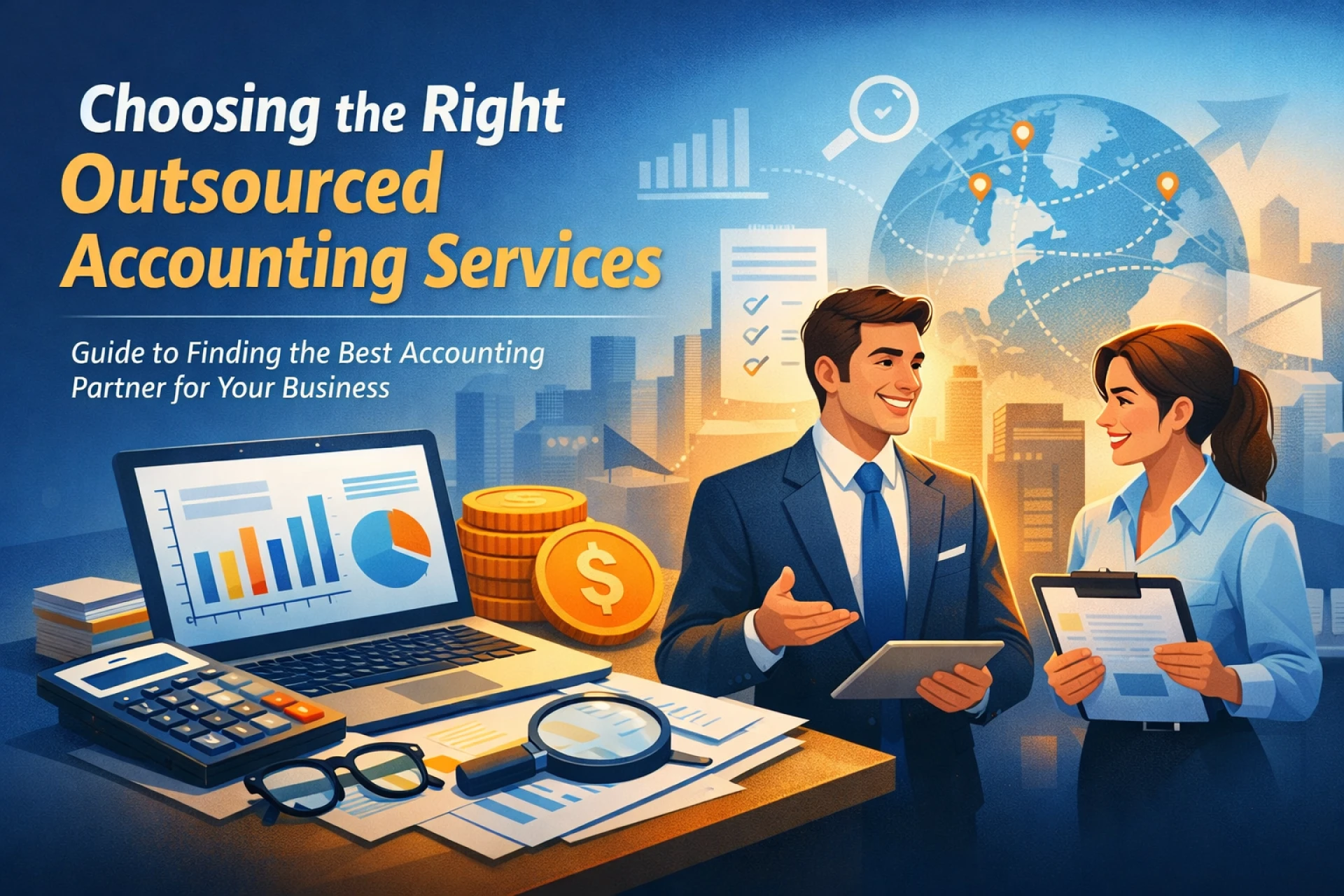

As businesses grow, financial management becomes more complex. Invoices multiply, compliance requirements increase, payroll expands, and reporting expectations rise. For many founders and finance leaders, managing all of this internally becomes inefficient and costly. That is why more businesses today are choosing to outsource their accounting function.
However, outsourcing accounting is not just about cost savings. Choosing the right accounting outsourcing partner can improve accuracy, strengthen compliance, enhance financial visibility, and free leadership to focus on strategy and growth.
This article explains what outsourced accounting is, why companies adopt it, and how you can select the right outsourcing partner for your business.
What Is Outsourced Accounting?
Outsourced accounting means delegating part or all of your accounting and finance functions to an external professional firm. These functions may include:
- Bookkeeping and transaction recording
- Payroll processing and statutory filings
- Tax compliance and reporting
- Financial statement preparation
- Budgeting and forecasting support
- Virtual CFO and advisory services
Instead of hiring a full in-house accounting team, businesses work with specialists who deliver these services remotely, securely, and on a contractual basis.
Why Businesses Are Outsourcing Accounting
The adoption of outsourced accounting is driven by several structural shifts:
1. Cost Efficiency
Hiring experienced finance professionals internally involves salaries, benefits, infrastructure, and ongoing training costs. Outsourcing converts these fixed costs into flexible operational expenses.
2. Access to Expertise
Outsourcing firms typically employ specialists across taxation, compliance, reporting standards, and industry verticals. This gives businesses access to skills they would otherwise struggle to hire.
3. Scalability
Outsourced services can scale up or down as your business grows, enters new markets, or faces seasonal fluctuations.
4. Improved Compliance
Accounting and tax regulations change frequently. Outsourced firms stay updated on regulatory changes and ensure filings and reporting remain compliant.
5. Focus on Core Business
By delegating financial operations, founders and leadership teams can focus on revenue growth, product development, and customer acquisition.
Key Factors to Consider When Choosing an Outsourced Accounting Partner
Selecting the right accounting partner is a strategic decision. The wrong choice can lead to compliance risks, inaccurate reporting, and operational friction. Here are the most important factors to evaluate.
1. Industry Experience
Your accounting partner should understand the regulatory and operational nuances of your industry — whether it is manufacturing, IT services, startups, ecommerce, or professional services. Industry familiarity leads to better structuring, tax efficiency, and compliance.
2. Range of Services
A strong partner should offer more than basic bookkeeping. Look for a firm that provides:
- Accounting and bookkeeping
- Tax filing and compliance
- Financial reporting and MIS
- Audit and regulatory support
- Advisory and CFO-level insights
This ensures continuity as your business grows.
3. Technology and Security
The firm should use secure, cloud-based accounting systems, automated workflows, and data protection protocols. This ensures real-time visibility, faster reporting, and protection of sensitive financial data.
4. Compliance Knowledge
Your partner must have strong knowledge of local and international regulations, especially if you operate across borders. This includes GST, VAT, corporate tax, transfer pricing, and statutory filings.
5. Communication and Responsiveness
Accounting is not just transactional — it is advisory. Choose a firm that communicates clearly, provides timely reports, and responds proactively to questions and issues.
How to Start the Selection Process
Before engaging with an outsourced accounting firm, define your internal needs:
- What functions do you want to outsource?
- What level of reporting and control do you need?
- Do you require domestic or international compliance support?
- Do you need advisory and strategic finance support or only execution?
Once these are defined, compare providers on expertise, service scope, reputation, and scalability.
A detailed guide on evaluating providers and structuring outsourcing effectively is available in this resource on choosing the right outsourcing accounting services, which outlines practical steps for businesses considering outsourcing.
Risks to Avoid
While outsourcing is beneficial, businesses should avoid:
- Choosing solely based on low price
- Working with providers who lack regulatory depth
- Failing to define service scope and deliverables clearly
- Ignoring data security and confidentiality standards
Clear contracts, defined KPIs, and periodic reviews help ensure long-term success.
Final Thoughts
Outsourced accounting is no longer just a cost-saving tool. It is a strategic lever that supports compliance, improves financial transparency, and enables business growth. The right partner acts as an extension of your finance team — not just a vendor, but a trusted advisor.
By carefully evaluating expertise, technology, compliance strength, and service quality, businesses can unlock the full benefits of accounting outsourcing and build a scalable, resilient financial foundation.





























Sign in to leave a comment.