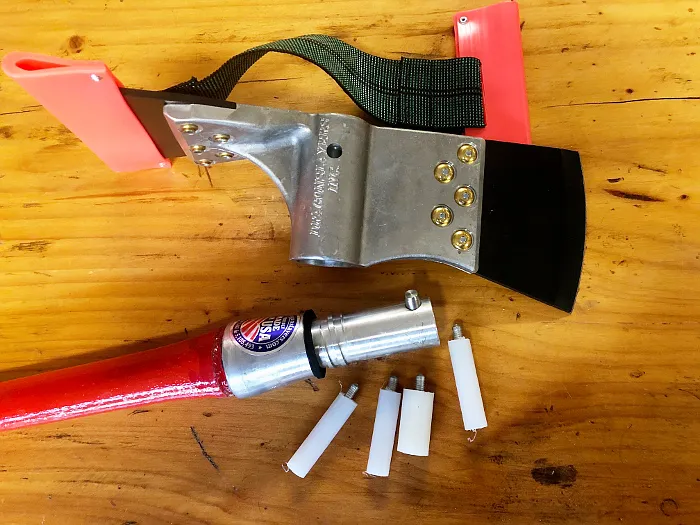

Reliable professional firefighting tools matter more than most people realize until they spend time around real wildfire work. I used to think durability was the main thing that separated quality equipment from average gear. Over time, I learned the real difference often comes down to balance, adaptability, and how equipment performs after long hours in rough conditions.
That shift in perspective happened gradually. Crews today deal with longer fire seasons, harder terrain, and faster operational transitions than many people outside the industry understand. Equipment that feels fine during a short demonstration can become frustrating after several demanding days in the field. Viewed from a broader perspective, this explains why many professionals now evaluate wildfire tools less like simple purchases and more like long-term operational assets.
Why Professional Firefighting Tools Are Evaluated Differently Today
Most people assume wildfire equipment decisions revolve around strength alone. Field experience tends to change that view pretty quickly.
Wildfire operations are physically repetitive. Digging line, clearing brush, scraping debris, and moving across uneven ground all place constant stress on both the firefighter and the equipment. Small design flaws become much more noticeable after several hours of repetitive movement.
One firefighter once compared poor equipment to wearing uncomfortable boots on a long hike. Everything technically still works, but energy drains faster than expected.
That analogy stuck with me because it perfectly describes the difference between average tools and thoughtfully designed ones.
Professionals often look closely at:
- Weight distribution
- Grip stability
- Ease of transport
- Multi-function capability
- Replaceable high-wear parts
Many assume cutting power is the real differentiator. In practice, fatigue reduction and operational flow often matter just as much.
How Wildfire Equipment Manufacturers Are Responding to New Conditions
Longer fire seasons are forcing many wildfire equipment manufacturers to rethink older design priorities.
Traditional wildfire tools were often built around single-purpose tasks. Crews carried separate tools for chopping, scraping, digging, or clearing. That approach still works in some situations, but modern wildfire operations increasingly reward versatility.
More tools are now being designed to:
- Reduce carrying weight
- Improve mobility on steep terrain
- Transition quickly between tasks
- Support easier maintenance cycles
Experiences like this reveal a broader industry pattern. Wildfire response is becoming more efficiency-focused, especially as agencies continue balancing staffing shortages with growing operational demands.
One thing I did not fully appreciate before spending time around wildfire operations was how important transport efficiency becomes. Crews may hike significant distances before work even begins. Every pound matters eventually.
Why Wildland Fire Equipment Needs to Work Beyond Emergency Response
One of the more interesting shifts happening in the industry involves how wildland fire equipment is being used outside direct suppression work.
Prescribed burns, fuel mitigation programs, habitat restoration, and vegetation management projects now overlap heavily with wildfire preparedness. That means tools are expected to perform across a wider range of conditions than before.
This changes the evaluation process considerably.
A tool designed only for emergency suppression may not work efficiently during slower, precision-focused land management operations. On the other hand, equipment built with flexibility in mind often becomes more valuable over time.
Over time, a larger trend becomes apparent across the industry. Wildfire management is increasingly tied to year-round landscape stewardship rather than isolated seasonal emergencies.
That shift is influencing equipment expectations in subtle but important ways.
What I Noticed About Crew Confidence and Equipment Reliability
One thing rarely discussed outside wildfire circles is the psychological side of dependable equipment.
Reliable tools create rhythm. Crews move more confidently when equipment behaves predictably under stress. That consistency becomes especially important during long operational periods where physical fatigue and mental pressure build simultaneously.
I remember watching a crew transition between scraping line and clearing vegetation almost without speaking. Their movements looked efficient, almost automatic. Later, one firefighter mentioned that reliable equipment reduces hesitation because people stop second-guessing whether tools can handle the task.
Professionals often notice subtle details that make all the difference.
That observation stayed with me because it highlighted something larger. Reliability is not only mechanical. It also affects decision-making speed and operational confidence.
Why Lifecycle Thinking Is Becoming More Important
Equipment pricing conversations can sometimes miss the bigger picture.
Lower-cost tools may appear attractive upfront, yet repeated replacement cycles quietly create their own operational problems. Downtime, maintenance interruptions, and inconsistent field performance all affect productivity over time.
This is why many experienced buyers now evaluate wildfire tools through a longer lens.
Important considerations often include:
| Equipment Factor | Long-Term Impact |
|---|---|
| Replaceable components | More predictable maintenance |
| Strong handle construction | Fewer mid-season failures |
| Multi-function design | Reduced carrying load |
| Compact storage | Faster deployment logistics |
Viewed strategically, the best tools often reduce friction rather than simply adding features.
That distinction feels increasingly important as wildfire operations become more demanding each year.
How Workforce Changes Are Influencing Tool Design
Wildfire operations are also experiencing workforce shifts that rarely receive enough attention.
Many experienced firefighters are retiring while newer crews enter environments that are more physically and operationally demanding than before. That reality is pushing equipment design toward simplicity, ergonomics, and adaptability.
Several trends are becoming easier to notice:
- Greater focus on reducing repetitive strain
- More compact equipment systems
- Increased interest in modular designs
- Better compatibility across different operational roles
Many clients assume innovation always means adding complexity. In wildfire operations, simpler and more intuitive equipment often performs better under pressure.
That may become even more important over the next several years as wildfire response environments continue evolving.
What Ultimately Changed My Perspective
Before spending time around wildfire professionals, I mostly viewed tools as static objects. Something either worked or it did not.
Now I see wildfire equipment differently.
Reliable professional firefighting tools influence movement, endurance, confidence, and operational efficiency in ways that are easy to overlook from the outside. Small improvements in balance, adaptability, and long-term usability can shape how smoothly an entire crew operates during difficult conditions.
Viewed from a broader perspective, this reflects a larger change happening across wildfire management itself. Preparedness is no longer centered only on emergency response. It increasingly involves long-term resilience, smarter land management, and equipment systems designed to support both.
That shift explains why conversations around wildfire equipment manufacturers and modern wildland fire equipment have become far more strategic than they once were.

























Sign in to leave a comment.