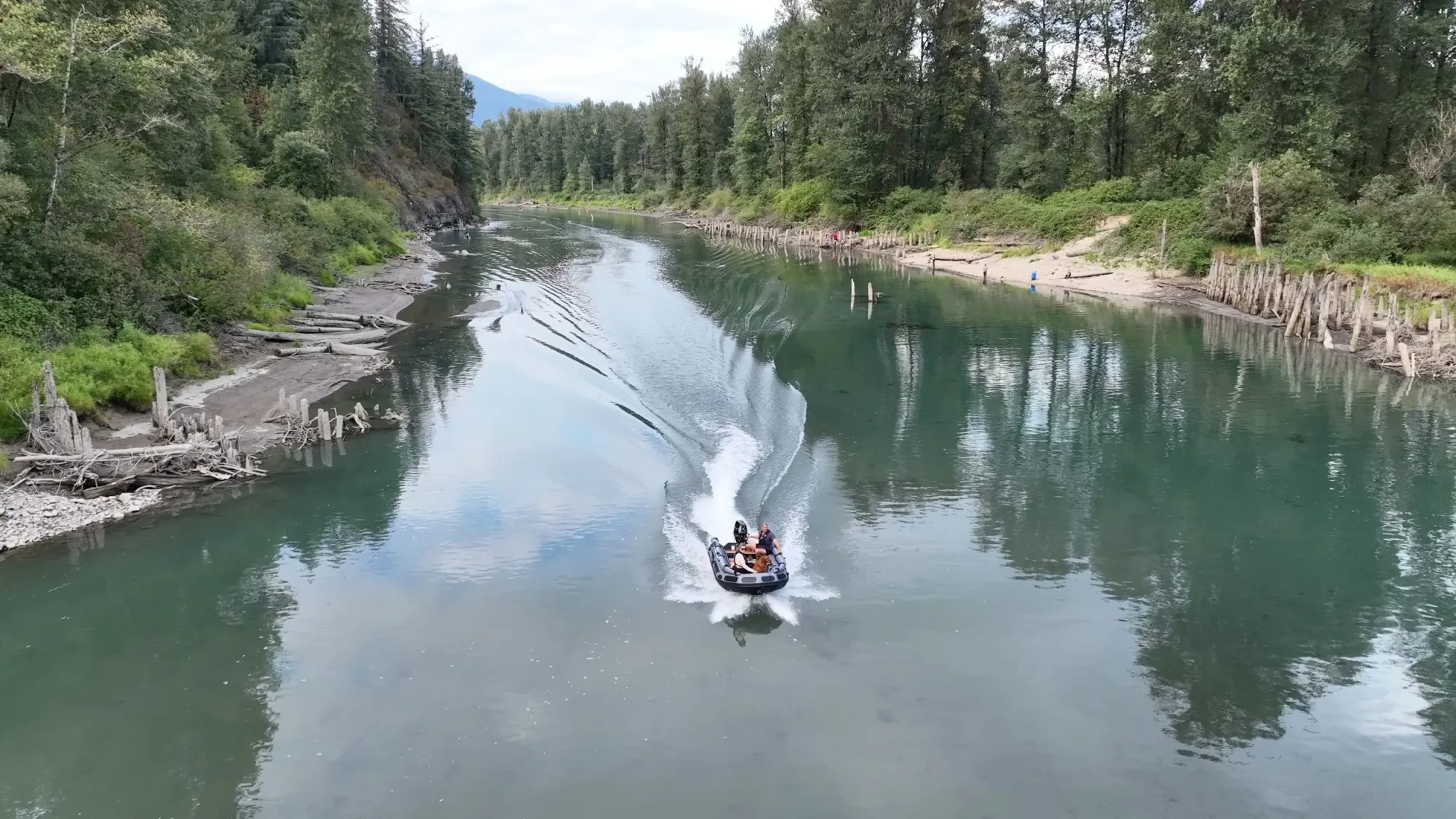

Would you really risk your life, your dog, a bull moose quarter, and your 40 hp jet through six inches of glacial silt at dawn in a $2k aluminum skiff? Most boaters would not, which is exactly why the backcountry has been going so heavily to the abuse-proof inflatable. The "which hull" question hinges on three factors: low-water ability, load-carrying capacity, and portability. Two new designs stand out in field tests: the jet tunnel inflatable hunting rig and the heavy-duty inflatable hull.
Why Shallow Water Changes Everything
Backcountry rivers aren't lakes. Props and keels can get damaged by braided streams, sweepers, and rock gardens. Standard jon boats need at least 12-14 inches of water. However, an impounded jet tunnel lowers this to 4-6 inches. It does this by moving the inlet into the hull, protecting it from gravel. This allows the boat to glide over riffles without cavitating.
Weight is a factor, also. A 15-foot aluminum jet sled dry weighs 600-800 lbs dry. An inflatable of comparable size with a thermo-welded seam and an aluminum transom weighs less than 250 lbs, fits in the bed of a pickup, and inflates in 12 minutes. For fly-in hunts in Alaska or the Idaho backcountry, this alone is the difference between going and not.
How a Jet Tunnel Inflatable Hunting Hull Works
A jet tunnel inflatable hunting boat uses an inflatable collar at high pressure along with a solid tunnel embedded within the floor. The Stryker PRO 470, sold by Valhalla Vessels, uses German Mehler fabric. It features thermo-welded seams and a full TPU bottom wrap. This design boosts its abrasion resistance. The 20-inch transom is solid aluminum, welded from one piece, and was designed with jet outboards in mind.
The tunnel does it all. It pulls water into the jet foot, keeping it primed even in shallow water. Jetech LLC's patented tunnels measure 13-16 feet and use 25-50 hp jets. They are perfect for Alaska moose hunts for this reason.
What to Check Before You Buy
- Fabric & welds: Look for PVC or TPU between 1.5-1.8 mm, with thermo-welded, rather than glued, seams. Welded seams do a much better job of holding air through a 20-degree-F to +120-degree-F range.
- Bottom protection: A UHMW or TPU shield covers the entire length of the runners, providing an anti-puncture layer on the shale bottom.
- Load capacity: The PRO 470 has a rating of 2,998 pounds, providing sufficient capacity for four hunters, equipment, and meat.
- Transom height: If running a short shaft jet, you need 20 inches of transom height; if running a prop kicker, you need 25 inches.
When You Need an Extended Heavy-Duty Inflatable
Some hunts aren't a race to the finish line. During multi-day, wall-tent, stove-cooking, game-carting float trips, duration = stability & capacity. A sturdy inflatable in the 16-17 foot range, like the Swellfish FS Jet 500 XL (16' 8"), boosts buoyancy and deck space without adding draft.
Longer hulls are easier to track in windy conditions, essential on large, open bodies of water such as Iliamna or Yellowstone lakes. These usually include 4 or 5 chambers and, often, V-hulls for better tracking and 4-5 chambers for security. All have full EVA foam decks for stealth when approaching fish, but they require more space to pack; you'll probably need a trailer or raft trailer.
Rigging for Hunt Success
A backcountry boat is a tool, not a toy. Here are priorities:
- Motor Matchup: For 14- to 16-foot boats, a 35 to 50-horsepower jet is best. It offers great punch for planning. Plus, it won’t porpoise and gives enough power to avoid getting stuck in shallow water.
- Fuel capacity: Pack 12 to 18 gallons of Rotax fuel to run a 60- to 80-mile round trip; jets consume 15-20% more fuel per mile than props.
- Accessories: Like the PRO 470, it has eight Scotty-style mounting bases. You can easily add rod holders, camera mounts, or gun racks. Plus, you won’t damage the boat.
- Launch assistance: Transom wheel mounts help reduce back pain at gravel launch sites.
- Safety equipment: Use a kill switch at all times, wear inflatable PFDs, and carry a sat comm.
To Sum Up
To outfit for the backcountry; outfit for the worst water, not the best water. A dedicated jet tunnel rig has a shallow draft and impact protection, reaching places an aluminum boat can't. An extended heavy duty inflatable offers the capacity and stability needed for a loaded trip. Choose the hull and mission, check the fabric, welds, and transom, and outfit to be self-sufficient.
For hunters and fishermen who need German material, Stryker Shield, and actually run jets, they provide stout inflatables like the Stryker PRO 470 at Valhalla Vessels. Let Valhalla Vessels help you choose, rig, and support a boat designed for shallow water and heavy loads. You should be hunting, not fixing your boat.
FAQs
How shallow will a jet tunnel run?
It seems that the best quality tunnels remain on a plane with a light load and a clean intake of 4-6 inches.
Can I run a prop on a tunnel hull?
Yeah, but performance isn't so great. Tunnels work better for jets.
What is the lifespan of thermo-welded PVC?
8-12 years if kept properly, compared to 4-6 years for glued seams.
























Sign in to leave a comment.