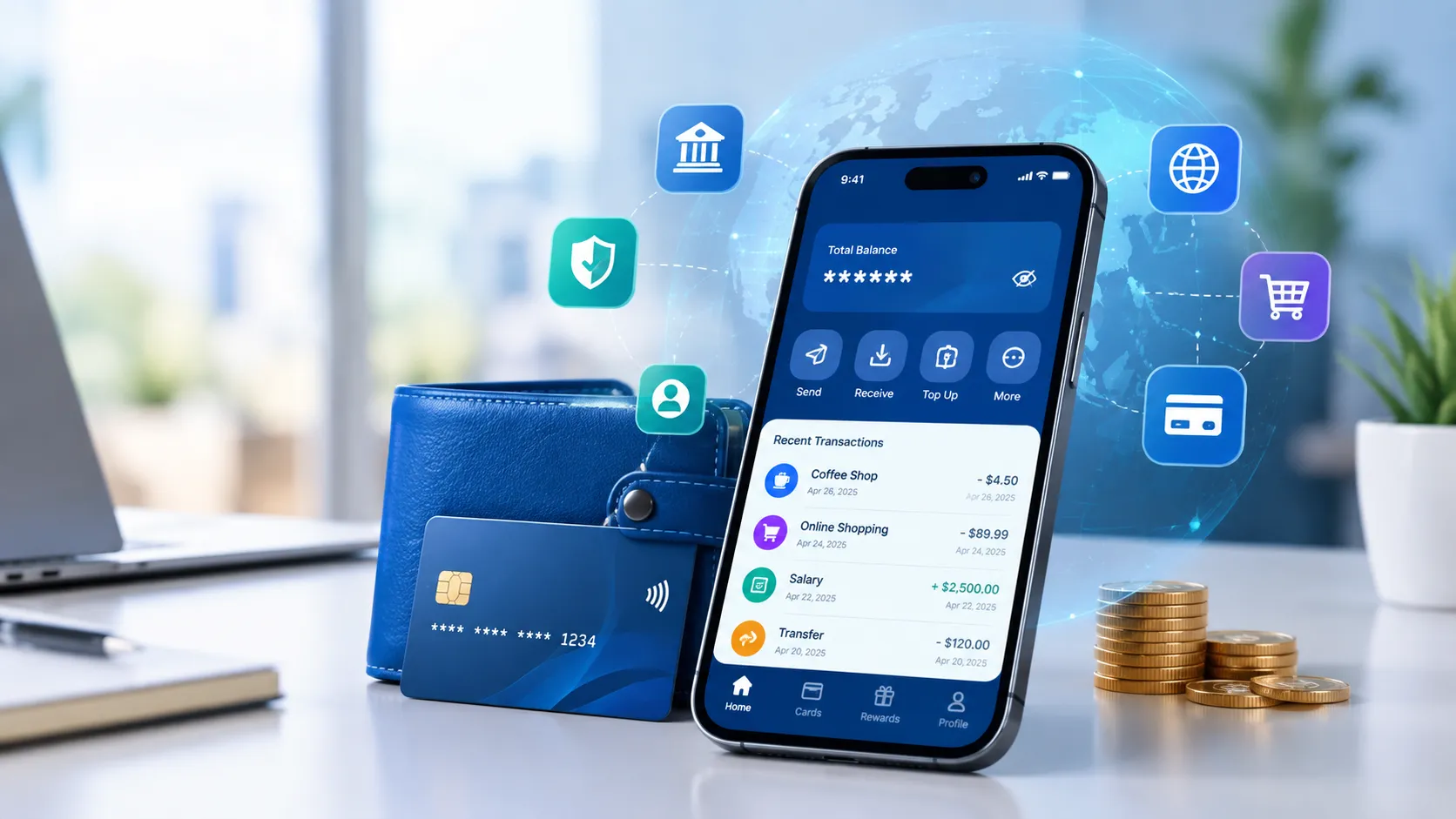

Digital payments have become an essential part of modern financial services, creating strong opportunities for FinTech startups to launch secure, convenient, and scalable eWallet platforms. From peer-to-peer transfers and mobile payments to bill payments and digital banking integrations, an eWallet can help startups deliver multiple financial services through a single application.
However, building a successful digital wallet requires more than creating a mobile interface. Startups need secure payment infrastructure, identity verification, transaction management, fraud prevention, third-party integrations, and a scalable technology architecture. This is where choosing the right eWallet App Development Company becomes important.
What Is eWallet App Development?
eWallet app development involves designing and building a digital platform that allows users to securely store payment information, transfer funds, make purchases, receive money, pay bills, and manage financial transactions through mobile or web applications.
A typical eWallet ecosystem includes three major components:
- User application for payments, transfers, wallet management, and transaction history
- Merchant or service-provider interface for accepting and managing payments
- Admin dashboard for monitoring transactions, users, KYC verification, disputes, and platform operations
For FinTech startups, custom eWallet development provides greater flexibility to create features and workflows around their target market rather than depending entirely on generic payment solutions.
Why FinTech Startups Need Custom eWallet Development
The FinTech market is highly competitive, and users increasingly expect fast, secure, and seamless digital payment experiences. A customized wallet platform allows startups to differentiate their products through specialized financial services.
An experienced eWallet App Development Company can help startups build solutions with features such as:
- Digital wallet creation and management
- Instant money transfers
- Peer-to-peer payments
- Bank account integration
- Debit and credit card integration
- QR-code payments
- Bill payments
- Merchant payments
- Recurring payments
- Transaction history
- Multi-currency support
- Push notifications
- KYC and identity verification
- Biometric authentication
- Fraud monitoring
- Admin and reporting dashboards
Startups can also integrate APIs from banks, payment processors, identity verification providers, and financial data platforms to create a broader financial ecosystem.
Key Features of a FinTech eWallet App
Secure User Authentication
Security should be a core component of every financial application. Modern eWallet platforms can use passwordless authentication, OTP verification, biometrics, device authentication, and multi-factor authentication to protect user accounts.
KYC and Identity Verification
KYC workflows help financial platforms verify customer identities before providing regulated financial services. Depending on the market and business model, startups can integrate third-party identity verification and compliance providers.
Multiple Payment Options
Users expect flexibility when making payments. An eWallet can support cards, bank transfers, QR payments, payment gateways, and other supported payment methods.
Peer-to-Peer Transfers
P2P payments allow customers to send and receive funds directly through the application. Real-time notifications and transaction tracking can make the experience faster and more transparent.
Transaction Management
Users should be able to view completed, pending, failed, and refunded transactions. Admin teams can also use transaction management tools to monitor platform activity and resolve disputes.
Fraud Detection
Financial applications require strong risk-management capabilities. Rule-based monitoring, transaction limits, device intelligence, behavioral analysis, and AI-based fraud detection can help identify suspicious activities.
Admin Dashboard
A centralized dashboard allows administrators to manage users, transactions, KYC status, payment methods, fees, disputes, reports, and other operational functions.
eWallet App Development Cost
The eWallet App Development Cost depends on several factors, including application complexity, number of platforms, integrations, security requirements, UI/UX complexity, development location, and regulatory requirements.
A basic wallet MVP with account creation, wallet management, transfers, transaction history, notifications, and an admin panel will generally require less development effort than a full-scale FinTech platform supporting multiple currencies, advanced compliance, merchant payments, lending, investment features, and sophisticated fraud prevention.
Key factors affecting eWallet development cost include:
- Number of platforms: iOS, Android, and web
- UI/UX design requirements
- Backend architecture
- Payment gateway integrations
- Banking and financial APIs
- KYC/AML integrations
- Security and authentication
- Multi-currency functionality
- Admin dashboard requirements
- Third-party integrations
- Testing and quality assurance
- Cloud infrastructure
- Post-launch maintenance
For startups, an MVP-first approach can help reduce initial investment and validate the product before expanding into advanced financial features.
Technology Stack for eWallet Development
The technology stack should be selected according to the wallet's scalability, security, integrations, and performance requirements.
A modern eWallet may use technologies such as Flutter or React Native for cross-platform mobile development, while React, Node.js, Python, or other backend technologies can support web and server-side functionality. Cloud platforms such as AWS can provide scalable infrastructure.
APIs and SDKs are particularly important because eWallet platforms often need to connect with payment gateways, banking systems, KYC providers, notification services, analytics platforms, and fraud-prevention tools.
eWallet MVP Development for Startups
Building an MVP is often a practical approach for early-stage FinTech companies. Instead of launching every possible feature at once, startups can focus on the functionality required to validate their business model.
A typical eWallet MVP can include:
- User registration and authentication
- Digital wallet creation
- Add-money functionality
- Money transfers
- Payment processing
- Transaction history
- Notifications
- KYC verification
- Basic security controls
- Admin dashboard
Once the MVP gains traction, startups can introduce additional capabilities such as merchant payments, international transfers, loyalty programs, financial analytics, lending, insurance, or investment services.
How On-Demand App Development Solutions Support FinTech
Modern On-demand app development Solutions are not limited to food delivery, transportation, or home services. The same scalable development principles can be applied to FinTech platforms that require real-time transactions and personalized digital experiences.
For example, an on-demand financial application can connect users with payment services, financial products, merchants, or service providers through a centralized mobile platform. Real-time notifications, location-based services where relevant, automated workflows, and API integrations can further improve the customer experience.
For startups planning to combine financial services with marketplace or on-demand business models, integrating eWallet functionality into a broader on-demand platform can create additional revenue opportunities.
How to Choose an eWallet App Development Company
Choosing a development partner is one of the most important decisions for a FinTech startup. Instead of evaluating companies only on development price, startups should consider their technical capabilities, financial technology experience, security practices, integration expertise, and post-launch support.
Look for an eWallet App Development Company that can provide:
- FinTech application development expertise
- Secure backend architecture
- Payment gateway integration
- Banking API integration
- KYC/AML integration experience
- Scalable cloud infrastructure
- Strong QA and security testing
- Custom UI/UX development
- MVP development capabilities
- Long-term maintenance and support
The development partner should also understand that financial applications require careful consideration of security, compliance, data protection, and transaction reliability.
Final Thoughts
An eWallet can become a powerful digital product for FinTech startups looking to simplify payments and create new financial experiences. From P2P transfers and digital payments to merchant transactions and financial integrations, a well-designed wallet can support multiple revenue-generating opportunities.
Selecting the right technology stack, starting with an MVP, and working with an experienced eWallet App Development Company can help startups move from concept to market more efficiently.
For businesses combining payments with marketplaces or service platforms, On-demand app development Solutions can further expand the functionality and scalability of the overall product. With the right strategy, security architecture, and development partner, startups can build an eWallet platform designed for long-term growth.





















Sign in to leave a comment.