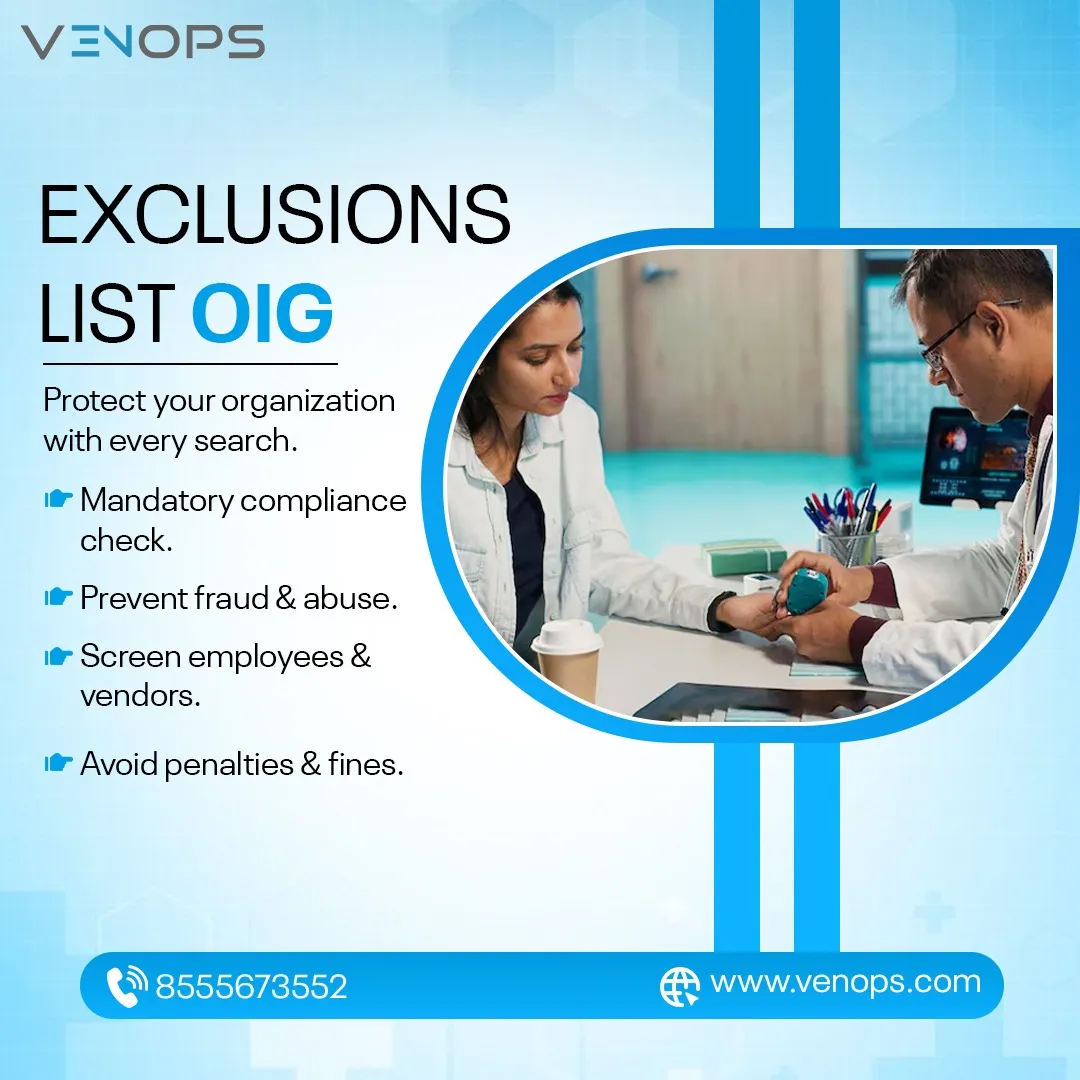

The healthcare industry in the United States operates under strict compliance regulations. Hospitals, clinics, pharmacies, insurance providers, medical staffing agencies, and healthcare vendors must follow federal rules to avoid fraud, abuse, and financial penalties. One of the most important compliance processes today is conducting regular Exclusions List OIG searches and OIG checks.
Organizations that fail to monitor OIG excluded individuals or entities can face serious legal consequences, financial losses, and reputational damage. This is why healthcare companies across the United States are investing in advanced compliance and exclusion screening solutions.
Platforms like Venops help healthcare organizations automate compliance monitoring, simplify exclusion checks, and reduce compliance risks.
What is the Exclusions List OIG?
The Exclusions List OIG is a federal database maintained by the Office of Inspector General (OIG) under the U.S. Department of Health and Human Services (HHS). The list contains individuals and entities that are excluded from participating in federally funded healthcare programs such as Medicare and Medicaid.
When a person or organization becomes OIG excluded, healthcare providers are prohibited from hiring, contracting, billing, or working with them in connection with federal healthcare programs.
The official database is called the List of Excluded Individuals and Entities (LEIE)
Why Do People Become OIG Excluded?
There are several reasons why a person or business may appear on the Exclusions List OIG, including:
- Healthcare fraud
- Medicare fraud
- Medicaid fraud
- Patient abuse or neglect
- Prescription drug violations
- Felony convictions related to healthcare
- Financial misconduct
- License suspension or revocation
- Insurance fraud
Once excluded, individuals and entities cannot receive payments from federal healthcare programs.
What is an OIG Check?
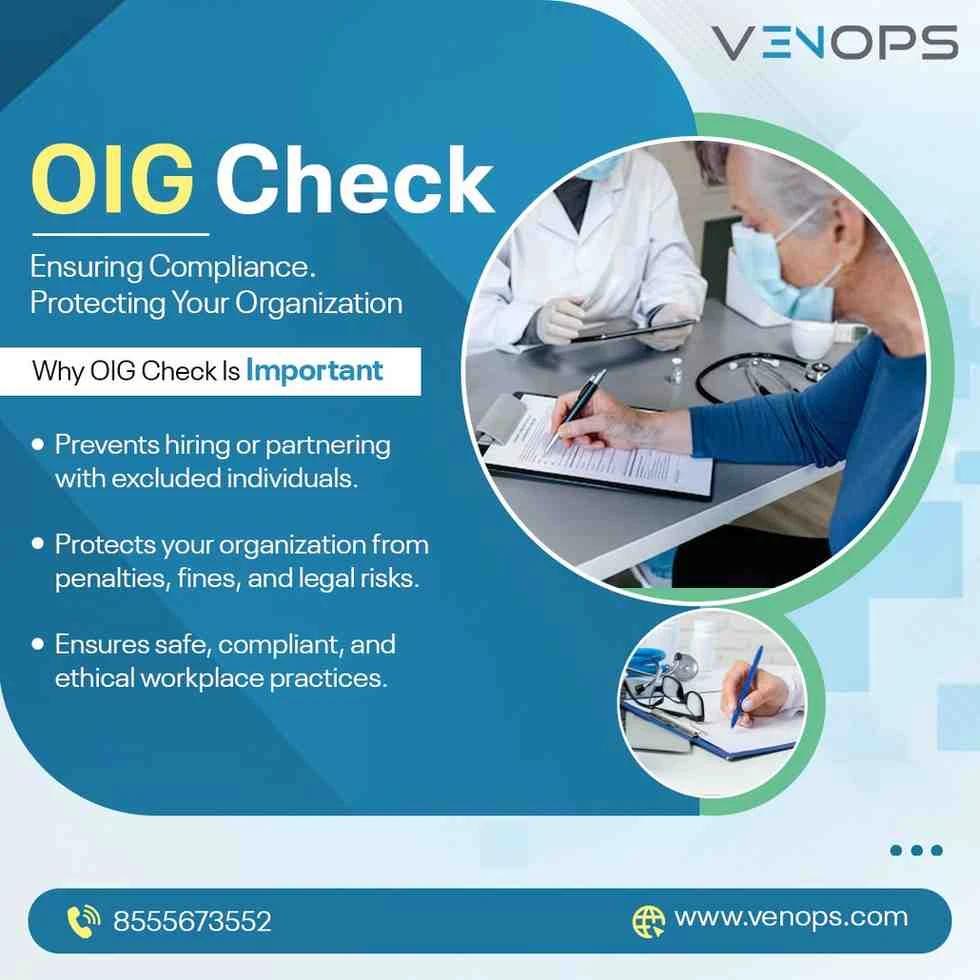
An OIG check is the process of screening employees, vendors, contractors, suppliers, physicians, nurses, and third-party organizations against the OIG exclusion database.
Healthcare organizations perform OIG checks to ensure they are not employing or partnering with excluded individuals.
Regular OIG checks are considered a critical part of healthcare compliance programs in the United States.
Why OIG Checks Matter in 2026
Healthcare compliance requirements continue to become stricter every year. In 2026, organizations are increasingly focused on:
- Fraud prevention
- Vendor risk management
- Third-party compliance
- Automated screening
- Data-driven compliance monitoring
- AI-powered healthcare governance
Federal agencies are also increasing audits and investigations related to exclusion screening.
Because of these growing compliance demands, many organizations are adopting automated platforms like Venops to simplify OIG check processes and reduce manual work.
Risks of Hiring OIG Excluded Individuals
Hiring or working with OIG excluded individuals can create major problems for healthcare organizations.
Financial Penalties
Organizations can face large civil monetary penalties if they receive federal healthcare reimbursements connected to excluded individuals.
Loss of Reputation
Compliance violations can damage public trust and impact patient confidence.
Federal Investigations
Healthcare providers may face audits and investigations from federal authorities.
Legal Consequences
Failure to conduct proper OIG checks may result in lawsuits and regulatory actions.
Loss of Federal Funding
Organizations may lose eligibility for Medicare or Medicaid reimbursements.
Industries That Need OIG Checks
Many industries perform OIG checks regularly, including:
- Hospitals
- Medical clinics
- Dental offices
- Nursing homes
- Home healthcare agencies
- Healthcare staffing companies
- Telehealth providers
- Laboratories
- Pharmaceutical companies
- Medical billing companies
- Insurance providers
How Often Should Organizations Conduct OIG Checks?
The OIG recommends monthly exclusion screenings.
Monthly OIG checks help organizations quickly identify newly excluded individuals and reduce compliance risks.
Manual screening methods are often slow and error-prone, which is why many healthcare companies are switching to automated compliance platforms like Venops.
Manual vs Automated OIG Check Process
Manual OIG Checks
Manual screening involves searching names individually in the OIG database.
Challenges include:
- Time-consuming process
- Human errors
- Missed matches
- Lack of audit trails
- Difficulty managing large databases
Automated OIG Checks
Automated systems provide:
- Faster screening
- Real-time alerts
- Continuous monitoring
- Reduced compliance risks
- Centralized reporting
- Improved accuracy
Venops helps organizations automate exclusion monitoring and streamline compliance operations.
How Venops Helps with OIG Checks
Venops provides modern compliance screening solutions for healthcare organizations across the United States.
The platform helps organizations:
- Conduct automated OIG checks
- Monitor exclusion lists continuously
- Screen vendors and contractors
- Generate compliance reports
- Maintain audit-ready records
- Reduce operational risks
With growing healthcare regulations, Venops supports organizations in maintaining efficient and scalable compliance programs.
Trending Compliance Challenges in the United States
Healthcare organizations are currently facing several trending compliance challenges, including:
Increased Vendor Screening
Healthcare systems are expanding vendor screening processes due to rising third-party risks.
AI and Automation Adoption
Organizations are using AI-powered tools for faster exclusion monitoring and compliance tracking.
Cybersecurity and Compliance Integration
Healthcare providers are integrating cybersecurity with compliance monitoring to protect sensitive patient data.
Remote Workforce Compliance
Telehealth and remote healthcare services require stronger compliance controls.
Real-Time Monitoring
Modern healthcare organizations are moving toward continuous monitoring instead of periodic reviews.
Best Practices for OIG Exclusion Compliance
Healthcare organizations should follow these best practices:
Conduct Monthly OIG Checks
Regular screening reduces the risk of compliance violations.
Screen All Vendors and Contractors
Compliance should include third-party vendors and temporary staff.
Maintain Documentation
Organizations should maintain detailed audit records for every screening.
Use Automated Compliance Solutions
Automation improves efficiency and reduces human errors.
Train Employees
Compliance teams should stay updated on changing federal regulations.
Future of OIG Compliance Screening
The future of OIG checks and exclusion screening will include:
- AI-powered compliance analytics
- Predictive risk monitoring
- Cloud-based screening systems
- Real-time federal database integration
- Automated vendor onboarding
- Advanced reporting dashboards
As healthcare compliance becomes more complex, automated solutions like Venops will continue helping organizations improve efficiency and reduce risks.
Conclusion
The Exclusions List OIG plays a critical role in protecting the integrity of federal healthcare programs in the United States. Conducting regular OIG checks is essential for healthcare providers, vendors, staffing agencies, and organizations that participate in Medicare and Medicaid programs.
Failure to identify OIG excluded individuals can result in severe penalties, reputational damage, and legal consequences.
By adopting automated compliance solutions like Venops, organizations can streamline exclusion screening, strengthen compliance programs, and stay ahead of changing healthcare regulations.
Healthcare compliance is no longer just a regulatory requirement — it is now a strategic business necessity.
























Sign in to leave a comment.