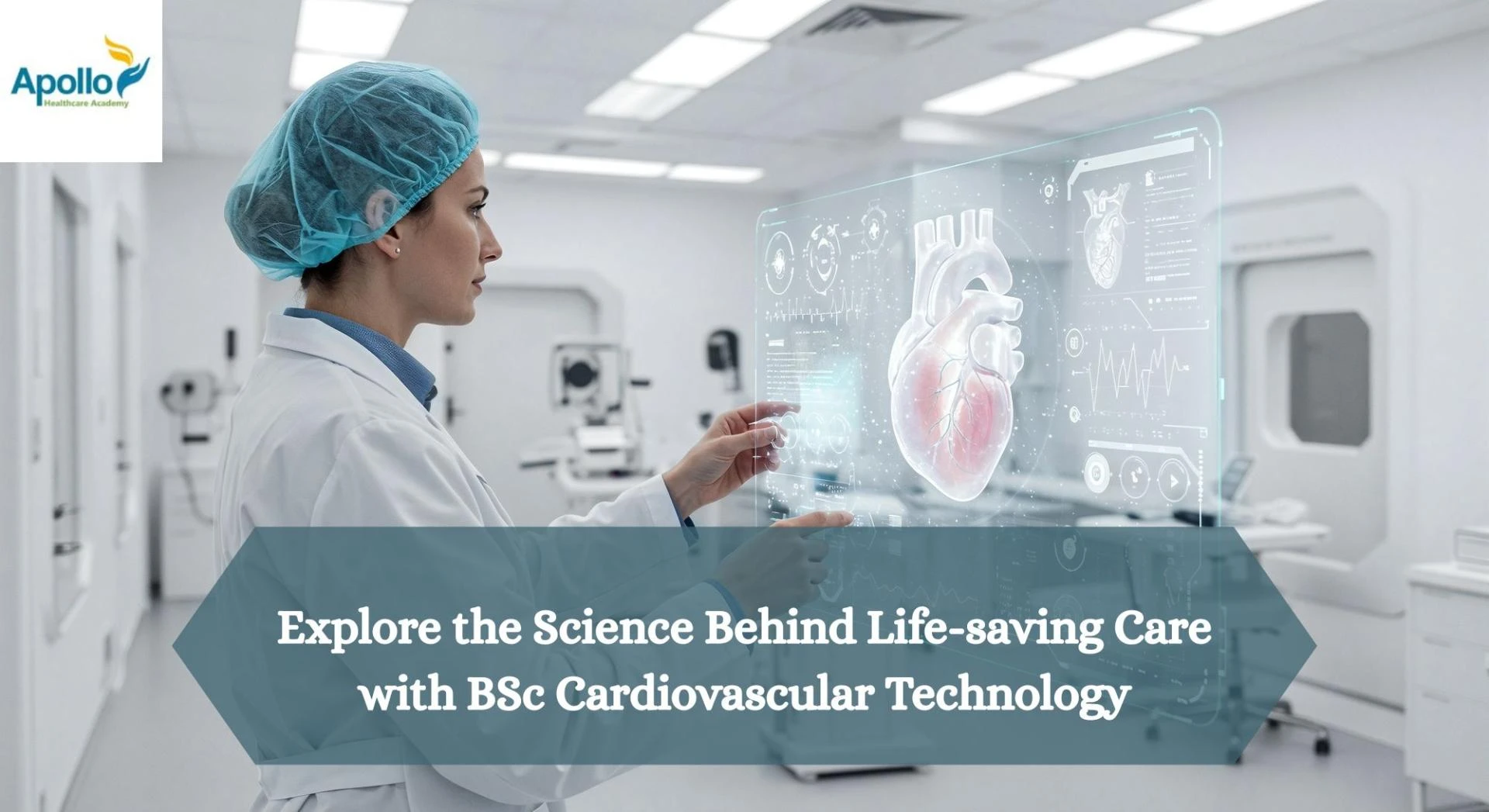

Heart problems are no longer rare and hospitals see cardiac patients every single day. Behind every ECG, stress test or heart scan is not just a machine, but a trained professional making sure that the results are accurate and reliable. As cardiac care becomes more technology-driven, the need for skilled hands in diagnostic & monitoring roles continues to grow.
For students who want a career in healthcare but do not want to become doctors, BSc Cardiovascular Technology is a smart choice. The programme teaches you how to work closely with cardiology teams, handle advanced equipment as well as monitor patients. With real hospital exposure along with classroom learning, it builds confidence and prepares you for various roles in the field of cardiac care. Let’s explore all the essential BSc Cardiovascular Technology course details.
An Overview- BSc Cardiovascular Technology
The programme typically spans 3 to 4 years, including supervised clinical training. It also provides students with knowledge of cardiac systems, diagnostic processes as well as patient care practices, so they can operate in a responsible way in hospital environments. Admission to this programme generally requires completion of higher secondary education with Physics, Chemistry and Biology.
BSc Cardiovascular Technology- Syllabus
The programme places a lot of emphasis on laboratory work, hospital placements and continuous testing so that students can apply what they have learnt practically. The syllabus is designed to build foundational knowledge before progressing to specialised cardiac subjects. This is a systematic learning method that facilitates the gradual development of skills and clinical knowledge.
Common subjects covered include-
- Human anatomy & physiology
- Cardiovascular anatomy & pathology
- Medical instrumentation fundamentals
- Electrocardiography & echocardiography
- Cardiac catheterisation techniques
- Patient care management and professional ethics
Practical sessions and clinical internships form a core component of the syllabus. The experiences benefit students by exposing them to actual diagnostic conditions, along with building technical accuracy and interaction skills with patients.
Skills Developed Through BSc Cardiovascular Technology
The programme goes beyond theory, helping students build the practical skills needed for daily clinical work. Frequent lab sessions and hands-on hospital training prepare them for both the technical tasks as well as patient interactions in cardiac care.
Key skills developed include -
- Operation of cardiac diagnostic equipment, such as ECG and echocardiography systems
- Clinical data recording and interpretation to assist in accurate diagnosis
- Patient handling and safety procedures during diagnostic tests
- Coordination with medical teams in fast paced clinical environments
- Professional ethics and attention to detail in sensitive healthcare situations
These skills enable graduates to work efficiently in cardiac units while maintaining patient safety & clinical standards.
Career Opportunities After BSc Cardiovascular Technology
The demand for skilled cardiovascular technologists is rising as heart care becomes increasingly technology driven. Graduates can find jobs in hospitals, cardiac units & diagnostic centres. Some of the common career roles are -
- Cardiovascular technologist supporting cardiac diagnostics
- ECG technician responsible for heart activity monitoring
- Echocardiography technologist assisting in cardiac imaging
- Cardiac catheterisation lab technician supporting interventional procedures
- Clinical support roles in diagnostic and healthcare institutions
With experience and further training, professionals may advance into senior technical roles or pursue higher education, thereby enhancing both their responsibilities and career stability.
Conclusion
Choosing the right healthcare course begins with knowing your interests, how comfortable you are with clinical work as well as what you want in the long run. BSc Cardiovascular Technology is a good fit for students who pay attention to detail, enjoy working with medical technology & like patient focused roles.
Before making a final decision, it is helpful for students as well as parents to look closely at eligibility, programme structure, hands on training & career prospects. Talking to academic advisors and exploring curricula can clarify the choice and build confidence, leading to a stable career in allied health sciences.



























Sign in to leave a comment.