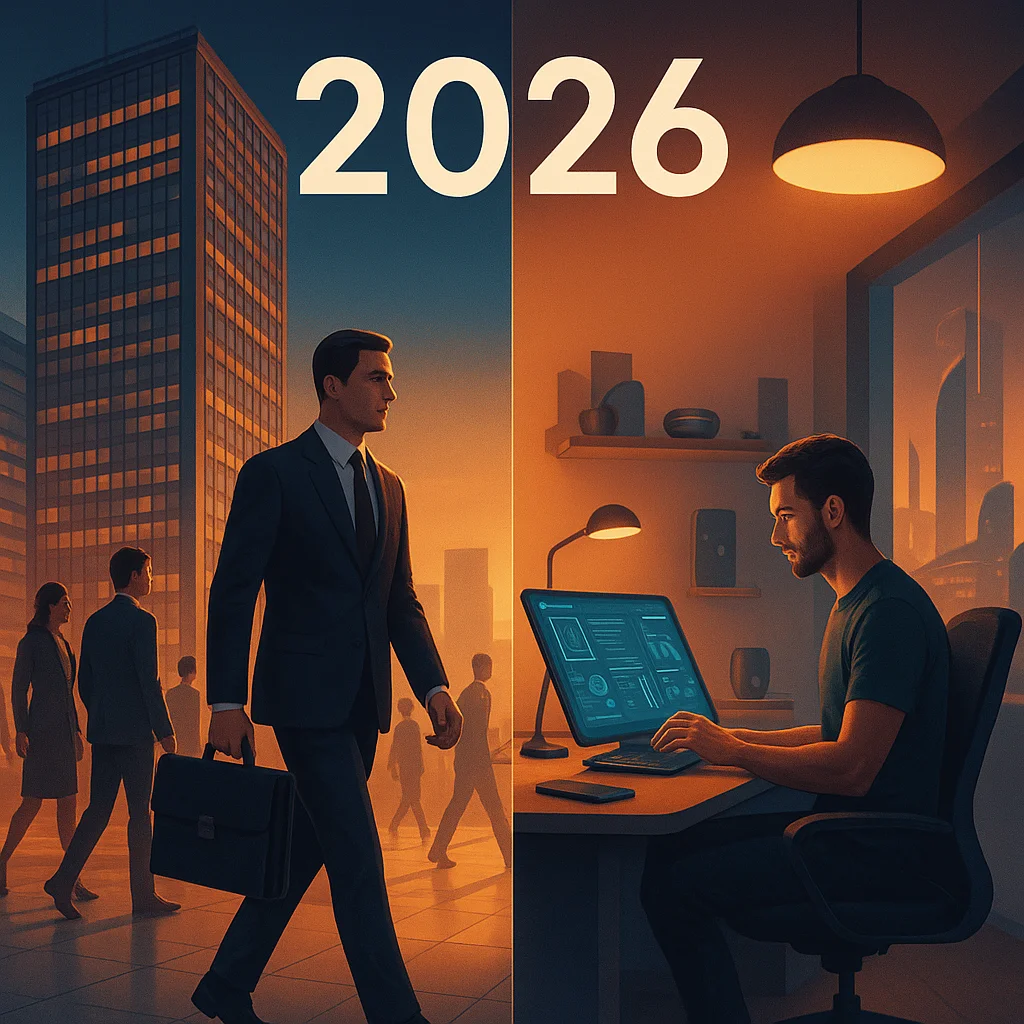

A Shift in Work Paradigms: Setting the Scene for 2026
Imagine a morning in early 2026: Sofia, a digital designer in Stockholm, sips her slow-brewed coffee while checking a stream of freelance projects on her tablet. Across the city, Erik, a software engineer, dresses for his corporate office, preparing for a team meeting. Both are emblematic of a workforce caught between two dominant modes of employment: freelancing and full-time roles. This duality is more pronounced than ever, reflecting broader socio-economic forces and technological transformations. According to a 2025 report by the International Labour Organization, approximately 35% of the global workforce now engages in some form of freelance or gig work, a notable rise from 27% in 2020.
The ongoing tug-of-war between freelancing and traditional full-time employment is reshaping career narratives. Hybrid work models, AI-driven tools, and shifting worker expectations have all contributed to this dynamic. For many professionals, the choice is no longer simply about earning a paycheck but about aligning work with lifestyle, values, and personal growth.
“The future of work is not a binary choice but a spectrum where flexibility, security, and purpose intersect,” notes Dr. Helena Lund, a labor economist at Stockholm University.
Understanding this evolving landscape requires a look into its origins, present trends, and what lies ahead.
Tracing the Roots: How Work Models Evolved to 2026
The historical arc of employment has swung like a pendulum over decades. Post-World War II economies favored stable, long-term full-time employment, often with a single employer. This model promised benefits, security, and a clear career ladder. However, as globalization intensified in the 1990s and 2000s, companies sought flexibility, outsourcing, and project-based hiring to remain competitive.
The rise of the internet in the early 2000s catalyzed a freelancing boom. Platforms like Upwork and Fiverr democratized access to global clients. By the 2010s, the gig economy became synonymous with apps like Uber and TaskRabbit, redefining freelance work to include many service roles. Yet, freelancing remained a double-edged sword—offering flexibility but often lacking in benefits and income stability.
Between 2020 and 2025, the COVID-19 pandemic accelerated remote work adoption, blurring lines between freelancing and full-time roles. Organizations invested heavily in digital infrastructure, and workers experienced unprecedented autonomy and work-life integration. This period also saw growing conversations about mental health, financial security, and the sustainability of work models.
The 2026 labor market reflects these accumulated shifts. Workers now weigh not only income but also autonomy, benefits, and career fulfillment. Employers, meanwhile, juggle talent retention with cost efficiency and agility.
Weighing the Pros and Cons: Core Comparisons Between Freelancing and Full-Time Employment
Freelancing and full-time employment each offer distinct advantages and challenges. The decision between the two often hinges on individual priorities, industry, and economic conditions.
Freelancing Advantages
- Flexibility: Freelancers set their own schedules, choose projects, and often work from anywhere.
- Diverse Income Streams: Multiple clients can reduce dependency on a single source.
- Skill Expansion: Exposure to varied projects fosters rapid upskilling and portfolio growth.
- Autonomy: Control over work environment and methods supports creativity and self-direction.
Freelancing Challenges
- Income Instability: Irregular payments and feast-or-famine cycles can strain finances.
- Lack of Benefits: No employer-provided health insurance, retirement plans, or paid leave.
- Administrative Burden: Freelancers manage taxes, invoicing, and client acquisition independently.
- Isolation: Limited social interaction can impact mental well-being.
Full-Time Employment Advantages
- Financial Security: Steady salary, bonuses, and predictable cash flow.
- Benefits: Health insurance, retirement contributions, paid leave, and sometimes educational support.
- Structured Career Path: Clear progression, mentorship, and professional development opportunities.
- Team Environment: Collaboration and social connection foster belonging.
Full-Time Employment Challenges
- Rigid Schedules: Fixed office hours and location can limit personal freedom.
- Limited Autonomy: Employees may have less control over projects and work style.
- Office Politics: Navigating hierarchies and workplace culture can be stressful.
- Potential for Burnout: High demands without flexibility increase risk.
Data from a 2026 survey by Statista indicates that 48% of freelancers cite flexibility as their primary motivation, while 55% of full-time employees prioritize job security. This divergence underscores the fundamental trade-offs at play.
“Choosing freelancing means embracing uncertainty for freedom; full-time employment offers stability but often at the cost of personal flexibility,” explains career coach Mia Andersson.
2026 Trends Shaping the Work Landscape
The year 2026 marks a pivotal moment where technology, societal values, and economic factors converge, influencing both freelancing and full-time employment.
Technology and AI Integration: Artificial intelligence tools have lowered barriers for freelancers by automating administrative tasks such as contract drafting, invoicing, and tax calculations. Simultaneously, full-time roles increasingly demand AI literacy, reshaping job descriptions and required skills.
Rise of Hybrid Work Models: Many companies now offer flexible arrangements blending remote and on-site work, eroding the traditional boundaries of full-time employment. This evolution challenges the distinctiveness of freelancing as the sole flexible option.
Regulatory Developments: Governments worldwide are revising labor laws to address gig workers' rights, including minimum wage guarantees and social security contributions. The EU’s landmark platform work directive, effective since 2024, is a prime example, impacting freelancers' protections and employer obligations.
Shifts in Worker Preferences: Younger generations prioritize meaningful work, diversity, and work-life balance. They are more inclined to freelance or negotiate flexible full-time contracts. According to a Deloitte 2026 workforce survey, 63% of Gen Z respondents would consider freelancing at some point in their careers.
Economic Uncertainty: Inflation and global market volatility have heightened the appeal of steady income but also driven entrepreneurial spirit among freelancers seeking control over their financial destiny.
These trends are not isolated but interwoven, creating a complex ecosystem where career choices reflect personal values and external realities.
Voices from the Field: Experts and Industry Insights
Industry leaders and career experts offer nuanced perspectives on the evolving employment landscape.
Eva Johansson, CEO of Nordic Talent Solutions, observes, “Companies are investing more in talent experience, recognizing that retention hinges on flexibility and well-being. We see a rise in permanent roles designed with freelancer-like autonomy.”
Conversely, freelance platform founder Lucas Berg highlights, “Freelancers now leverage AI to enhance productivity, making them competitive with traditional employees. However, building a stable client base remains a challenge, especially for newcomers.”
Psychologists studying workforce wellbeing emphasize the importance of community and support. Dr. Sofia Nilsson states, “Freelancers often report feelings of isolation, which can impact mental health. Full-time roles provide social structures but may induce stress through rigid expectations.”
These insights illustrate that no single model fits all. Career satisfaction increasingly depends on customizing work arrangements and ongoing upskilling.
“The future workforce will likely blend freelancing and full-time traits, demanding adaptable policies and personal resilience,” concludes Dr. Lund.
Navigating Ahead: What the Future Holds for Workers in 2026 and Beyond
Looking forward, the dichotomy between freelancing and full-time employment is expected to blur further. Several developments merit close attention:
- Emergence of ‘Fractional Employment’: Roles where workers engage with multiple employers part-time, combining stability with variety.
- Enhanced Worker Protections: Legislative efforts to close gaps in benefits for freelancers and gig workers will continue.
- Digital Nomadism Normalization: Improved global connectivity and relaxed visa policies will enable more workers to freelance internationally.
- AI-Augmented Work: Both freelancers and employees will need to harness AI tools to stay competitive, changing skill requirements substantially.
- Customized Career Pathways: Career development will emphasize personalized learning journeys blending formal education, micro-credentials, and experiential projects.
For individuals contemplating their own paths, several practical steps can help:
- Assess personal tolerance for risk versus need for stability.
- Invest in continuous skill development, especially digital and interpersonal skills.
- Build networks and community, regardless of employment type.
- Explore hybrid models or part-time freelancing alongside full-time roles.
- Stay informed on evolving labor laws and benefits options.
For those interested in further exploring this topic, WriteUpCafe offers insightful reads such as Freelancing vs Full-Time Employment in 2026: Pros and Cons Explored and Advanced Strategies for Freelancing vs Full-Time Employment Pros and Cons in 2026, which provide deeper dives into strategic decision-making and practical advice.
Ultimately, the evolving world of work invites us to rethink traditional notions of careers. Whether choosing the freedom of freelancing or the security of full-time employment, the key lies in aligning choices with values, needs, and aspirations.
Thank you for spending time with this exploration. May your own career journey be filled with both confidence and kindness.





























Sign in to leave a comment.