
Introduction
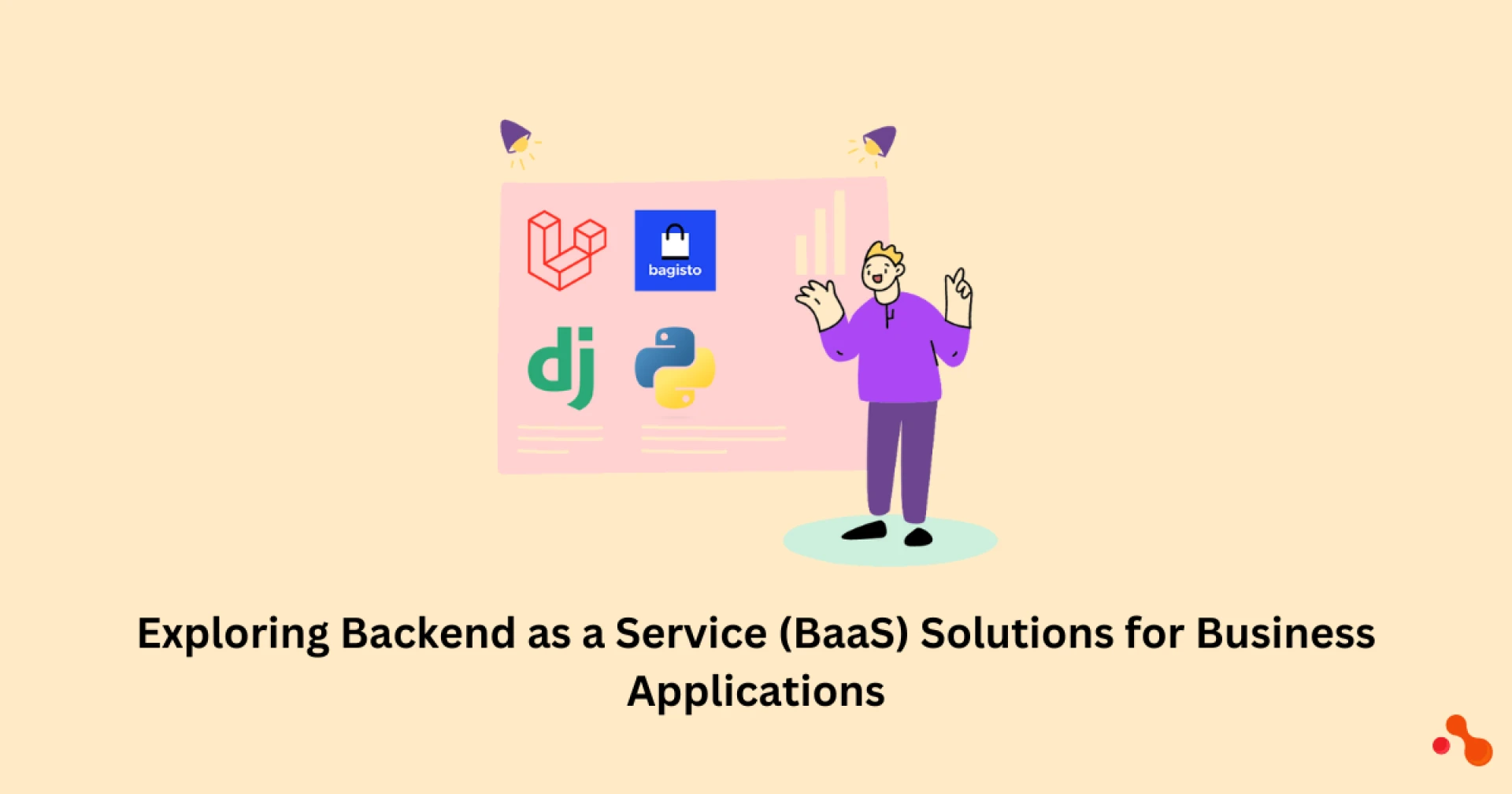
Are you a business owner or entrepreneur looking to build a powerful and efficient online platform? Look no further! In this blog, we will delve into Backend as a Service (BaaS) solutions. BaaS is a game-changer for businesses, offering a simplified approach to backend development. Whether you are a startup or an established enterprise, partnering with a reliable backend development company can provide top-notch backend development services. Join us as we explore the benefits and possibilities of BaaS solutions for your business applications.
Understanding Backend as a Service (BaaS)
Backend as a Service (BaaS) is a cloud-based service that provides ready-to-use backend infrastructure and features for developing and deploying web and mobile applications. It allows developers to focus on building the frontend and business logic of their applications while the backend infrastructure is taken care of by the BaaS provider. Here's an easy-to-understand breakdown of BaaS:
Definition of BaaS and its Components:
BaaS: Backend as a Service, a cloud-based service providing backend infrastructure for applications.Components: BaaS comprises various components, such as databases, servers, storage, APIs, user authentication, and push notifications. These components are managed by the BaaS provider, relieving developers from the burden of setting them up and maintaining them.Advantages of BaaS for Business Applications:
Faster Development: BaaS accelerates development by providing pre-built backend components, reducing the need to build everything from scratch.Scalability: BaaS offers scalable infrastructure, allowing applications to handle increased user loads without worrying about infrastructure limitations.Cost Efficiency: With BaaS, businesses can save on upfront infrastructure costs, as they only pay for the resources they use rather than invest in and maintain their backend infrastructure.Easy Integration: BaaS providers often offer APIs and SDKs that simplify the integration of third-party services like payment gateways or social media platforms.Comparison with Traditional Backend Development Approaches:
Traditional Backend Development: In traditional approaches, businesses must set up and maintain their backend infrastructure, which requires expertise, time, and resources.BaaS vs. Traditional Approach: BaaS eliminates the need for businesses to invest in their infrastructure, providing a cost-effective and time-saving solution. BaaS also offers features like user authentication and push notifications, which are not typically included in traditional backend development.In summary, BaaS simplifies the backend development process by providing pre-built components and infrastructure, offering benefits such as faster development, scalability, cost efficiency, and easy integration. It is a viable alternative to traditional backend development approaches, particularly for businesses looking to reduce costs and accelerate their application development timeline.
Benefits of BaaS for Business Applications
BaaS (Backend as a Service) offers numerous advantages for businesses looking to develop applications. In this section, we will explore the benefits of BaaS in a simple and easy-to-understand manner. Here are the key benefits:
Scalability and Flexibility:
BaaS allows businesses to scale their applications as the user base grows easily.With BaaS, you can handle increased traffic and data without worrying about infrastructure management.Example: A backend development company can quickly scale a mobile app's backend to handle thousands of users during peak times without additional hardware or servers.Reduced Development Time and Cost:
BaaS eliminates the need to build backend infrastructure from scratch, saving valuable development time.Developers can focus on the application's front end and core features, accelerating the development process.Example: A business developing an e-commerce app using BaaS can leverage pre-built authentication, database, and payment modules, significantly reducing development time and cost.Focus on Core Business Logic:
BaaS frees developers from managing low-level infrastructure, enabling them to concentrate on the application's unique functionality.Businesses can focus on delivering value to customers by prioritizing the development of their core business logic.Example: A healthcare startup can utilize BaaS to handle user authentication, data storage, and push notifications, allowing their development team to concentrate on creating innovative healthcare features.Integration Capabilities:
BaaS simplifies integration with third-party services, APIs, and platforms.It provides ready-to-use connectors and APIs, enabling seamless integration with popular services like social media platforms, analytics tools, and cloud storage providers.Example: An e-learning platform can easily integrate BaaS with a payment gateway, user management system, and content delivery network, enhancing the overall functionality of their application.Enhanced Security and Compliance:
BaaS offers robust security measures, including encryption, access control, and regular backups.It helps businesses meet compliance requirements such as GDPR, HIPAA, and PCI-DSS.Example: A financial services company can rely on BaaS to handle secure storage and transmitting sensitive customer data, ensuring compliance with industry regulations.Popular BaaS Providers and Their Features
Regarding backend development services, several popular Backend-as-a-Service (BaaS) providers are available in the market. These providers offer ready-to-use backend infrastructure, allowing developers to focus on building their applications rather than managing the backend. Here, we will discuss some well-known BaaS providers, compare their features, highlight use cases and success stories, and provide factors to consider when choosing a BaaS provider.
Firebase:
Features:Real-time database management.User authentication and authorization.Cloud functions for serverless computing.Use cases:Mobile apps require real-time data updates, such as chat applications.Apps with user authentication and secure data storage.Success story: Many startups and small businesses have leveraged Firebase to develop and scale their mobile and web applications rapidly.Parse:
Features:Database management with support for multiple data types.User authentication and push notifications.Cloud functions for custom server-side logic.Use cases:Applications with complex data models, like social networking platforms.Apps requiring push notifications and user engagement.Success story: Parse has been used by numerous successful mobile apps, including those with millions of users.AWS Amplify:
Features:Database management with various options like NoSQL and GraphQL.User authentication and authorization.Serverless functions using AWS Lambda.Use cases:Scalable web and mobile applications with advanced data querying needs.Apps requiring secure user authentication and serverless computing.Success story: Many enterprise-level companies have benefited from AWS Amplify, powering their robust and scalable applications.Backendless:
Features:Database management with support for relations and geolocation.User management with role-based access control.Custom business logic through Codeless or CodeRunner.Use cases:Applications with complex data structures and geolocation needs.Apps requiring granular user access control and custom business logic.Success story: Backendless has been utilized by various businesses across industries, including e-commerce, healthcare, and logistics.Factors to consider when choosing a BaaS provider:
Scalability and performance requirements.Integration with other services or platforms.Pricing structure and cost considerations.Development and deployment flexibility.Community support and documentation availability.Choosing the right BaaS provider can significantly impact your application's development process and success. It's crucial to evaluate your specific needs and match them with each provider's features and capabilities before making a decision.
Implementation Considerations and Best Practices
Before adopting a Backend as a Service (BaaS) solution, several factors must be considered. Here are some key points to keep in mind:
Compatibility: Ensure that the BaaS solution supports your existing application's programming languages, frameworks, and databases. It should seamlessly integrate with your technology stack.Scalability: Evaluate the scalability capabilities of the BaaS provider. Your application should be able to handle increased user load without compromising performance. Look for features like auto-scaling and load balancing.Data Security: Security is crucial when handling sensitive user data. Understand the security measures implemented by the BaaS provider, such as encryption, access control, and data backups. Compliance with industry regulations like GDPR may also be important.Customization and Flexibility: Consider whether the BaaS solution allows customization to meet your specific requirements. It should offer flexibility in adding or modifying new features without significant limitations.Integrating BaaS into existing applications:
Identify the core functionalities of your existing application that can benefit from BaaS. For example, you can offload user authentication, file storage, or push notifications to the BaaS provider.Utilize the BaaS provider's APIs and SDKs to integrate their services into your application. This enables seamless communication between your app and the BaaS backend.Performance optimization tips for maximizing BaaS efficiency:
Minimize unnecessary API calls by leveraging caching mechanisms to store frequently accessed data on the client side.Optimize data transfer by compressing payloads and using efficient data formats, such as JSON instead of XML.Leverage asynchronous programming techniques to handle time-consuming tasks in the background, allowing your application to remain responsive.Monitoring and debugging techniques for BaaS-powered applications:
Utilize logging and monitoring tools provided by the BaaS provider to track API usage, errors, and performance metrics.Implement error-handling mechanisms in your application to gracefully handle BaaS service failures or network issues.Maintenance and support considerations for long-term success:
Choose a reliable and reputable BaaS provider with a proven track record and good customer support.Stay updated with the latest BaaS updates and security patches the provider provides.Regularly test and monitor your BaaS-powered application to identify and address performance or compatibility issues.Remember, when adopting a BaaS solution, it's important to carefully evaluate your needs and consider compatibility, security, scalability, and customization options. Integrating BaaS effectively and following best practices can enhance your application's functionality and streamline backend development processes.
Conclusion
In conclusion, Backend as a Service (BaaS) solutions offer businesses a convenient and efficient way to handle their backend development needs. By outsourcing these services to a specialized backend development company, businesses can focus on their core competencies and save time and resources. BaaS solutions provide ready-made backend functionalities and infrastructure, eliminating the need for businesses to build and maintain their backend systems. This simplifies the development process and accelerates time-to-market for business applications. Whether you're a small startup or a large enterprise, leveraging BaaS solutions can enhance your development capabilities and allow you to deliver robust and scalable applications to your users.


























Sign in to leave a comment.