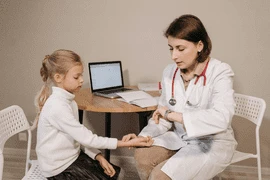

Pediatric Advanced Life Support (PALS) is a crucial pillar in emergency medical services, specially designed to equip healthcare professionals with the skills and knowledge necessary to respond to critical situations involving infants and children. The importance of PALS training cannot be overstated, as children are not merely small adults; they have unique physiological differences that require specialized care during emergencies.
This blog delves into the critical need for PALS training, exploring its significance, the core components of the training, and the impact it has on improving outcomes in pediatric emergencies. Additionally, obtaining a pediatric life support certification is not only a testament to a healthcare professional's commitment to excellence in pediatric care but also a crucial step in ensuring that the most vulnerable patients receive the best possible emergency support.
The Significance of Specialized Pediatric Care
Children's anatomical and physiological differences significantly make them particularly vulnerable in emergencies. Their airway structures, for instance, are smaller, more flexible, and thus more easily obstructed than adults, which can quickly lead to critical conditions.
Moreover, children have a notably higher metabolic rate, meaning their need for oxygen substantially exceeds that of adults, making them more susceptible to hypoxia and other respiratory distresses. These distinct physiological characteristics underscore the necessity for healthcare providers to undergo specialized training in pediatric care, such as obtaining PALS (Pediatric Advanced Life Support) certification online.
This ensures they are adequately prepared to quickly and effectively address these unique challenges, using state-of-the-art interventions tailored specifically for the pediatric population. Furthermore, children's smaller blood volume and the fact that their physiological reserves are less robust than adults' mean that they can decompensate rapidly if not managed with the utmost care and precision.
Hence, PALS certification online equips healthcare professionals with the critical skills and knowledge to make life-saving decisions swiftly, enhancing the quality of care provided to this vulnerable group.
Core Components of PALS Training
PALS training encompasses a broad range of skills and knowledge critical to responding to life-threatening scenarios in children. Key components include:
Recognition and treatment of infants and children at risk for cardiopulmonary arrest:Early identification of symptoms can be life-saving.Systematic approach to pediatric assessment:Utilizing a structured approach for evaluation.Effective respiratory management:Understanding the nuances of securing airways in pediatric patients.Defibrillation and synchronized cardioversion:Knowing how and when to use these interventions.Establishing intravenous/intraosseous access: Techniques for gaining access to the circulatory system when conventional methods are not feasible.Understanding and applying essential medications in pediatrics: Dosages and indications differ significantly from adults.The Role of Simulation in PALS Training
A vital aspect of PALS (Pediatric Advanced Life Support) training, particularly emphasized in an online PALS certification course, is the use of simulation-based learning. This innovative approach enables healthcare providers to practice and refine their skills in a completely risk-free environment. By engaging in realistic scenarios that closely mimic real-life pediatric emergencies, practitioners are not only able to improve their decision-making abilities and enhance their technical skills but also learn how to effectively manage the emotional and psychological stress often associated with such critical situations.
This training method, especially when facilitated through an online platform, allows for greater accessibility and flexibility, ensuring that healthcare professionals can receive comprehensive training without the constraints of traditional in-person sessions. The dynamic, interactive nature of these simulations makes the learning experience more engaging and impactful, better preparing healthcare workers for the challenges of pediatric emergency care.
The Impact of PALS Training on Emergency Outcomes
Evidence consistently demonstrates that PALS-trained healthcare providers have a positive impact on the outcomes of pediatric emergencies. Improved survival rates, better neurological outcomes, and shorter hospital stays are among the tangible benefits of this specialized training. By preparing providers to act decisively and correctly under pressure, PALS training significantly enhances the quality of care received by pediatric patients in critical situations.
Challenges and Solutions in Implementing PALS Training
Despite its proven benefits, several challenges hinder the widespread implementation of PALS training, including the financial burden of training, the time commitment required, and the need for regular recertification. To overcome these obstacles, institutions can explore blended learning options that combine online theoretical learning with in-person practical sessions. Additionally, subsidies or financial assistance programs can make PALS training more accessible to healthcare providers. Incorporating AHA PALS certification into this framework can further ensure the quality and consistency of the training provided.
Keeping Skills Current: The Importance of Recertification
PALS certification, like all medical certifications, requires regular updating to ensure healthcare professionals stay abreast of the latest guidelines, technologies, and best practices. Recertification is not just a bureaucratic necessity; it's an opportunity to refresh knowledge, practice new techniques, and reinforce the commitment to excellence in pediatric emergency care.
Global Perspectives on Pediatric Emergency Training
Exploring the adoption and impact of PALS training across different countries illuminates the universal value of specialized pediatric emergency care. While resource constraints may vary, the fundamental principles of PALS training are applicable worldwide. Sharing experiences, challenges, and successes in implementing PALS training globally can foster international improvements and innovations in pediatric emergency care.
CPR, ACLS & PALS Training Institute
In today's fast-paced world, the significance of Pediatric Advanced Life Support (PALS) Training cannot be overstated. The CPR, ACLS & PALS Training Institute stands at the forefront, offering comprehensive courses such as the online PALS certification course and ACLS certification course. Their curriculum is designed to meet the needs of healthcare professionals and the general public alike, covering crucial skills like first aid and CPR alongside specialized pediatric life support certification. With options for both in-person and online learning, including the AHA PALS certification and AHA ACLS certification, this institute ensures accessibility and convenience.
Furthermore, their CPR & AED training and basic life support certification online align with American Heart Association courses, guaranteeing quality and recognition. Whether you're seeking PALS certification near you, ACLS certification online, or a BLS CPR certification online, their diverse offerings, like the CPR first aid certification, cater to all needs. Recognize the critical need for specialized skills in emergencies involving children by exploring their offerings. Contact them now to secure your place in their next session and join countless others in becoming a lifesaver.
About The Author
The author of this blog is a seasoned healthcare professional with extensive experience in pediatric care. With a background in emergency medicine, they are dedicated to advocating for the critical importance of Pediatric Advanced Life Support (PALS) training. Through their expertise and passion for child health, they aim to empower healthcare professionals and save lives in emergency situations.




























Sign in to leave a comment.