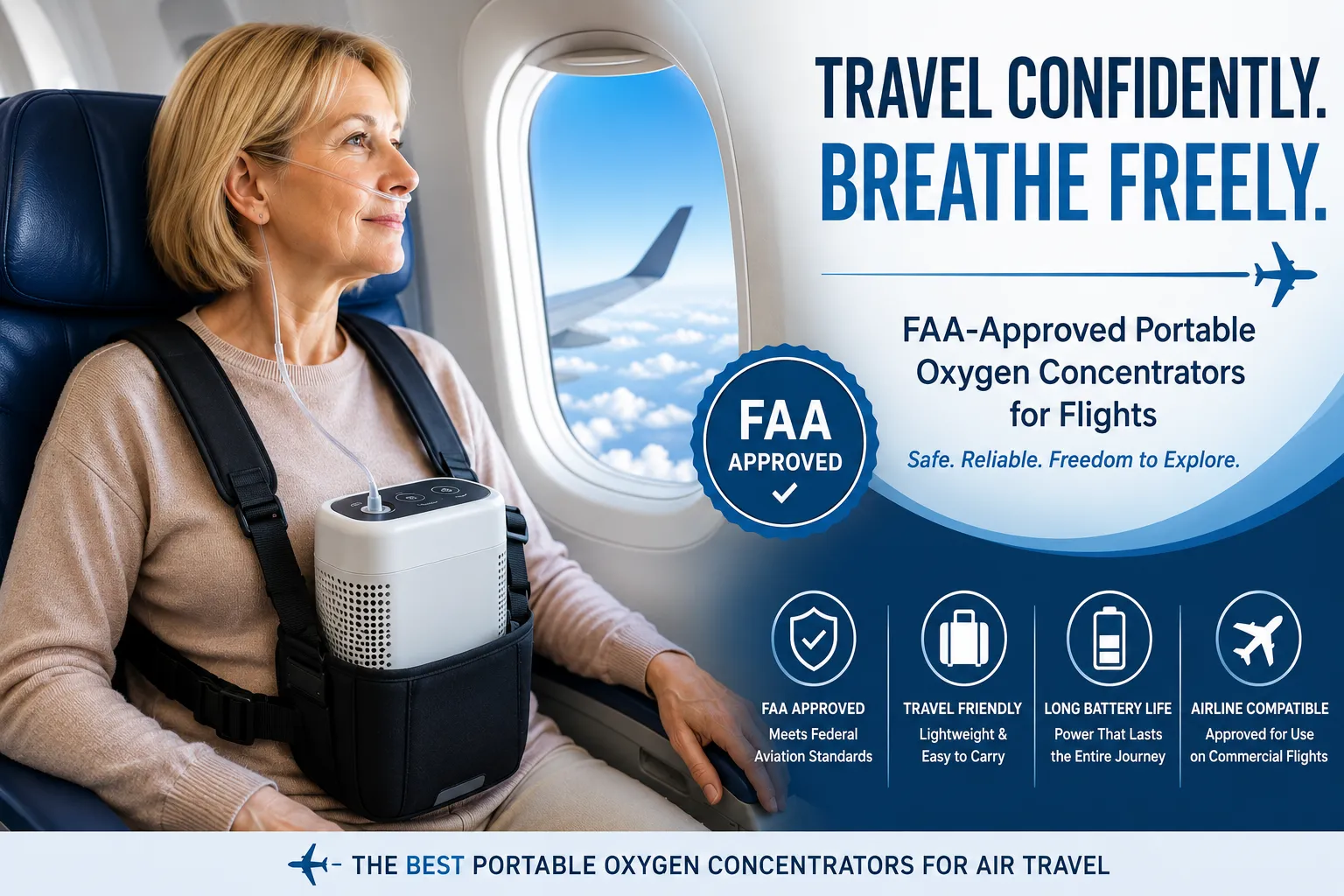

Air travel has become more accessible than ever for individuals who require supplemental oxygen. Thanks to advancements in oxygen therapy technology, travelers can now enjoy greater freedom and convenience while flying. If you're planning a trip and rely on oxygen support, understanding FAA regulations and choosing the right equipment is essential. This guide covers everything you need to know about using an FAA approved portable oxygen concentrator and how to make your journey smooth, safe, and stress-free.
What Is an FAA-Approved Portable Oxygen Concentrator?
A portable oxygen concentrator (POC) is a lightweight medical device that extracts oxygen from the surrounding air and delivers concentrated oxygen to the user. Unlike traditional oxygen tanks, POCs do not require refilling, making them ideal for travel.
The Federal Aviation Administration (FAA) allows passengers to carry and use approved POCs during flights. An FAA approved portable oxygen concentrator meets specific safety standards and can be operated safely on commercial aircraft. Before booking your flight, always verify that your device appears on the airline’s approved equipment list.
Why Portable Oxygen Concentrators Are Ideal for Air Travel
For travelers who depend on oxygen therapy, portability and reliability are critical. Modern POCs are designed with travel in mind, offering compact designs, rechargeable batteries, and user-friendly controls.
When flying with oxygen machine equipment, passengers benefit from:
- Increased mobility throughout the airport
- Reduced dependence on oxygen cylinder refills
- Continuous oxygen support during long flights
- Compliance with airline safety regulations
- Lightweight and travel-friendly designs
Many frequent travelers consider a POC to be the most convenient solution for maintaining oxygen therapy while on the move.
Choosing the Best Portable Oxygen Concentrator for Flights
Selecting the best portable oxygen concentrator depends on your medical needs, travel frequency, and lifestyle. Not all POCs deliver oxygen in the same way. Some models provide pulse-dose oxygen, while others offer continuous flow settings.
When comparing devices, consider:
Battery Life
Long battery life is essential for air travel. Airlines often require passengers to carry enough battery power to last at least 150% of the expected flight duration.
Weight and Portability
A lightweight concentrator is easier to carry through airports and during layovers. Many travelers pair their device with a portable oxygen backpack for added convenience and comfort.
Oxygen Delivery Mode
If your physician prescribes continuous oxygen, you may need a portable oxygen concentrator continuous flow model. These devices deliver oxygen continuously rather than only when you inhale.
FAA Approval
Always confirm that the model is FAA-approved before traveling.
By evaluating these factors, you can identify the best portable oxygen concentrator for air travel that meets both your medical and travel requirements.
Continuous Flow vs. Pulse Dose Oxygen Delivery
One of the most important decisions involves choosing between pulse-dose and continuous-flow oxygen delivery.
A continuous portable oxygen concentrator delivers a steady stream of oxygen regardless of breathing patterns. This option is often recommended for individuals with higher oxygen requirements or specific medical conditions.
On the other hand, pulse-dose devices release oxygen only when the user inhales, helping conserve battery life and reduce device size.
Travelers who require uninterrupted oxygen support should discuss whether a portable oxygen concentrator continuous flow device is necessary for their condition before booking a flight.
Airline Requirements for Portable Oxygen Use
Each airline may have slightly different procedures for passengers traveling with oxygen equipment. However, most carriers require the following:
- Advance notification before departure
- Physician documentation if requested
- Sufficient battery supply for the entire journey
- FAA-approved oxygen concentrator model
- Proper storage and operation during the flight
Understanding these requirements ahead of time helps avoid last-minute complications and ensures a smooth travel experience.
Portable Oxygen for Flights: Preparation Tips
Traveling with oxygen requires a bit of planning. Follow these practical tips for a hassle-free journey:
Contact Your Airline Early
Notify the airline as soon as possible about your oxygen needs. Some carriers require advance approval.
Carry Extra Batteries
Flight delays can happen unexpectedly. Bringing extra batteries ensures uninterrupted oxygen therapy.
Pack Documentation
Keep prescriptions, medical certificates, and equipment manuals readily available.
Use a Travel-Friendly Carrying Solution
A portable oxygen backpack can help distribute weight evenly and keep your concentrator secure during transit.
Arrive Early
Extra screening may be required at airport security checkpoints when traveling with medical equipment.
By preparing ahead of time, travelers can confidently manage their portable oxygen for flights needs.
Should You Rent or Buy a Portable Oxygen Concentrator?
Not everyone needs to purchase a device outright. For occasional travelers, a portable concentrator oxygen rental service can be a cost-effective option.
Rental programs typically offer:
- Short-term access to FAA-approved devices
- Technical support and training
- Lower upfront costs
- Convenient delivery options
However, frequent travelers may find purchasing their own unit more economical in the long run. Evaluating travel frequency and medical needs can help determine the best solution.
Final Thoughts
Traveling with supplemental oxygen no longer means sacrificing freedom or comfort. With an FAA approved portable oxygen concentrator, passengers can safely maintain their oxygen therapy while exploring new destinations around the world.
Whether you choose a continuous portable oxygen concentrator, rent a device through a portable concentrator oxygen rental provider, or invest in the best portable oxygen concentrator for air travel, proper planning is key. Understanding airline policies, carrying adequate battery power, and selecting the right equipment will help ensure a safe and enjoyable journey.
As technology continues to improve, flying with oxygen machine support is becoming easier than ever. With the right preparation and equipment, travelers can enjoy greater independence and confidence wherever their adventures take them.




























Sign in to leave a comment.