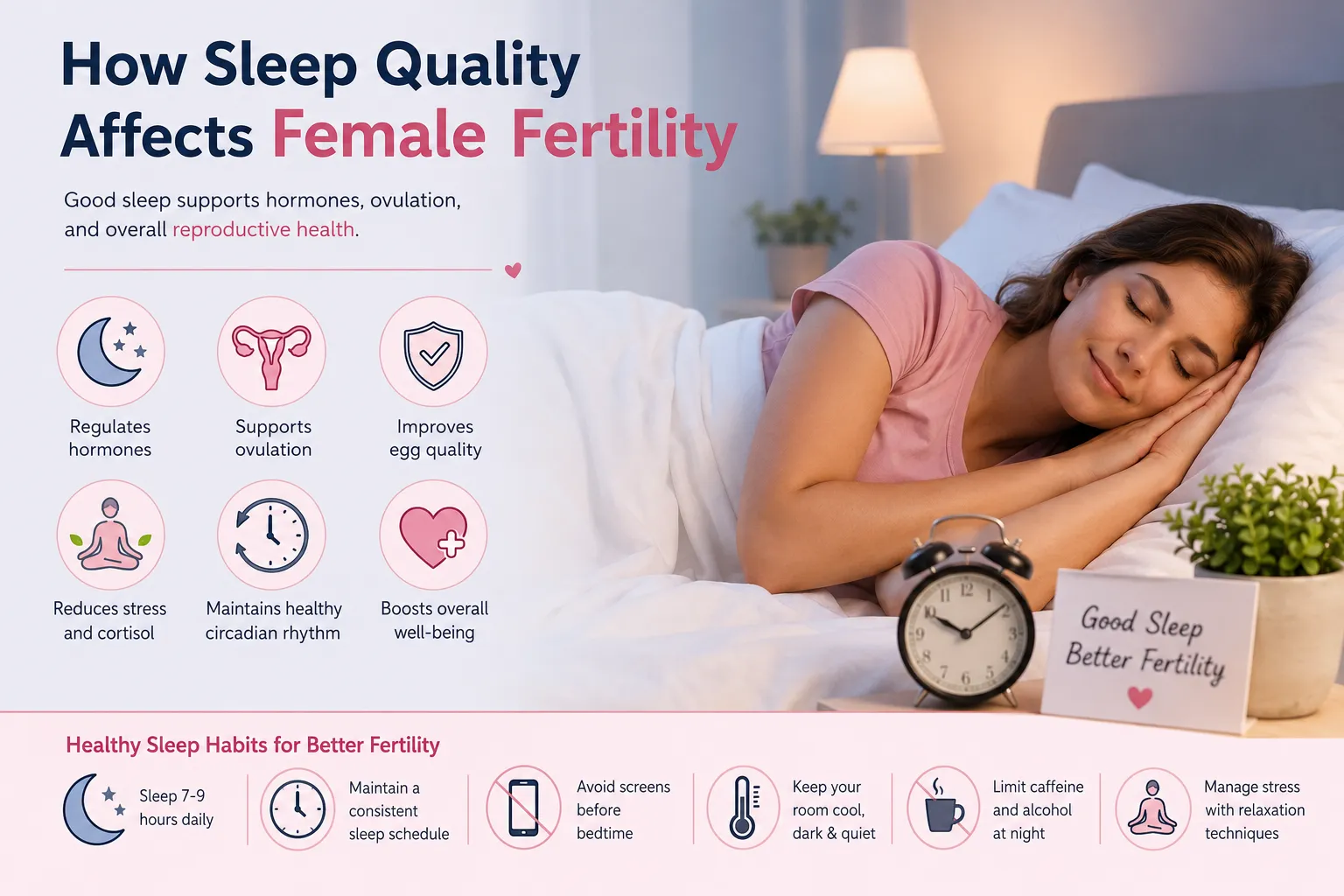

Good sleep does more than help you feel refreshed. It supports many important functions in your body, including reproductive health. If you are trying to conceive, poor sleep may affect hormone balance, ovulation, and egg quality. While sleep alone cannot treat infertility, making it a priority can support your overall fertility journey.
Many women focus on diet, exercise, and ovulation tracking. Sleep is often overlooked. However, your body performs many hormone-regulating processes while you sleep. Consistent, quality sleep helps create the right environment for healthy reproductive function.
What Is the Connection Between Sleep and Female Fertility?
Your brain controls both your sleep cycle and your reproductive hormones. The hypothalamus and pituitary gland work together to regulate hormones that support ovulation and the menstrual cycle.
When your sleep pattern becomes irregular, this communication may be affected. As a result, hormone release may become less consistent. This can influence ovulation and make conception more difficult for some women.
If you also experience irregular periods, learn how sleep and stress can impact your menstrual cycle.
Sleep Quality vs Sleep Duration
Getting enough sleep is important. Sleep quality matters just as much.
You may spend eight hours in bed but still wake up tired. Interrupted sleep, frequent waking, loud snoring, or difficulty reaching deep sleep can reduce the body's ability to recover overnight.
Healthy sleep usually means:
- Sleeping for 7 to 9 hours.
- Falling asleep without much difficulty.
- Staying asleep through the night.
- Waking up feeling rested.
How Poor Sleep Can Affect Fertility Hormones?
Sleep helps maintain the natural rhythm of several reproductive hormones.
- Follicle-stimulating hormone (FSH) supports egg development.
- Luteinizing hormone (LH) triggers ovulation.
- Estrogen prepares the body for pregnancy.
- Progesterone supports the uterus after ovulation.
- Melatonin protects developing eggs from oxidative stress.
When sleep is poor for a long time, these hormonal cycles may become less predictable. This does not always lead to infertility, but it can reduce the chances of regular ovulation in some women.
Can Poor Sleep Affect Ovulation?
Yes. Ovulation depends on the timely release of reproductive hormones. Poor sleep or an inconsistent sleep schedule may disturb your body's internal clock.
This may contribute to:
- Irregular menstrual cycles.
- Delayed ovulation.
- Occasional missed ovulation.
- Hormonal imbalance.
Women who work rotating or night shifts may experience greater disruption because their circadian rhythm changes frequently.
Does Sleep Quality Affect Egg Quality?
Egg quality depends on many factors, including age, ovarian reserve, overall health, and hormone balance. Healthy sleep supports these natural processes.
Melatonin, a hormone produced mainly during darkness, also acts as an antioxidant. It helps protect cells, including developing eggs, from oxidative stress. This is one reason fertility specialists often recommend maintaining healthy sleep habits as part of a balanced lifestyle.
You can also support reproductive health through healthy daily habits. Read more about lifestyle choices that affect fertility.
Sleep Disorders That May Affect Fertility
Some sleep disorders may also affect reproductive health. These conditions should not be ignored.
- Chronic insomnia.
- Obstructive sleep apnea.
- Shift work sleep disorder.
- Long-term sleep deprivation.
If you often wake up feeling exhausted, snore loudly, or struggle to sleep for weeks, speak with your doctor. Treating sleep problems may improve your overall health and support fertility treatment.
Healthy Sleep Habits to Support Fertility
Simple daily habits can improve sleep quality.
- Go to bed and wake up at the same time every day.
- Aim for 7 to 9 hours of sleep each night.
- Reduce screen time before bedtime.
- Keep your bedroom cool, dark, and quiet.
- Avoid caffeine late in the evening.
- Exercise regularly, but not close to bedtime.
- Practice relaxation techniques if stress affects your sleep.
- Follow a balanced diet that supports reproductive health.
If you are preparing for fertility treatment, improving your sleep and following healthy nutrition may help you feel physically and emotionally ready. You may also find these natural ways to improve egg quality before IVF helpful.
When Should You See a Fertility Specialist?
Consult a fertility specialist if:
- You have been trying to conceive for 12 months without success.
- You are over 35 and have been trying for six months.
- Your periods are irregular or absent.
- You have ongoing sleep problems that affect your daily life.
- You have been diagnosed with PCOS, thyroid disease, or another hormonal condition.
Conclusion
Sleep is an important part of reproductive health. It supports hormone balance, regular ovulation, and healthy body function. Poor sleep does not always cause infertility, but it can become one of several factors that affect conception.
Making sleep a daily priority is a simple lifestyle change with long-term health benefits. If sleep problems continue or you are finding it difficult to conceive, seek medical advice for a complete fertility evaluation.
Frequently Asked Questions
Can poor sleep reduce the chances of getting pregnant?
Poor sleep may affect hormone balance and ovulation. This can make conception more difficult for some women.
How many hours should women sleep when trying to conceive?
Most adults benefit from 7 to 9 hours of quality sleep every night.
Does sleeping late affect fertility?
Regular late nights may disturb your body's natural circadian rhythm. Over time, this can influence reproductive hormone regulation.
Can better sleep improve fertility?
Healthy sleep supports hormone balance and overall reproductive health. It should be combined with a balanced diet, regular exercise, and appropriate medical care when needed.


























Sign in to leave a comment.