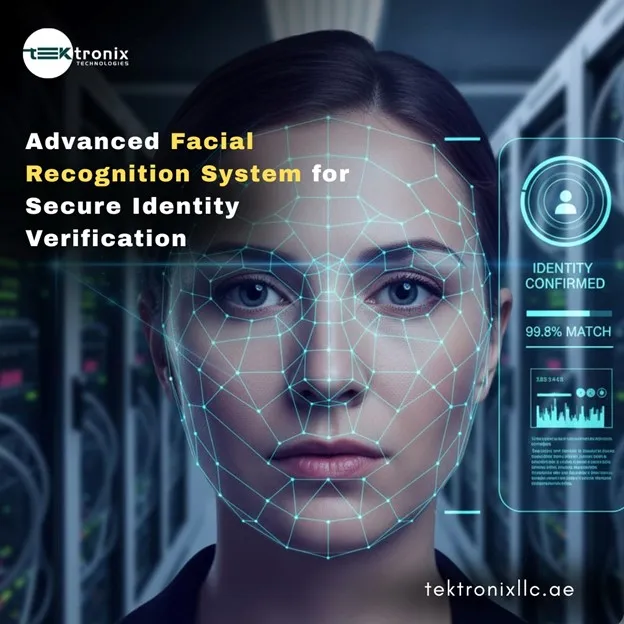

A school gate is one of the few access points where getting security wrong carries consequences far beyond a typical office building. A properly designed Facial Recognition System gives UAE schools and universities a way to control campus entry with the accuracy and speed the setting genuinely demands, and educational institutions reviewing facial recognition deployments for schools and universities are finding that the technology addresses both safety and administrative efficiency at once. 
Campuses present a genuinely distinct access control challenge compared to a corporate office. Large numbers of students arrive and depart within tight windows around the start and end of the school day, staff and faculty need differentiated access across teaching and administrative buildings, and parents, delivery personnel, and occasional visitors all require a controlled but not overly cumbersome entry process. Facial recognition has become a practical answer to managing that complexity reliably.
Why Schools and Universities Are Adopting Facial Recognition
Manual gate checks by security guards, however diligent, cannot realistically verify hundreds of student identities individually during a compressed morning arrival window. A guard recognising most students by sight still leaves room for an unfamiliar face to pass unchallenged during a particularly busy moment, a gap that concerns school administrators far more than it would a typical commercial building manager.
Beyond the security case, campuses benefit from the same efficiency gains facial recognition delivers elsewhere — automated attendance recording that eliminates manual roll call, faster parent pickup verification at the end of the school day, and clear visitor logging for anyone entering campus grounds outside the regular student population.
The Verification Pipeline Adapted for Campus Environments
Face Detection Across Diverse Age Groups and Growing Students
Campus deployments present a particular technical challenge for Face Detection, since younger students' facial features change more noticeably over shorter periods than an adult employee's would, requiring systems designed to remain accurate despite natural growth and appearance changes across an academic year.
Facial Identification Against Student, Staff, and Visitor Databases
Campus Facial Identification typically manages several distinct enrolled populations simultaneously — students, teaching staff, administrative personnel, and approved parent or guardian profiles — each requiring different access permissions and often different re-enrolment schedules to account for appearance changes over time.
Facial Authentication for Fast, Reliable Gate and Building Access
During the concentrated morning arrival rush, Facial Authentication needs to process large volumes of students quickly enough to prevent a queue forming at the school gate, since a slow system during peak arrival times creates exactly the kind of congestion that undermines both safety and punctuality.
Facial Recognition Access Control for Campus Safety
Deployed as part of a broader Facial Recognition Access Control strategy, campus systems typically extend beyond the main gate to library entrances, laboratory access, dormitories for boarding or university facilities, and administrative offices, with each zone carrying its own permission set appropriate to who genuinely needs to be there.
Hardware and Software Suited to Educational Environments
Facial Recognition Device Placement for School Gates and Entrances
Choosing the right Facial Recognition Device for a school gate means accounting for outdoor exposure, varying student heights across different age groups, and the need for weatherproof housing suited to UAE's outdoor conditions at drop-off and pickup zones.
Facial Recognition Software with Parent and Visitor Management Features
Campus-appropriate Facial Recognition Software typically includes features generic commercial platforms lack, such as automated parent notification when a child checks in or out, custody-restriction alerts for specific family situations, and visitor pre-approval workflows tailored to a school's administrative processes rather than a corporate office.
Facial Recognition Solution Considerations Unique to Education
The right Facial Recognition Solution for a school differs meaningfully from a corporate deployment in scale and re-enrolment frequency, since a system managing several thousand students across multiple grade levels needs to accommodate annual appearance changes and cohort turnover far more actively than a stable adult workforce would ever require.
Facial Recognition System UAE: Educational Deployment Across the Emirates
Adoption of a Facial Recognition System UAE-wide spans international schools, national curriculum institutions, and universities across the Emirates, each balancing safety requirements against the practical realities of managing thousands of enrolled students and staff across a busy academic calendar.
Facial Recognition System Dubai — KHDA-Regulated School Considerations
A Facial Recognition System Dubai deployment at a KHDA-regulated school typically needs to align with the authority's broader school safety and data governance expectations, with facial recognition increasingly forming part of a school's overall safeguarding infrastructure documentation reviewed during inspection cycles.
University Campuses Bring Additional Complexity
Higher education institutions face access control challenges that differ meaningfully from K-12 schools. University campuses often span multiple buildings across a larger physical footprint, house residential dormitories requiring around-the-clock access management, and enrol adult students who move independently between lectures, laboratories, libraries, and social spaces throughout the day rather than following a single fixed daily schedule.
Laboratory and research facility access adds a further layer, since certain university spaces house valuable equipment or sensitive research data requiring more restrictive permissions than general lecture halls. A well-designed campus deployment typically layers facial recognition with graduated access tiers, granting general campus access broadly while reserving laboratory, server room, or restricted archive access to specifically authorised staff and postgraduate researchers.
Protecting Minors' Biometric Data: Consent and Privacy
Collecting biometric data from minors carries additional responsibility beyond a standard workplace deployment. UAE PDPL requirements around consent apply with particular care in an educational context, generally requiring documented parental or guardian consent before a child's facial data is enrolled, alongside clearly communicated retention periods tied to the length of a student's enrolment at the institution.
Schools should ensure their facial recognition policy is communicated transparently to parents during enrolment, covering exactly what data is collected, how it's used, who can access it, and when it's deleted after a student leaves the institution. Institutions pursuing ISO 27001 alignment typically extend that framework specifically to student biometric data, treating it as a category requiring elevated protection compared to general administrative records.
Balancing Safety Benefits Against Privacy Sensitivities
School administrators considering facial recognition should weigh the genuine safety and efficiency benefits against parent and community sensitivity around biometric data collection for children specifically, which is often more pronounced than similar concerns in a workplace setting. Transparent communication, opt-out alternatives for families who decline enrolment, and visible commitment to data minimisation typically address most parental concerns raised during a rollout.
Institutions that engage parent communities early in the planning process, rather than presenting facial recognition as an already-finalised decision, generally encounter considerably less resistance during implementation than those that roll out the technology without adequate prior consultation.
Why UAE Educational Institutions Choose Tektronix for Facial Recognition
Tektronix LLC deploys facial recognition systems for schools and universities across the UAE, working with manufacturers including HID Amico, Suprema, and ZKTeco to select hardware suited to outdoor gate conditions and software configured with the parent notification and visitor management features educational environments specifically require. Every project includes a data governance framework addressing parental consent, retention, and access policy, developed collaboratively with the institution's administration before enrolment begins.
Educational institutions planning a campus safety upgrade can review Tektronix's facial recognition solutions in Dubai to see configurations suited to K-12 schools as well as university campuses.
Conclusion
Campus access control carries distinct demands that a generic corporate Facial Recognition System was never designed to fully address. Reliable Face Detection that accounts for growing students, Facial Identification managing multiple distinct populations, and fast Facial Authentication during peak arrival windows together give schools genuine operational confidence. Built into a broader Facial Recognition Access Control strategy, and supported by campus-appropriate Facial Recognition Device placement and Facial Recognition Software with parent and visitor features, institutions gain both safety and administrative efficiency. Selecting the right Facial Recognition Solution while handling minors' biometric data with genuine care protects both students and institutional trust. As Facial Recognition System UAE adoption grows across educational institutions — including Facial Recognition System Dubai KHDA-regulated schools — administrators who plan thoughtfully around both safety benefits and privacy sensitivities will implement the technology most successfully.


























Sign in to leave a comment.