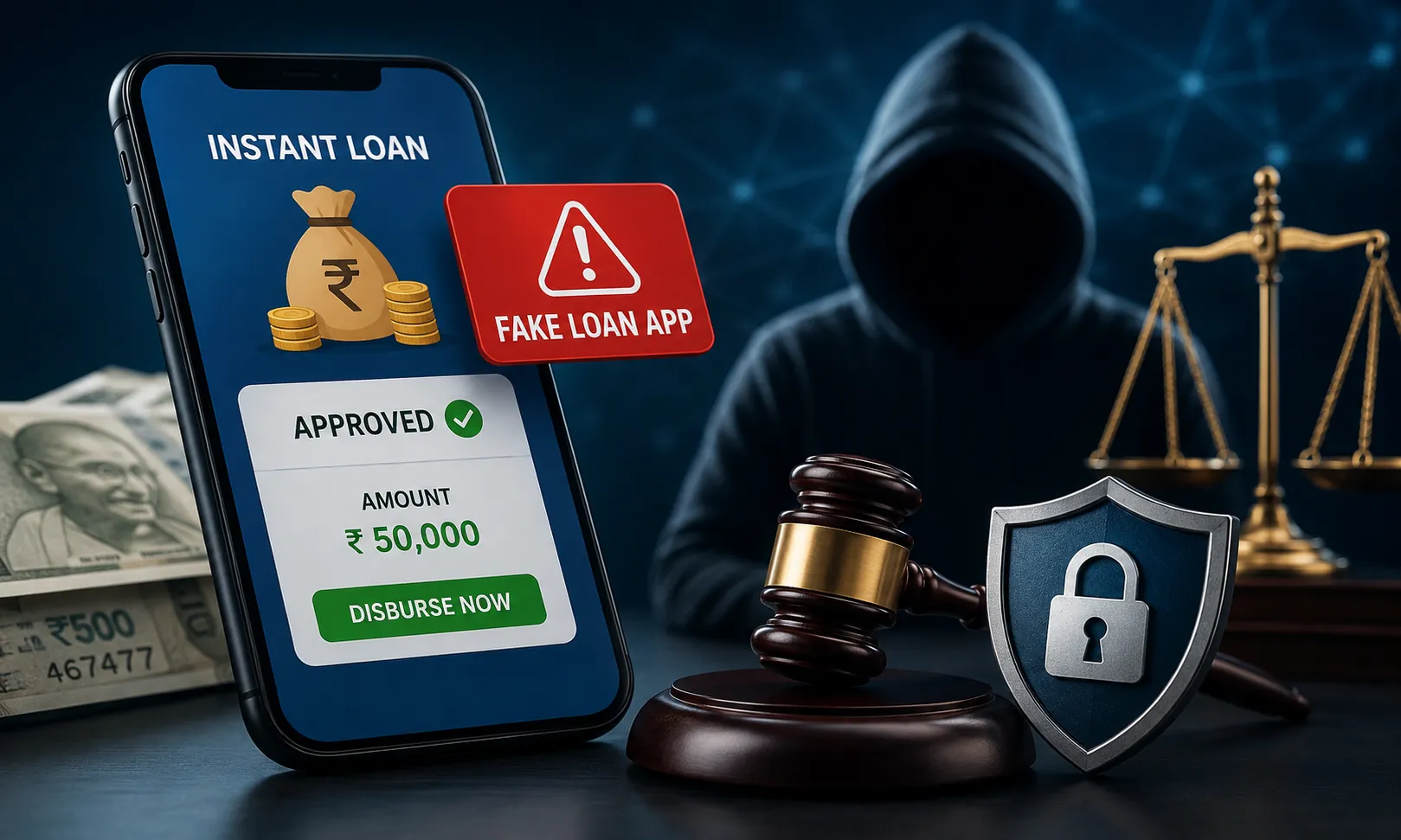

A loan app can appear helpful when you need money quickly, but fraudulent apps can turn a small financial need into a serious cybercrime. Victims may face fake processing fees, hidden charges, threats, or misuse of their contacts and photos. The good news is that you do not have to handle such conduct silently. Timely reporting, proper evidence, and suitable legal action can help protect your position.
How Fake Loan App Scams Work and What Victims Should Do
Fake loan apps often promise instant approval, low paperwork, and quick disbursal. Warning signs include demands for advance fees, unclear lender details, unusually high charges, and requests for access to contacts, call logs, files, or media. RBI's digital lending rules require regulated lenders and their lending service providers to follow customer-protection and data-related safeguards. RBI has also created a public repository to help users verify digital lending apps linked to regulated entities.
Common Warning Signs of Fake Loan Apps
Be careful when an app does not clearly identify the lender or changes the loan terms after approval. Genuine digital lending arrangements should provide important loan information, including the cost of credit. RBI guidance also requires need-based data collection with prior and explicit consent and restricts unnecessary access to phone resources such as contact lists and call logs.
Immediate Steps to Protect Money and Personal Data
Stop unnecessary communication with suspicious callers and do not make another payment simply because of threats. Contact your bank or payment provider about any fraudulent transaction. Secure your accounts, review app permissions, and preserve screenshots, messages, payment references, phone numbers, UPI details, and other records. This evidence trail can become important later.
Legal Action Available to Victims in India
Fake loan app cases can involve several legal issues, depending on the facts. Fraudulent representations may raise concerns under the Bharatiya Nyaya Sanhita, 2023, which contains offences relating to cheating, cheating by personation, and criminal intimidation. The Information Technology Act, 2000 may also become relevant where certain computer-related offences or misuse of electronic information are involved.
Report Cyber Fraud Without Delay
Victims should report online financial fraud promptly through India's National Cyber Crime Reporting Portal or by calling 1930, the national cyber financial fraud helpline. You should also notify your bank or payment provider immediately. Early reporting can improve the chances of tracing or stopping suspicious transactions.
Take Action Against Threats and Data Misuse
Threatening calls, abusive recovery messages, contacting relatives, or misuse of private information should be recorded and included in the complaint. Where the lender is regulated, RBI's digital lending framework places requirements around data collection, privacy, and responsible recovery practices.
When Cyber Crime Lawyers Can Help
When the matter involves significant financial loss, repeated threats, identity misuse, or difficulty pursuing a complaint, cyber crime lawyers can help assess the evidence and build a practical legal strategy. They can also explain the appropriate complaint process and possible legal recourse. No lawyer can guarantee recovery, but timely action can help place the victim in a stronger legal position.
The safest approach is simple: preserve evidence, report quickly, protect your personal information, and seek professional guidance when the situation becomes serious.






























Sign in to leave a comment.