
The decision between a compact spa and a family spa looks straightforward on the surface — more people, bigger spa. But the differences go beyond seating count, and understanding them properly helps avoid buying something that works for two but frustrates everyone else in the household.
Here's what actually changes when you're buying a spa for a family or a larger group, and how to think through the decision.
Seating Configuration Is Not Just About Numbers
A compact spa might seat three or four people on paper, but how those seats are arranged matters as much as how many there are.
Most compact spas are designed around two primary users. The layout reflects this — often with one or two lounge positions and a couple of upright seats arranged around the perimeter. When a third or fourth person joins, they typically end up in a less favourable position, or someone has to rotate out.
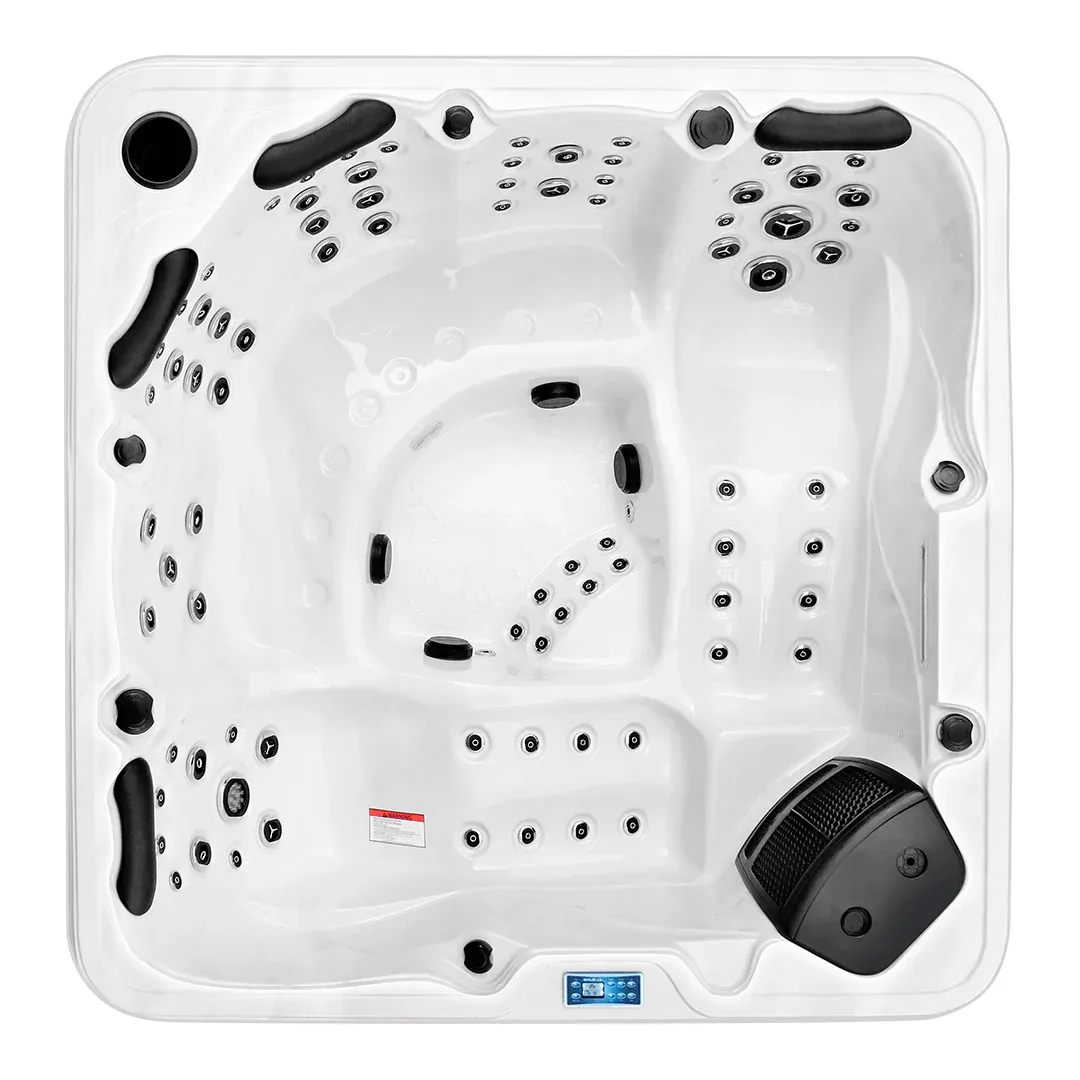
A family spa is designed with multiple simultaneous users in mind from the outset. The seating arrangement distributes positions more evenly — a combination of upright seats, corner seats, and lounge positions that gives everyone a considered place rather than a compromise one. The Family Spa from Spas Wholesale, for example, includes four seats and two lounges across a 2280×2280mm footprint — a configuration designed for six adults to use at the same time comfortably, not six adults to technically fit.
If your household has three or more people who will regularly use the spa at the same time, this distinction matters more than the seat count number alone.
Jet Coverage Changes With Size
A compact spa with 20–30 jets serves two primary users well — the jets are positioned to cover the seats those users occupy. When additional people join, they're often sitting in positions that weren't the design priority for jet placement.
A family spa with 60–80+ jets is engineered to provide meaningful hydrotherapy coverage across all seating positions simultaneously. The jet placement considers multiple users at different positions, which means everyone in the spa is receiving actual massage benefit, not just the two people in the prime positions.
This is worth thinking about if hydrotherapy is a genuine reason for buying — not just ambience and socialising, but actual muscle relief and recovery. In that case, the number of jets and their coverage map across all seats is a meaningful specification, not just a number to compare on a product sheet.
Pump Capacity Needs to Match the Load
More jets serving more people requires more pump capacity to maintain water pressure and flow rate.
A compact spa typically runs on a single dual-speed pump — sufficient for the jet count and seating configuration it's designed to serve. A family spa runs on multiple pumps: the Family Spa uses two massage pumps plus a dedicated circulation pump, which allows it to run jets at full pressure across all positions simultaneously while maintaining continuous filtration and heating.
The practical consequence: a compact spa used by four people at full jet capacity may deliver noticeably less pressure per jet than the same spa used by two. A family spa with the pump capacity to match its jet count maintains consistent performance regardless of how many seats are occupied.
Water Capacity and Heating Time
More seats means more water volume — and more water volume means longer initial fill times and slightly higher energy cost to heat from cold.
The Family Spa holds 1,460 litres, compared to approximately 700–900 litres in a typical compact model. Initial heating from cold takes longer, but once at temperature, the ecoWARM insulation system — comprising the lockable hard cover, full tub insulation, foil thermal layer, and temperature-sealed base — maintains that temperature efficiently. The running cost difference between a well-insulated family spa and a compact spa is less significant than the initial heating difference might suggest.
For households that keep the spa at temperature continuously (the most common approach), the ongoing energy cost is primarily a function of insulation quality and ambient temperature, not water volume. A well-insulated 1,460-litre spa in a moderate Australian climate will hold temperature through the night with minimal energy draw.
Footprint and Backyard Space
The obvious consideration: a family spa requires more space.
The Family Spa is 2280×2280mm — roughly 2.3 metres square. That's a significant footprint, and it needs clear space around it for access, cover removal, and the operation of a cover lifter. A compact spa in the 210×160cm range takes up considerably less deck or ground area.
If your backyard has the space, a family spa anchors the outdoor living area in a way that a compact model doesn't. It becomes a centrepiece rather than an addition. If space is genuinely constrained, a compact spa used in rotation — different family members at different times — may be more practical than a larger unit that takes up space the backyard can't accommodate.
Budget: Upfront and Ongoing
Family spas cost more upfront. The difference in manufacturing complexity — more shell material, more jets, more pumps, more plumbing — translates directly to price.
The comparison to make is value per use rather than sticker price. If four or five people use a family spa regularly, the per-use cost of a $9,990 family spa over five years compares very favourably to a cheaper compact model that realistically serves two people well and becomes a source of frustration when the whole family wants to use it together.
The ongoing chemical and maintenance cost difference between a compact and family spa is present but not dramatic — more water volume means slightly more chemicals to balance, but the filtration and ozone systems in the Family Spa are scaled to the water volume they're managing.
The Straightforward Summary
If two people will be using the spa most of the time with occasional guests, a compact spa serves that use case well and costs less.
If three or more people will regularly use the spa at the same time — family evenings, entertaining, regular group use — a family spa is worth the additional investment. The seating configuration, jet coverage, and pump capacity are all designed for simultaneous multi-user use in a way that a compact model stretched beyond its intended capacity is not.
Spas Wholesale stocks the Family Spa alongside a full range of compact spas — with fast delivery and installation across Australia and a 20-year warranty.
























Sign in to leave a comment.