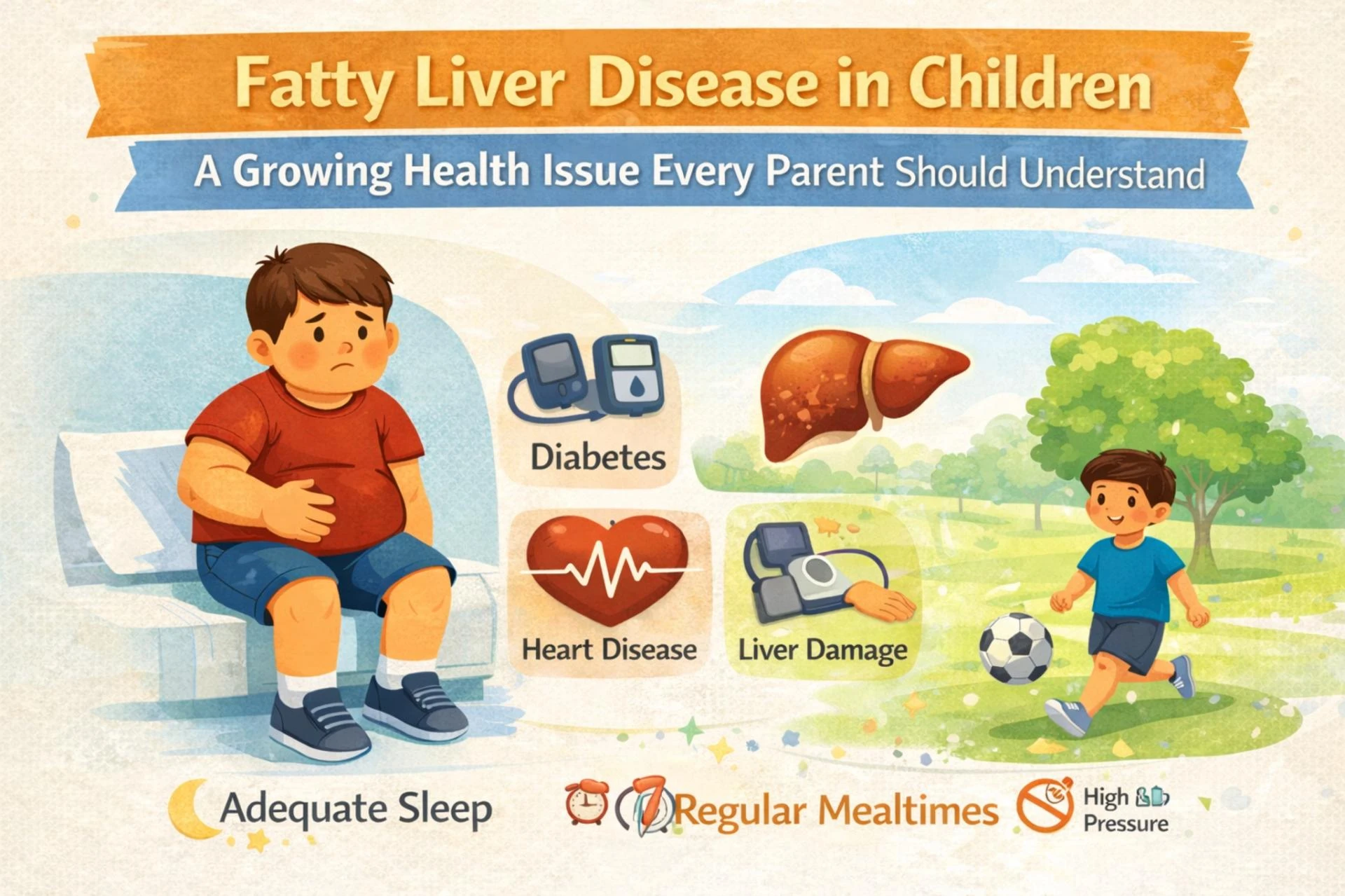

Fatty Liver Disease in Children: What Parents Often Miss Early
Fatty liver disease in children is no longer rare, and that reality is catching many families off guard. Often, the first time parents hear the term is not during an emergency, but in the middle of what feels like an ordinary doctor visit. A routine blood test. A complaint about tiredness. A paediatrician suggesting an ultrasound “just to be safe.” The appointment ends, but the worry doesn’t.
It usually starts with confusion rather than panic. Parents replay conversations in their minds. Was something missed earlier? Was this developing silently for months? Could it have been prevented? These questions tend to surface slowly, often late at night when the house is quiet.
The most difficult part is that many children with fatty liver disease look completely fine. They go to school, joke with friends, argue over homework, and complain about vegetables like any other kid. Nothing about their daily routine feels alarming. That normalcy is exactly why this condition is so easy to miss in its early stages.
“But He Looks Completely Fine” – The Confusion Most Families Feel
A father once shared how close he came to ignoring the diagnosis. His 12-year-old played cricket every evening, stayed active, and rarely fell sick. The family had visited the doctor for something minor. When the reports showed elevated liver enzymes, it felt unreal.
The doctor explained that fat can begin to build up in the liver long before any obvious symptoms appear. The child may not feel pain. There may be no visible illness. But internally, the liver is already under strain.
Later that night, trying to understand what the reports actually meant, he searched for reliable information and found a detailed guide that explained the condition clearly and calmly:
https://ayushmanliver.com/masld-in-children-a-complete-guide-for-parents-on-prevention-and-care/
What helped most wasn’t fear-based language. It was the clarity. Simple explanations about how sleep, diet, and daily habits affect a child’s liver health. For the first time, the diagnosis felt understandable instead of overwhelming.
How Everyday Habits Slowly Add Up
Fatty liver disease in children rarely develops because of one single cause. More often, it grows out of ordinary routines that seem harmless on their own.
Skipping breakfast because mornings are rushed.
Sugary drinks added to lunchboxes because kids refuse plain water.
Long hours of sitting between online classes, homework, and screens.
Weekends spent indoors because everyone feels tired.
None of these habits look extreme. In fact, they describe everyday life in many households. That’s why parents rarely see the risk building up.
Health organizations such as the World Health Organization have also highlighted how rising childhood obesity and sedentary lifestyles are increasing the risk of metabolic problems worldwide, including those affecting liver health.
https://www.who.int/news-room/fact-sheets/detail/obesity-and-overweight
One mother from Delhi shared how she dismissed her daughter’s tiredness for months. “We thought it was just school pressure,” she said. Tuition, homework, exams — fatigue felt normal. When the doctor suggested further testing, she hesitated. Only later did she realize how closely lifestyle habits and liver health can be connected.
She didn’t change everything overnight. But slowly, things shifted. Bedtimes became earlier. Packaged juice became occasional rather than daily. Evening walks became a shared routine. No drastic transformation, just consistent small adjustments.
The Part Doctors Emphasize (But Parents Often Miss at First)
Early fatty liver disease is often reversible.
This surprises many parents.
They expect strict diets, heavy medication, or long-term complications. But most paediatricians emphasize consistency rather than extremes.
Not with panic.
Not with harsh restriction.
But with steady, realistic changes.
Parents who see improvement usually talk about small shifts rather than dramatic overhauls. Evening walks becoming a habit. Sugary drinks slowly disappearing from the fridge. More home food, even if it’s simple. Less pressure to be perfect, more focus on doing better most days.
These changes are not glamorous. But they are practical, sustainable, and effective when continued over time.
Even Children Who Aren’t Overweight Can Be Affected
This is the point where many parents feel genuinely surprised.
There is still a common belief that fatty liver disease only affects children who are visibly overweight. But doctors now see cases in children who appear slim and otherwise healthy. Sleep disruption, high sugar intake, genetics, and metabolic factors can all play a role.
A child who looks healthy on the outside may still be experiencing internal changes that aren’t obvious without testing. That’s why appearance alone is not a reliable indicator of liver health.
The Emotional Side Parents Rarely Talk About
Beyond the medical side, there is an emotional journey that many parents quietly go through.
Guilt often comes first.
Did I allow too much screen time?
Should I have noticed earlier?
Did I ignore the signs?
Then comes fear. What if it worsens? What does this mean long term?
But over time, many families move away from guilt and fear toward awareness. They begin paying closer attention to routines. They ask better questions during doctor visits. They become more intentional, not obsessive, about daily habits.
One parent put it simply: “We didn’t become perfect. We just became more aware.”
That shift often makes the biggest difference.
The Reality Most Families Experience
No family handles this perfectly.
There are days when children still ask for junk food.
Days when schedules collapse.
Days when screens take over because everyone is exhausted.
Days when parents feel like they’re failing.
Yet families who manage this condition successfully over time usually don’t rely on strict control. They rely on attention. They notice patterns earlier. They take reports seriously. They follow up instead of postponing. They make small changes and repeat them often enough to matter.
Many parents admit that if they had ignored that one abnormal report or skipped that one follow-up appointment, they might still be unaware anything was wrong.
Why Early Awareness Makes Such a Difference
Fatty liver disease in children does not announce itself loudly. It blends into ordinary life. No dramatic symptoms. No obvious warning signs in many cases.
But when families catch it early, the outcome often looks very different. There is more room for improvement. More opportunity for positive change. Less fear, more action.
Awareness doesn’t mean panic. It means paying attention. Taking test results seriously. Asking questions. Making gradual changes that can realistically be maintained.
Families who approach it this way often say something similar months later:
“We’re not perfect, but we’re doing better than before.”
And in most cases, that’s enough to change the direction of the condition.




























Sign in to leave a comment.