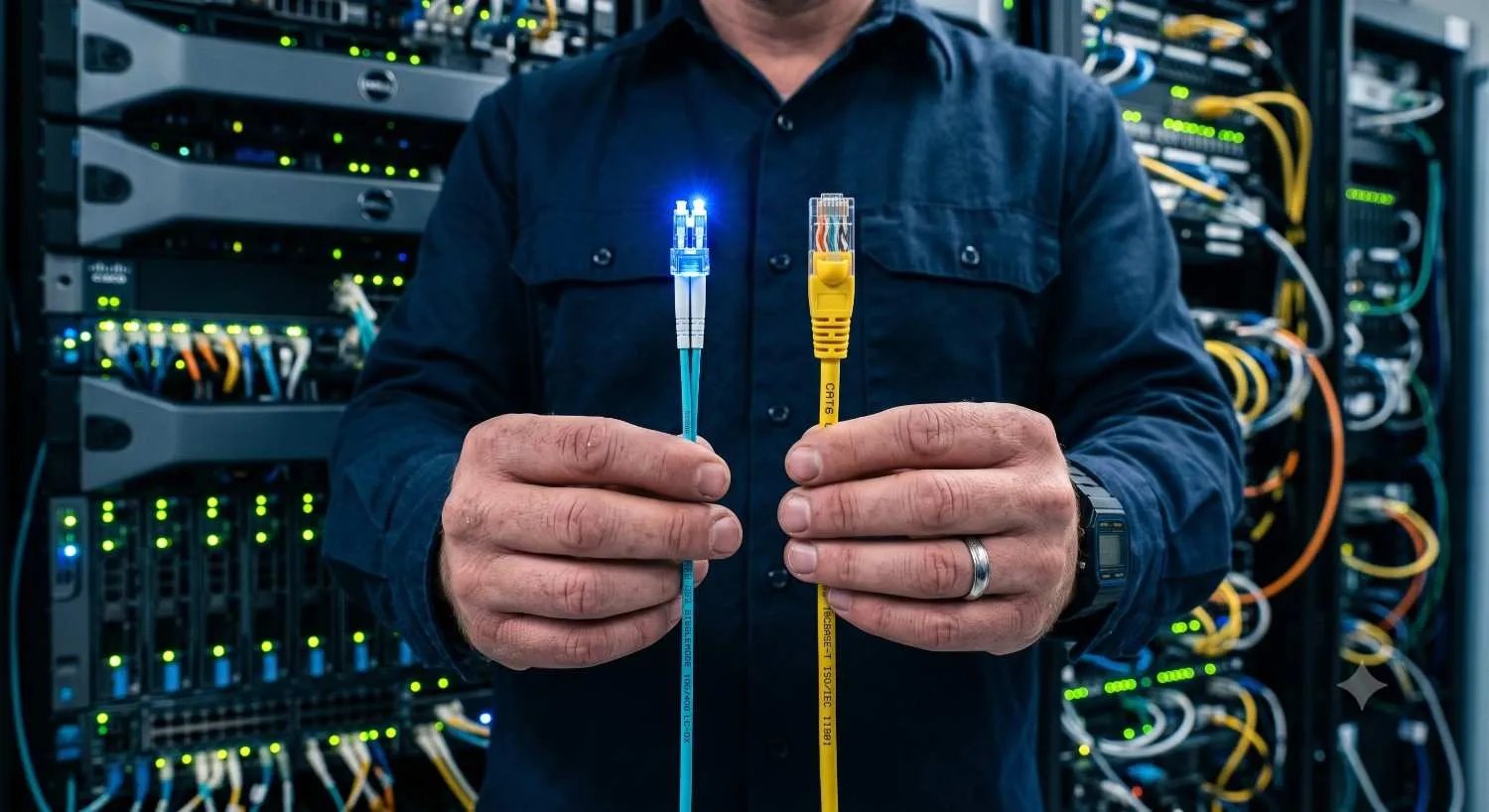

In today’s hyper-connected business landscape, your company's network infrastructure is its central nervous system. Whether you are moving into a new office space or upgrading an aging data center, one of the most critical decisions you will face is choosing between fiber optic and copper cabling.
Both mediums have their distinct advantages, but selecting the wrong one can lead to bandwidth bottlenecks, future upgrade headaches, and unexpected costs. Here is a comprehensive guide to help you understand which cabling solution is right for your business.
Understanding the Basics
Before diving into the comparison, it is important to understand how each cable transmits data:
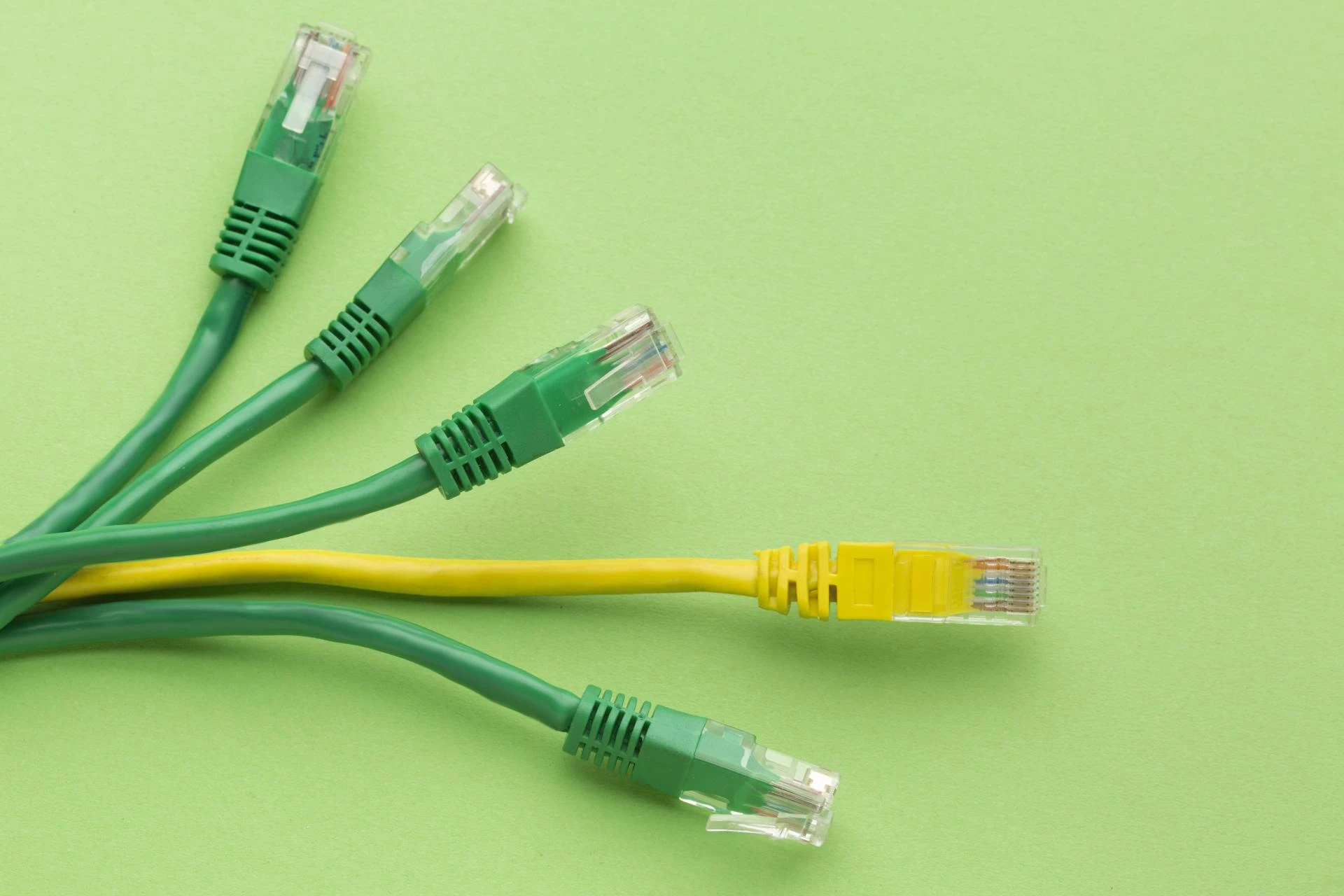
- Copper Cabling (Cat5e, Cat6, Cat6a, Cat7): Copper cables transmit data using electrical impulses. They have been the industry standard for decades and are typically used for shorter-distance connections, such as connecting desktop computers to a local switch.
- Fiber Optic Cabling: Fiber cables transmit data using pulses of light generated by small lasers or light-emitting diodes (LEDs) traveling through microscopic glass or plastic strands. They are designed for high-speed, long-distance data transmission.
Copper vs. Fiber: A Head-to-Head Comparison
To make the best decision for your infrastructure, it helps to compare these cables across the most important performance metrics for commercial networks.
| Feature | Copper Cabling (e.g., Cat6/Cat6a) | Fiber Optic Cabling |
|---|---|---|
| Speed & Bandwidth | Up to 10 Gbps (depending on category and distance). | 10 Gbps to 100+ Gbps with massively higher bandwidth. |
| Distance Limits | Typically limited to 100 meters (328 feet) before signal degrades. | Can span several kilometers without losing signal strength. |
| Interference | Susceptible to Electromagnetic Interference (EMI) from heavy machinery. | Completely immune to EMI, making it ideal for industrial spaces. |
| Security | Easier to tap into, though still relatively secure. | Very difficult to tap without breaking the glass, highly secure. |
| Cost | Generally more cost-effective for materials and installation. | Higher initial investment for cables and compatible hardware. |
Which One Does Your Business Need?
When to Choose Copper:
For most standard office environments where workstations are within 300 feet of the telecom room, copper remains the go-to choice. It is highly cost-effective and perfectly handles standard internet browsing, VoIP phone systems, and basic cloud applications.
When to Choose Fiber:
If your business relies on massive data transfers, operates across a large warehouse, or demands zero latency (such as in financial trading or large-scale media production), fiber is the superior choice. Fiber is also commonly used as the "backbone" connecting different telecom closets across multiple floors, while copper runs the horizontal stretch to the individual desks.
The Importance of Professional Installation
Whether you decide to build a network purely on Cat6 copper or invest in a high-speed fiber optic backbone, the physical components are only as good as the installation. Improper terminations, exceeding bend radius limits, or failing to test the lines can result in severe network degradation.
This is why partnering with certified structured cabling installers is crucial. Professional technicians ensure that cables are routed safely, terminated perfectly, and certified to handle your expected bandwidth loads. Whether you need an office completely rewired or are looking for ongoing data cabling installation services, relying on local experts prevents costly downtime.
Real-World Success Stories
Don't just take our word for it. Here is how proper network planning and cabling upgrades have transformed operations for other businesses:
Case Study: Envoy Air
Aviation operations require absolute precision and unyielding network reliability. By upgrading their structured cabling, Envoy Air secured a robust network capable of handling high-density communication and logistics data without interruption.
Case Study: Significant Internet Upgrade
A local business was suffering from severe bandwidth throttling due to outdated legacy cables. A comprehensive infrastructure upgrade allowed them to finally utilize the high-speed internet they were paying their ISP for, completely eliminating daily network crashes.
Case Study: Davis Jones
For the Davis Jones team, poor cable management and aging infrastructure led to constant connectivity drops. A strategic cabling overhaul organized their server room and future-proofed their office for upcoming technological expansions.
Final Thoughts
Future-proofing your network starts at the physical layer. While copper cabling will continue to serve as a reliable, cost-effective solution for local endpoints, fiber optics represent the future of high-speed business communication. By assessing your bandwidth requirements, workspace size, and budget, you can design a hybrid or specialized network that keeps your team productive and online.
























Sign in to leave a comment.