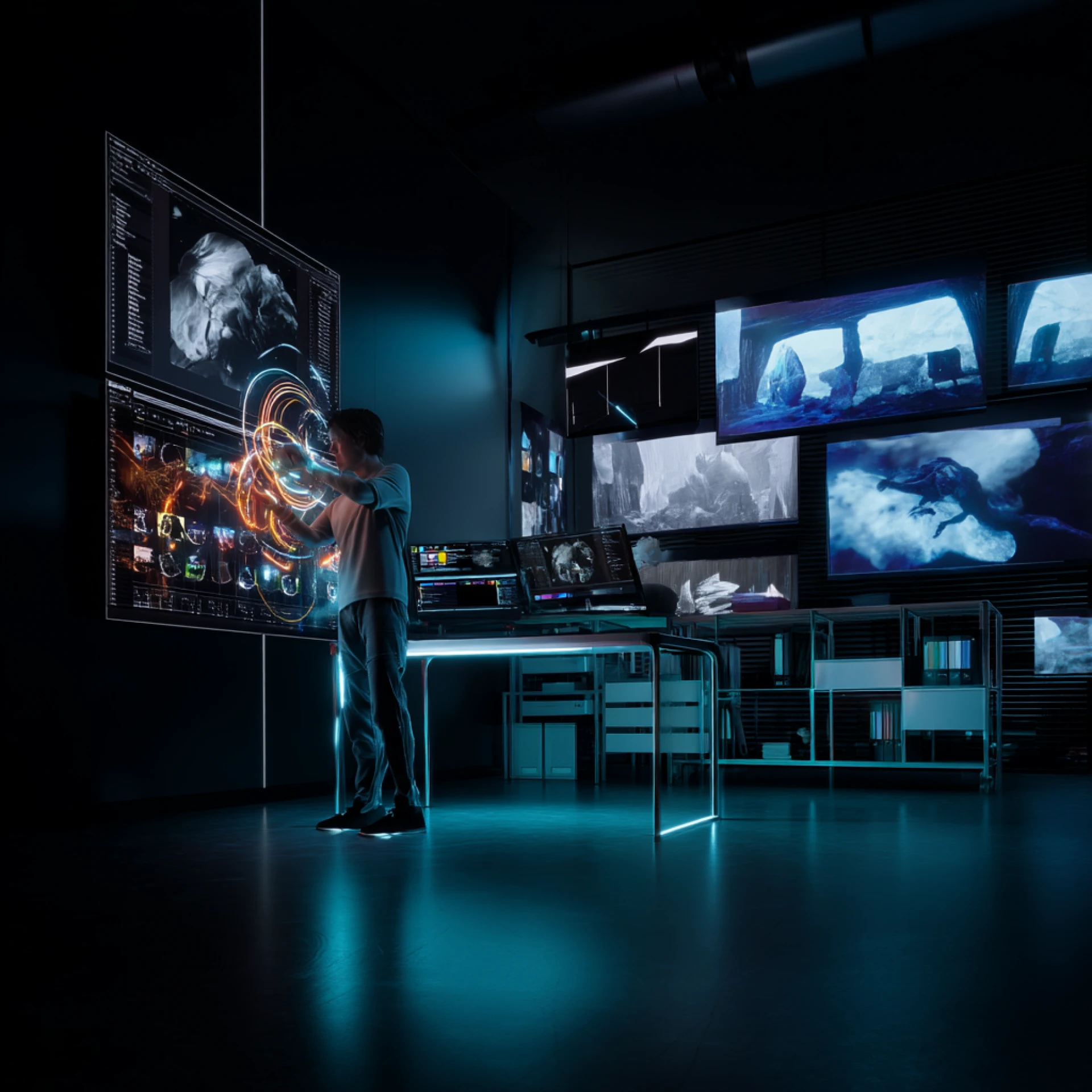

I’ve been following the evolution of AI tools closely, especially in the creative field—and one tool that really caught my eye this year is Google Flow. If you haven’t heard of it yet, don’t worry, it’s still under the radar for most people outside the tech and film communities. But after digging into what it does, I think it could become one of the most important shifts in filmmaking we’ve seen in a while.
Flow was announced at Google I/O 2025 and it’s already turning heads, not because it generates video (a lot of tools can do that now), but because it actually lets creators build full stories. It’s not just about short clips or animated fragments—it’s about telling a consistent story, shot by shot, frame by frame, all generated with AI.
What Flow Actually Does
Flow works by combining Google’s most advanced models—Veo, Imagen, and Gemini—to create video sequences from text prompts. Sounds basic, but it goes much deeper.
Let’s say you write:
“A girl stands alone in a neon-lit alley in Tokyo, rain pouring down, her expression unreadable.”
Flow will generate that scene. But beyond that, you can follow up with:
“She hears footsteps behind her and turns slowly.”
And Flow remembers the character, the environment, the mood, and continues the scene in perfect continuity.
It gives you tools like Scene Builder, which is basically where you build your characters, environment, and tone—and Flow carries those through your story. You can control camera angles, movement, even background sound. Plus, if you create digital props or environments, you can reuse them later. It’s like having a virtual set that stays consistent as your story progresses.
Why It’s Gaining Attention
Filmmakers are already testing it in creative ways. One example that stuck with me was from Dave Clark, an indie filmmaker who created a short called Freelancers using Flow. He showcased a scene set along the Amalfi Coast—generated entirely from text. What’s wild is how cinematic the visuals looked. It didn’t feel like AI. It felt like a high-end, well-produced indie film.
People like Henry Daubrez and Junie Lau are also jumping in. Lau’s upcoming project Dear Stranger is a narrative drama, and she’s using Flow to build key scenes and develop visual pacing. She called it “a new way of thinking about storyboarding.”
There’s also a section called Flow TV, where users can publish their short clips or films and show the exact prompts and structure they used. It’s like a community lab, full of inspiration and experimentation.
How It’s Different from Other AI Tools
Yes, there are other video generation platforms out there. OpenAI’s Sora, Moonvalley, Pika, and tools like Runway are making impressive progress. But here’s the thing—most of them can’t build consistent scenes across a full story. They generate great short clips, but they don’t “remember” the scene before. Flow does.
You can create a continuous narrative across multiple scenes, and the AI understands that the woman in the alley is the same character who enters a train station five scenes later. It’s that level of contextual storytelling that sets Flow apart.
Where It Gets Interesting (and a Little Scary)
On one hand, Flow is a dream tool for creators. It removes so many barriers: budget, access to gear, location scouting, scheduling, even post-production. You can iterate faster, test ideas visually before committing to shoots, or even create entire projects if you want.
But yeah, there’s a flip side too. There are conversations happening about job displacement, especially for editors, animators, and even cinematographers. If a filmmaker can do 80% of the heavy lifting on a laptop, what happens to the team? Personally, I think there’s always going to be space for human creativity, especially in directing, storytelling, acting, and emotional nuance. But there’s no denying that this tech will reshape roles.
One quote from Dave Clark stuck with me. He said, “Tools like Flow don’t replace vision—they remove friction.” That feels right. We still need people who can imagine compelling stories. Flow just makes the execution more accessible.
My Perspective
I think Flow is still in its early stages, but the potential is obvious. It’s available only in the U.S. right now and mostly for Pro and Ultra users of Google AI (the Ultra plan is pricey, around $249/month), but if you’re someone who tells stories visually—filmmaker, ad creator, even educators—this might be worth watching closely.
Even if you’re not ready to use it, understanding what’s coming next in visual content is important. We’re witnessing the rise of AI-powered storytelling—not just in writing, but in full-blown cinematic expression.
The world of content is evolving fast. Tools like Google Flow aren’t just automating work—they’re opening up entirely new ways to create.
Image Credit: microstock.in






















Sign in to leave a comment.