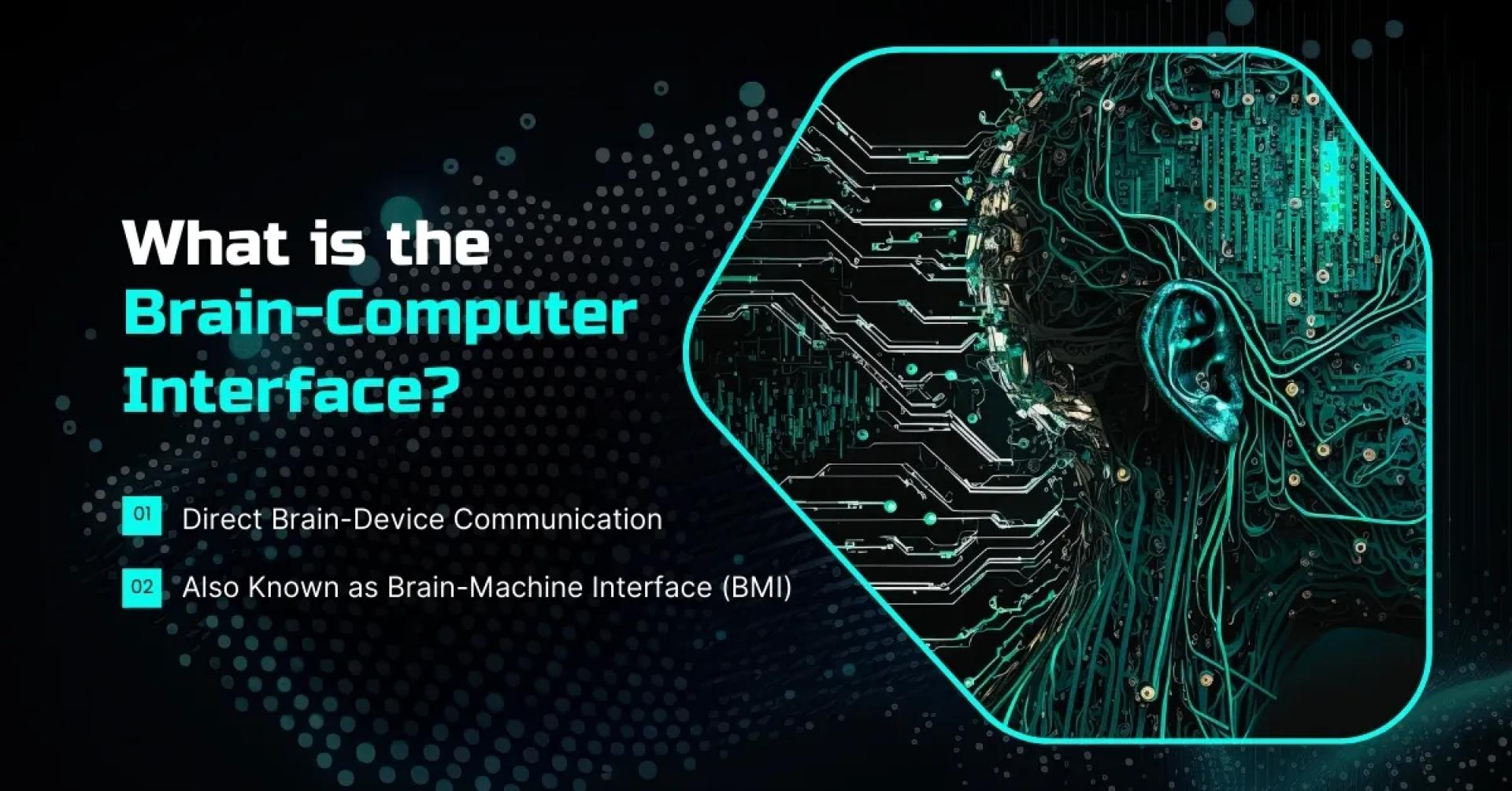

Image Credit: microsrtock.in
You know how we used to watch sci-fi movies where someone controlled machines with just their thoughts? It turns out we’re not so far from that world anymore. Brain-Computer Interfaces (BCIs) are becoming more real, more advanced, and more integrated into our everyday technology than most people realise.
At its core, a BCI is exactly what it sounds like—a direct communication channel between the brain and an external device. Whether you’re wearing a headset or have a chip implanted under your skull, BCIs work by picking up neural signals and translating them into actions: moving a robotic arm, controlling a cursor, or even typing just by thinking. It sounds wild, but it’s here.
This journey actually started nearly a century ago. Hans Berger, a German psychiatrist, first recorded human brain waves in the 1920s using EEG. But it wasn’t until the 1970s that real progress happened when Dr. Jacques Vidal explored how our brains might communicate directly with computers. His paper in 1973 was basically the birth certificate of modern BCI.
Fast forward to today, and we’ve come a long way from basic brain wave recordings. Thanks to cloud computing, AI, and deep learning, BCIs have become far more accurate and responsive. There are now companies like Neuralink, OpenBCI, BrainGate, and Emotiv creating devices that go beyond the lab and into the real world—whether that’s helping paralysed people move again or building headsets that track your mental focus in real time.
One of the most fascinating things to me is how different these BCIs can be. Some are non-invasive—you just wear a cap or headset that reads electrical signals from your brain. Others go deeper, with electrodes placed on the brain’s surface or even implanted directly into brain tissue. Of course, the closer to the brain they are, the cleaner and more accurate the signal. But that also brings risks, which is why non-invasive methods are still preferred for gaming, research, and home applications.
BCIs work through a pretty intuitive process: the device detects brain signals, AI decodes them, and then the output controls something. That “something” can be a robotic limb, a digital interface, or even a drone. What I find really exciting is how this is opening up entirely new ways for people with disabilities to communicate and interact with the world. Imagine typing an email or sending a message without moving a finger—just pure thought-to-text.
Some of the applications out there are already pushing boundaries. Neuralink’s coin-sized chip aims to help people with paralysis control devices with their minds. Neurable has developed headphones that monitor brain fatigue and help boost productivity. Precision Neuroscience created a thin electrode that wraps around the brain’s surface without damaging tissue, almost like a digital tattoo. Then there’s Synchron’s Stentrode, which can be implanted via blood vessels, skipping traditional surgery altogether.
Blackrock Neurotech and Inbrain Neuroelectronics are also working on implants that use biocompatible materials like graphene—way more body-friendly than metal electrodes—and are showing real promise in treating neurological conditions like Parkinson’s.
As amazing as all of this sounds, there are still big challenges. BCIs are complex, and the tech isn't flawless. Signals can get noisy, especially in non-invasive devices. Real-time processing demands a lot of power. And of course, you can’t talk about mind-reading tech without thinking about privacy. What happens when our thoughts can be decoded? Who gets access to that data? Could it be hacked? These are questions we can’t ignore.
But the momentum is real. The BCI market is growing fast, expected to hit nearly $3 billion in the next couple of years. And new developments are arriving constantly: wireless BCIs, AI-powered cognitive enhancements, even early-stage brain-to-brain communication. It’s like we’re rewriting how humans and machines interact, and we’re still just at the beginning.
The future might look like this: stroke patients recovering movement faster, gamers interacting with environments through thoughts, smart homes responding to brain signals, and humans possibly boosting their memory or attention span through neurotech. But none of this will matter if we don’t also figure out how to do it ethically, protecting cognitive freedom and ensuring it’s accessible, safe, and inclusive.
I used to think BCI tech was far off, maybe something for my kids to experience. But it’s happening now. And the more I learn, the more fascinated (and honestly, cautious) I become. We’re not just building new tools—we’re expanding the boundaries of what it means to be human in a tech-driven world.


























Sign in to leave a comment.