Food Development: A Complete Guide to Taking Your Product from Idea to Market

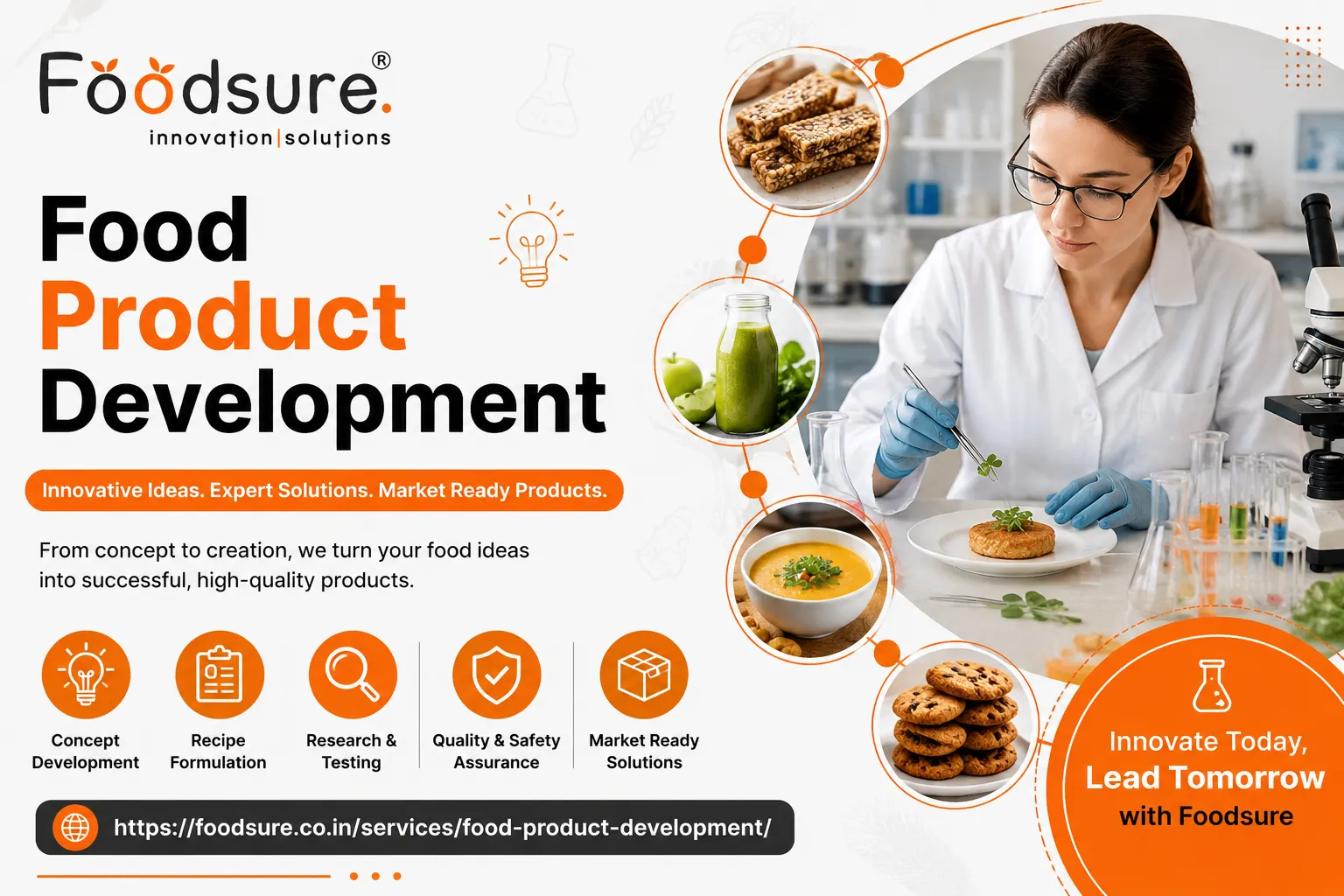
Every popular food brand began as a simple idea: a better snack, a healthier sauce, a tastier ready-to-eat meal. But the gap between an idea and a product on the shelf is wide. It is filled with recipe trials, safety checks, regulatory approvals, packaging decisions and production planning. The structured journey that covers all of this is called food development.
In this guide, we explain what food development includes, how each stage works, and how brands can reduce risk and launch with confidence.

What Is Food Development?
Food development is the complete process of creating a new food product or improving an existing one. It begins with a concept and ends with a product that is safe, consistent, compliant and ready for commercial sale.
A successful food development project answers questions such as:
- Who is the product for, and what need does it meet?
- Which ingredients deliver the right taste, texture and nutrition?
- How long will the product stay fresh and safe?
- Does it meet FSSAI requirements for ingredients, claims and labelling?
- Can it be produced at scale without losing quality or profit?
When these questions are answered early, the launch is smoother and far less expensive.
The Stages of Food Development
Every project is different, but most follow a similar path.
1. Idea and Market Research
The first step is understanding your customer. Who will buy this product, at what price, and why would they choose it over existing options? Market research, competitor study and trend analysis help define a clear product concept.
2. Recipe Creation
Once the concept is clear, technologists begin building the base recipe. This is where food recipe formulation comes in. It involves choosing ingredients, deciding quantities, and balancing flavour, texture, colour and nutrition. A good formula works on paper and in the pot, and it also works in a factory.
3. Prototyping and Sensory Testing
Small-batch samples are prepared in several variations. These are then tested through structured tasting sessions to find the version that best matches the target consumer’s expectations. Feedback at this stage shapes the final recipe.
4. Shelf-Life and Stability Testing
A product that tastes great on day one may change in colour, texture or flavour within weeks. Stability testing checks how the product behaves under different storage conditions, so you can set a reliable shelf life.
5. Nutritional Analysis and Labelling
Nutrition values are calculated, and label information is prepared in line with FSSAI rules. Any health or nutrition claims must be supported and compliant.
6. Pilot Trials and Scale-Up
The lab recipe is adapted for factory equipment. Mixing time, temperature, batch size and processing conditions are adjusted so the product turns out the same every time.
7. Commercial Launch
After approvals, packaging and production planning, the product is ready for the market.
The Role of Food Research and Development
Behind every well-built product is solid science. Food research and development is the technical engine of the whole process. It covers ingredient studies, processing techniques, preservation methods, texture and flavour research, and problem-solving when something does not work as planned.
Strong R&D helps brands in several ways:
- It reduces trial-and-error, saving both time and raw material
- It helps create unique products that stand out from competitors
- It improves existing products by fixing issues such as short shelf life or inconsistent taste
- It builds a base of knowledge that can be reused for future product lines
Brands that invest in R&D early usually launch faster and face fewer surprises during production.
Common Mistakes in Food Development
Many first-time founders make the same errors:
- Skipping market research. A product nobody wants will not sell, however good it tastes.
- Relying only on home-kitchen trials. Recipes often behave very differently in large batches.
- Ignoring shelf-life testing. Products can spoil or change quality much sooner than expected.
- Overlooking regulations. Wrong claims or additives can delay or block your launch.
- Choosing a manufacturer too late. Production limits can force changes to a recipe that was already finalised.
Avoiding these mistakes early protects your budget and your brand reputation.
Why Work With a Food Consultant?
Setting up your own lab, hiring technologists and learning every regulation takes time and money. For most startups and growing brands, hiring an experienced food consultant is the faster and more dependable option.
A good consultant can:
- Convert your idea or reference sample into a scalable formula
- Suggest ingredient alternatives to manage cost and supply risk
- Guide you on FSSAI compliance, labelling and claims
- Support pilot trials, troubleshooting and production handover
- Connect you with reliable manufacturing partners
This allows you to focus on branding, sales and distribution while the technical side is handled by specialists.
Choosing a Food Contract Manufacturer
Once your recipe is ready, you need a place to produce it. Not every brand wants to build its own factory, especially in the early stages. This is where a food contract manufacturer in India becomes valuable. Contract manufacturing lets you produce your product at scale without heavy investment in machinery, space and staff.
When selecting a manufacturing partner, check the following:
- Certifications: valid FSSAI licence and relevant quality certifications
- Category experience: have they handled products similar to yours?
- Capacity: can they support your current volumes and future growth?
- Quality systems: do they follow hygiene, traceability and batch-testing practices?
- Flexibility: are minimum order quantities and timelines reasonable for your stage?
- Confidentiality: will your formula and brand details be protected?
It also helps to involve the manufacturer early. When the recipe is designed with the factory’s equipment in mind, scale-up becomes much easier.

How to Build a Realistic Food Development Plan
A clear plan keeps your project on track. Here are some practical tips:
- Set a defined budget. Include trials, testing, packaging, licences and initial production.
- Create a timeline. Simple products may take a few weeks, while complex ones can take several months.
- Start with a limited range. Launch one or two products well before expanding the line.
- Document everything. Keep records of trials, approved recipes and supplier details.
- Plan for feedback. Be ready to make small improvements after the first market response.
Final Thoughts
Launching a food product takes more than a good recipe. It takes research, testing, compliance, the right partners and careful planning. Strong food development brings all of these together and turns a promising idea into a product that is safe, consistent and profitable. Start with clear market research, build and test thoroughly, involve experts early, and choose manufacturing partners who match your goals. With the right approach, your idea can grow into a brand that customers trust.
Frequently Asked Questions (FAQs)
1. What is food development?
Food development is the process of creating or improving a food product, from idea and recipe to testing, compliance, production and launch.
2. How long does food development take?
It depends on the product. Simple items may take a few weeks, while products with special nutrition claims or long shelf-life needs can take a few months.
3. What is the difference between recipe formulation and food development?
Recipe formulation focuses on creating the recipe itself. Food development is the wider journey that also includes testing, regulatory support, scale-up and launch.
4. Why is food research and development important?
R&D helps you test ideas, solve technical problems and create better products. It reduces the risk of failed batches and costly changes after launch.
5. Do I need a food consultant for my startup?
It is not compulsory, but it is very helpful. A consultant saves time, helps you meet regulations and reduces expensive trial-and-error.
6. When should I choose a contract manufacturer?
Ideally, you should start the conversation during recipe development. This ensures your formula is suitable for the manufacturer’s equipment and avoids major changes later.



Sign in to leave a comment.