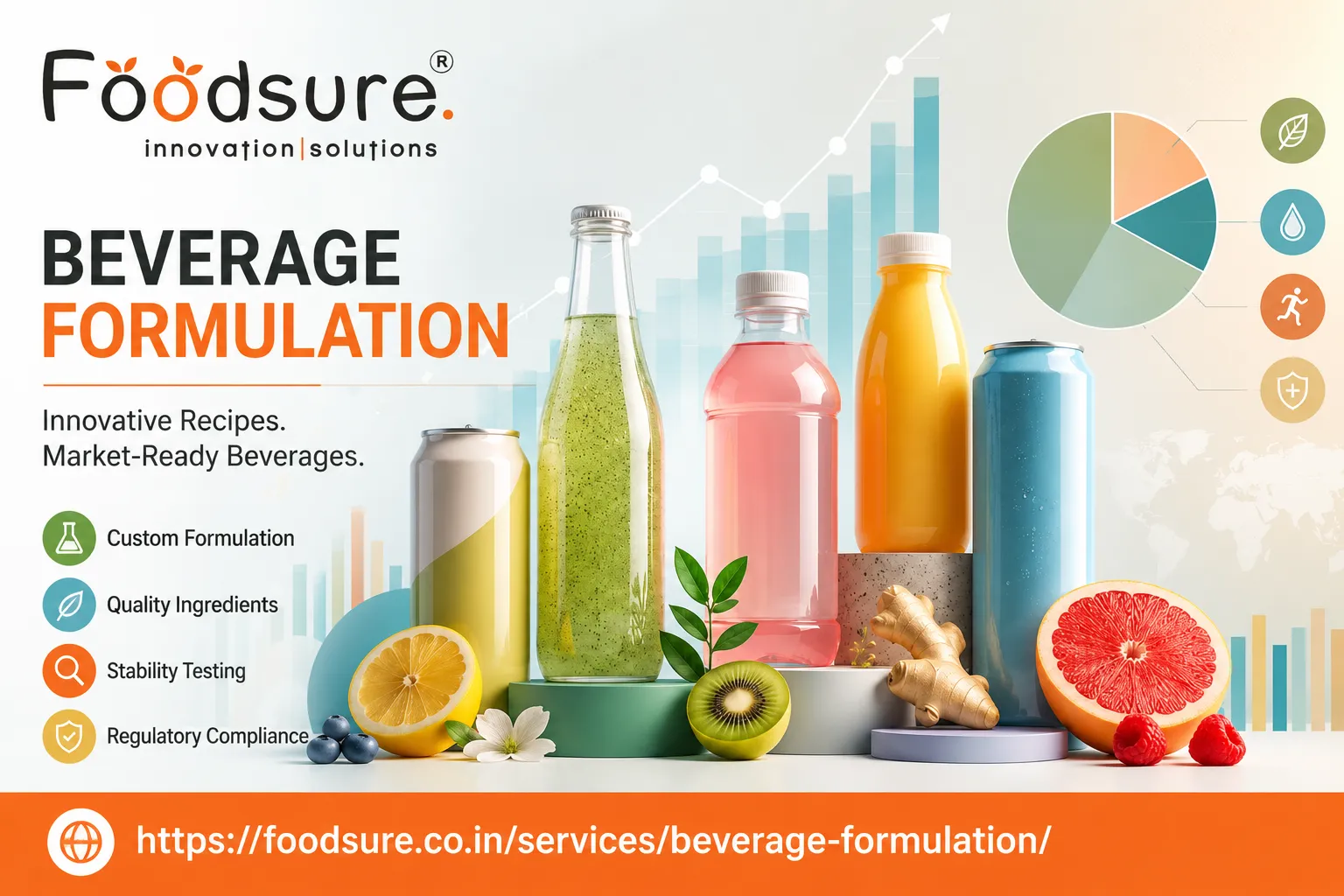

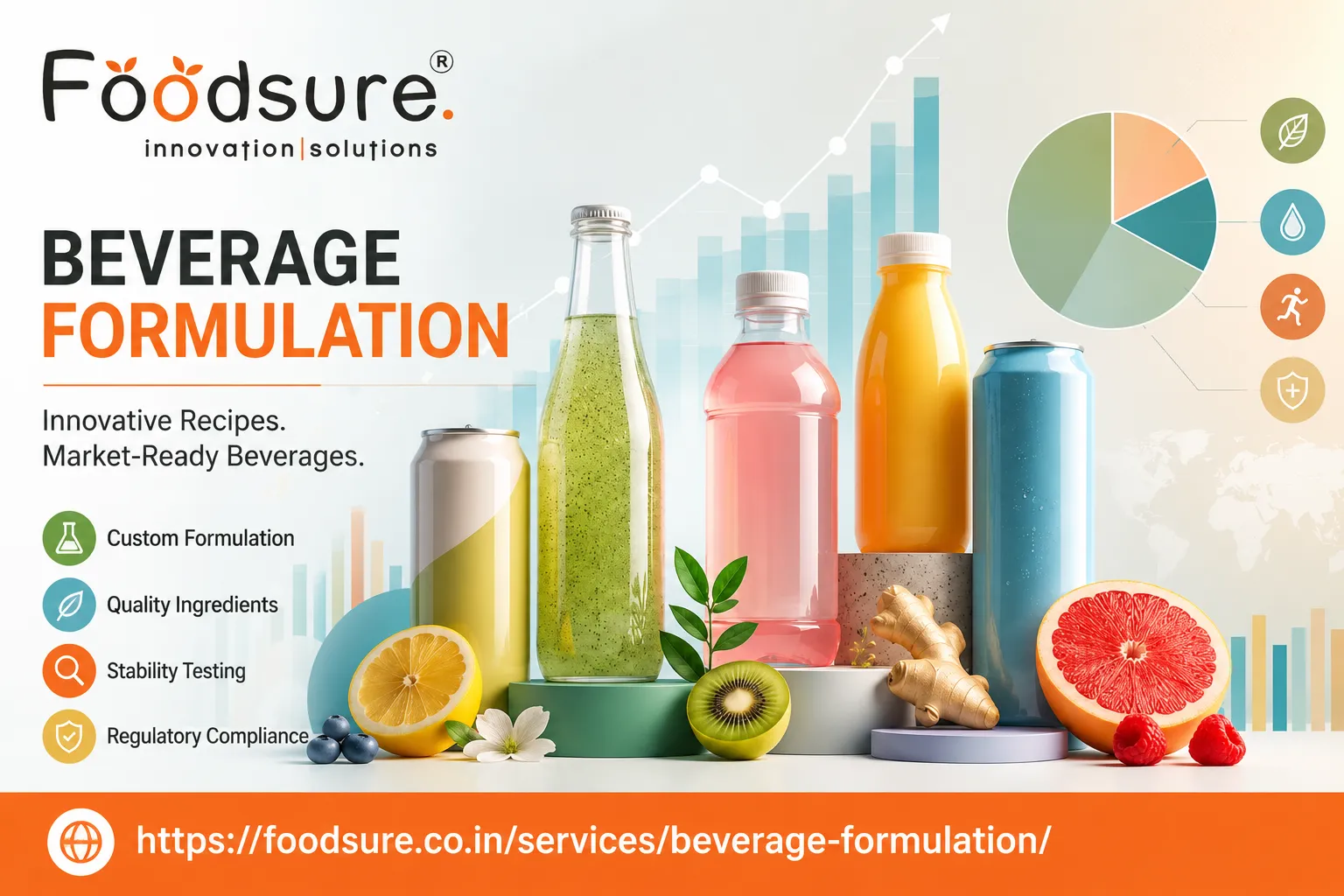
The beverage industry in India has grown rapidly over the last decade, with new brands launching juices, energy drinks, flavoured waters, dairy-based drinks, and functional beverages every year. Behind every successful product on the shelf lies a carefully planned process called beverage formulation. This process determines taste, shelf life, nutritional value, cost, and overall market success of a drink. Whether you are a startup founder or an established F&B brand, understanding beverage recipe formulation is essential before you launch any new product.
What Is Beverage Formulation?
Beverage formulation is the scientific and creative process of developing a drink recipe that balances taste, texture, stability, and regulatory compliance. It goes far beyond simply mixing ingredients. A proper formulation considers raw material selection, pH balance, preservation methods, packaging compatibility, and consumer preferences. This is why most serious brands prefer to work with an experienced beverage consultant in India rather than experimenting on their own, as small errors in formulation can lead to spoilage, inconsistent taste, or compliance issues.
Step-by-Step Process of Beverage Formulation
1. Concept and Market Research
Every formulation begins with a clear concept. Is the product a health drink, a carbonated soda, a ready-to-drink tea, or a probiotic beverage? Market research helps identify consumer trends, target audience preferences, and gaps in the existing market before moving forward.
2. Ingredient Selection
Once the concept is finalised, the next stage in beverage recipe formulation is choosing the right combination of ingredients — fruit pulp, natural or artificial sweeteners, acids, stabilisers, flavours, and functional additives such as vitamins or proteins. The choice of ingredients directly affects taste, cost, and shelf life.
3. Recipe Development and Trials
This is the core of beverage recipe formulation. Food technologists prepare multiple small-batch trials, adjusting sweetness, acidity, viscosity, and flavour intensity until the desired sensory profile is achieved. Sensory panels and taste tests are conducted repeatedly to fine-tune the recipe.
4. Stability and Shelf-Life Testing
A great-tasting drink is useless if it separates, discolours, or spoils within weeks. Stability testing checks how the beverage performs under different temperatures, light exposure, and storage conditions over time, ensuring the product remains safe and appealing throughout its intended shelf life.
5. Nutritional and Regulatory Compliance
Beverages sold in India must comply with FSSAI standards regarding labelling, permitted additives, and nutritional claims. This step ensures the formulation meets all legal requirements before commercial production begins.
6. Scale-Up and Production Trials
After the lab-scale recipe is finalised, it is scaled up for factory production. This stage checks whether the formulation behaves consistently in larger batches and with commercial machinery, since ingredient behaviour can change at scale.
7. Packaging Compatibility
The final formulation must be tested with the intended packaging — PET bottles, tetra packs, cans, or glass bottles — to confirm there is no reaction between the beverage and its packaging material over the storage period.
Why Professional Guidance Matters
Many entrepreneurs attempt formulation on their own, but the process demands food science expertise, lab access, and regulatory knowledge. Partnering with a qualified food beverage consultant can save significant time and money by avoiding costly trial-and-error batches, ensuring the recipe is production-ready from day one, and reducing the risk of product recalls due to instability or non-compliance.
A skilled consultant also brings industry connections for raw material sourcing, contract manufacturing, and packaging solutions, which is particularly valuable for startups entering a competitive market.
Common Mistakes in Beverage Formulation
- Skipping proper stability testing before launch
- Ignoring FSSAI labelling and additive regulations
- Underestimating the cost impact of premium ingredients
- Not testing the recipe across different climatic conditions found in India
- Rushing the scale-up process without pilot batches
Conclusion
Beverage formulation is a detailed, science-backed process that shapes the success of any drink brand. From ingredient selection to shelf-life testing and regulatory compliance, every step plays a crucial role in delivering a safe, tasty, and market-ready product. Companies like Foodsure specialise in guiding brands through this entire journey, helping entrepreneurs turn their beverage ideas into successful, compliant products ready for the Indian market.
Frequently Asked Questions
Q1. What is beverage recipe formulation?
It is the structured process of developing a drink's recipe, covering ingredient selection, taste balancing, stability testing, and regulatory compliance to create a market-ready product.
Q2. How long does beverage formulation usually take?
Depending on complexity, it can take anywhere from a few weeks to several months, especially when extensive stability and shelf-life testing is required.
Q3. Do I need a consultant for beverage recipe formulation?
While not mandatory, working with an experienced beverage consultant in India significantly reduces the risk of formulation failures and speeds up the path to launch.
Q4. What factors affect the cost of formulation?
Ingredient quality, number of trial batches, lab testing, packaging trials, and consultant fees all influence the overall cost.
Q5. Is FSSAI approval required for a new beverage?
Yes, all beverages sold in India must comply with FSSAI regulations regarding ingredients, labelling, and health claims before commercial sale.























Sign in to leave a comment.