
Introduction
The Indian food industry is expanding rapidly, with new brands entering the market every day. However, along with innovation comes the responsibility of ensuring that products meet regulatory standards. One of the most critical aspects of compliance is food labeling, which directly impacts consumer safety and brand credibility.
A properly designed food packaging label is not just about aesthetics—it serves as a legal document that communicates essential product information to consumers while ensuring adherence to FSSAI guidelines.
Why Food Labelling is Crucial in India
Food labeling plays a vital role in maintaining transparency between businesses and consumers. With increasing awareness about health and nutrition, customers rely heavily on product labels before making purchasing decisions.
In India, FSSAI has made it mandatory for all packaged food items to follow strict labeling rules. These regulations ensure that consumers are not misled and receive accurate details about the product.
A compliant food packaging label helps businesses establish trust, improve product credibility, and avoid regulatory issues.
Mandatory Information Required on Food Labels
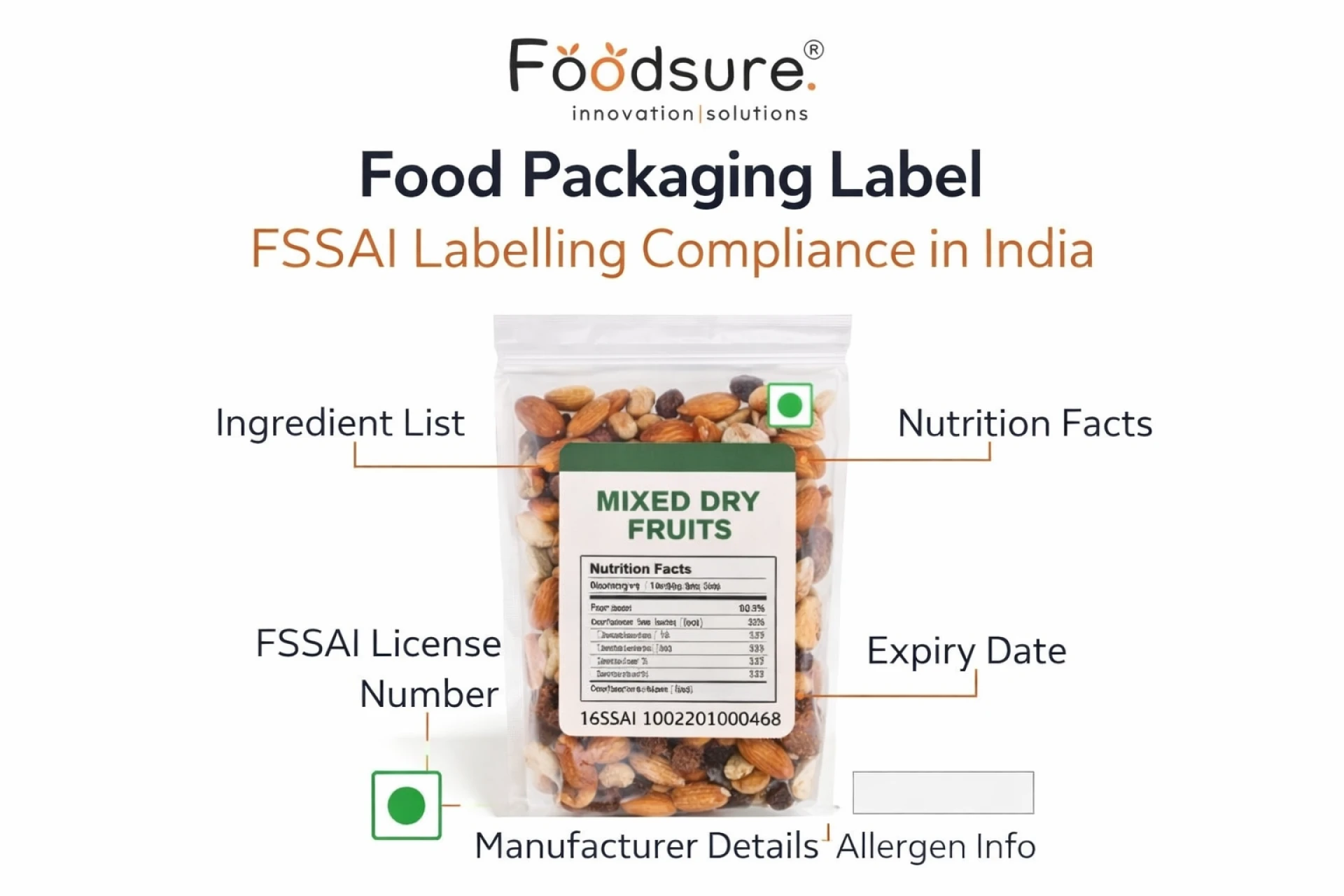
To ensure compliance with FSSAI standards, food products must include several key details on their packaging. These elements are essential for both legal and consumer purposes.
Product Identity
The product name must clearly indicate the nature of the food item. It should not be misleading or exaggerated.
Complete Ingredient Disclosure
All ingredients must be listed in descending order based on their quantity. This includes additives, preservatives, and flavor enhancers.
Nutritional Details
The label should provide clear nutritional information, including:
- Energy value
- Protein content
- Carbohydrates and sugar
- Fat levels
Allergen Information
Ingredients that may trigger allergies, such as dairy, nuts, soy, or gluten, must be clearly highlighted.
Manufacturer Information
Details of the manufacturer, packer, or importer must be included along with the complete address.
FSSAI License Number
A valid 14-digit license number is compulsory for all food businesses.
Net Quantity Declaration
The exact weight or volume of the product must be mentioned.
Date Marking
Manufacturing date, expiry date, or “best before” information must be clearly visible.
Vegetarian/Non-Vegetarian Mark
Products must carry the appropriate symbol as per FSSAI norms.
How Labelling Impacts Consumer Behavior
Consumers today are more conscious about what they eat. They carefully read labels to understand ingredients, nutritional value, and safety information. This makes labeling a powerful tool for influencing buying decisions.
A clear and informative food packaging label can:
- Increase customer confidence
- Improve brand loyalty
- Encourage repeat purchases
- Differentiate your product from competitors
Brands that provide transparent and accurate information are more likely to succeed in the long run.
Common Challenges Faced by Food Businesses
Despite clear guidelines, many businesses struggle with labeling compliance. Some common challenges include:
- Misinterpretation of FSSAI rules
- Incorrect placement of mandatory information
- Use of misleading claims
- Poor label design and readability
- Missing allergen declarations
These mistakes can lead to penalties, product rejection, or loss of consumer trust. Therefore, it is essential to approach labeling with accuracy and attention to detail.
Best Practices for Creating Effective Food Labels
Creating a successful label requires a balance between compliance and creativity. Here are some best practices to follow:
Focus on Clarity
Ensure that all information is easy to read and understand.
Use Proper Formatting
Maintain proper alignment, spacing, and font size as per FSSAI guidelines.
Highlight Key Information
Important details like expiry date and allergens should stand out.
Avoid Misleading Claims
Do not use terms like “100% natural” or “chemical-free” unless they are scientifically validated.
Maintain Consistent Branding
Use consistent colors, fonts, and design elements to strengthen brand identity.
A well-crafted food packaging label not only meets legal requirements but also enhances the overall product appeal.
Benefits of Professional Labelling Support
Many businesses choose to work with experts to ensure compliance and quality. Professional labelling services offer several advantages:
- Accurate interpretation of FSSAI guidelines
- Error-free label creation
- Improved design quality
- Faster product launch
Experts can help businesses avoid costly mistakes and ensure that their products meet all regulatory standards.
Future of Food Labelling in India
The food labeling landscape is evolving with changing consumer preferences and technological advancements. Some emerging trends include:
- Smart Labels: QR codes for additional product details
- Clean Labels: Simple and transparent ingredient lists
- Sustainable Packaging: Eco-friendly materials and disclosures
- Detailed Transparency: Information about sourcing and processing
Adapting to these trends can give businesses a competitive advantage and improve customer engagement.
FAQs
1. What is a food packaging label?
A food packaging label is a printed or digital element on food products that provides essential information such as ingredients, nutrition, and safety details.
2. Why is FSSAI compliance important?
FSSAI compliance ensures that food products are safe, properly labeled, and legally approved for sale in India.
3. What are the penalties for incorrect labeling?
Non-compliance can lead to fines, product recalls, or suspension of the FSSAI license.
4. Can labeling improve product sales?
Yes, clear and informative labeling builds trust and influences purchasing decisions positively.
5. Do small food businesses need to follow labeling rules?
Yes, all packaged food products, regardless of business size, must comply with FSSAI regulations.
Conclusion
In a competitive and regulated market like India, labeling is more than just a requirement—it is a strategic asset. From ensuring compliance to building customer trust, every aspect of labeling plays a crucial role in business success.
Foodsure understanding FSSAI guidelines, avoiding common mistakes, and focusing on clarity and design, businesses can create labels that stand out in the market. Investing in a high-quality and compliant food packaging label is a smart step toward long-term growth and brand recognition.






























Sign in to leave a comment.