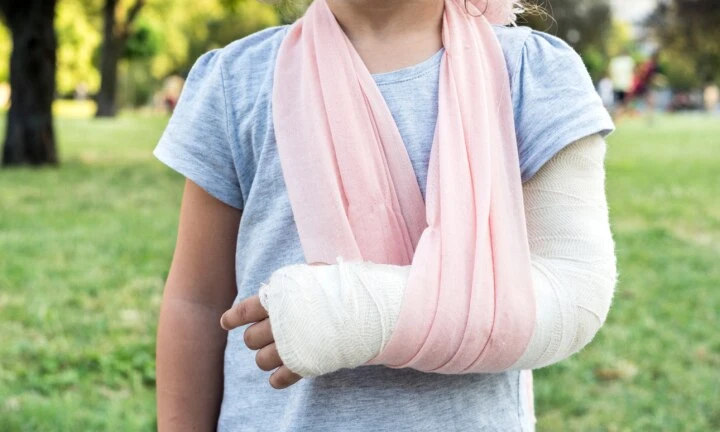

In the past as a kid, we all used to live a carefree life. Jumping around without any worries, living a joyful childhood. And most of us have gotten hurt in the process while playing around but have grown out of it strongly. My father used to say what doesn’t kill you makes you stronger. He was right as the small bruises and pains we experience in childhood is just a part and parcel of all the excitement we went thru during our growing age. But some experiences were traumatizing, were a mere play in the park went wrong, and affected us in adverse ways.
Fractures often take place when kids play on the playground or when they participate in sports. If a child trips and falls on his arm, there is a chance it may result in a forearm fracture. Children’s bones are more fragile but heal quicker than an adult\'s, so it is important to treat a fracture.
For the examination and consultation of these fractures, it is recommended to seek an expert’s opinion that specializes in treating kids. Dr. Ratnav Ratan from young bones clinic is one of the finest pediatric orthopedic in Gurgaon who has years of experience in handling young patients with love and care. He has given us insights on how to identify a fracture when it occurs and what are the steps we need to consider treating this. This is helpful for those people who have small children and don’t have an idea of how to go about this procedure.
How do we treat this?
The treatment for this procedure depends on the type of fracture and the displacement that has taken place. Your doctor is the best person to diagnose a method that is appropriate for you. Clinicspots is an online health aggregator that lists down the best orthopaedists in Gurgaon. You can check out the website for more information.
There are two types of fractures that we need to know:
- Open or compound fracture: In this scenario, the bone breaks through the skin.
- Closed or simple fracture. In this scenario, the bone is broken, but there is no wound in the skin.
What are the symptoms of a fracture in a child?
These symptoms can vary amongst different children. The following can help identify a broken bone, in a child.
- Pain & Swelling
- Warmth, bruising, or redness
- Deformity of the bone
- Trouble using your arm
What are the different types of fractures? How do we deal with them?
Nonsurgical Treatment
In some cases, fractures like buckle fractures just need the support of a cast while healing.
In severe fractures that are angled, the doctors are able to manipulate or align the bones into their place without the need for surgery. This procedure is called a closed reduction. Afterward, the arm is immobilized in a cast or splint while it heals. A good rest and stable condition always helps the most to a steady recovery.
Surgical Treatment
For some instances, surgery is required to align the pieces of bone and secure them back in its place. Your doctor will recommend surgery in the following cases:
• If the bone is piercing through the skin (open fracture). It requires specific treatment to stop the risk of infection.
• If the bones have already begun to heal in an angle which is not right.
• If the fracture is unstable. During this, the ends of the broken bones will be lined up.
• If the bones cannot be rectified through the manipulation process by itself.
During the surgery, your doctor will reposition the broken bone fragments (a procedure called an open reduction) by opening up the skin and treating it. For this procedure, the use of metal implants, pins, or a cast may be used to hold the broken bones in place until they have completely healed.
How long will the recovery take?
The recovery time and the duration of the cast worn would vary as it completely depends on the severity of the fracture. A stable fracture might need to use the cast for 3 to 4 weeks, whereas a severe injury would require the patient to be fully immobilized for 6 to 10 weeks. Rehabilitation and physiotherapy are very crucial to ensure that child recovers fully.
After the cast is removed, the wrist and elbow joints will be stiff for 2 to 3 weeks and will fade away over time. The fractured bones will be extremely weak so the patient should take utmost care in this period. The child should avoid all sorts of sporty activity and mischief. He/she should refrain from playing and should not go to the park for 3 to 4 weeks after recovery to ensure the prolonged safety of his/her arm. In case any complications take place the patient should be taken to a pediatric orthopedic immediately for a follow-up consultation. After this whole recovery period, your kid will be back to normal and can resume enjoying his childhood, which is one of the best periods in everyone’s life.

























Sign in to leave a comment.