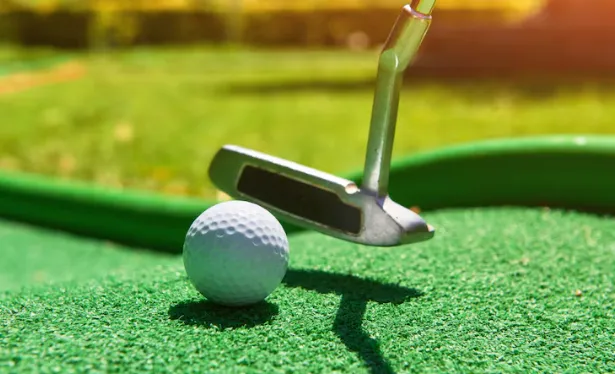
A lot of golfers know this feeling. You finally have a free hour, your swing has been on your mind all week, and you are ready to work. Then real life gets in the way. The weather turns. The course is too far. The pace of a full round does not fit the day. Practice becomes something you keep planning instead of something you actually do.
That is why indoor golf simulators matter so much right now. They do not just make golf more convenient. They make training more deliberate. Instead of guessing how a swing felt, players can see what happened. Instead of waiting for the right season, they can build consistency year-round. Instead of treating golf as an all-or-nothing time commitment, they can fit meaningful reps into a normal week.
In Lolo, Montana, one private indoor club has leaned fully into that idea. The Dogleg is built around member access, oversized simulator bays, a relaxed clubhouse atmosphere, and technology-driven practice that helps golfers improve without the stiffness that often comes with traditional country club culture. The facility offers three oversized bays, 24/7 member access, and a library of more than 450 courses, all within a private, members-only setting.
Key Takeaways
- Indoor golf training works best when practice is consistent, measurable, and easy to fit into real life.
- Precise shot feedback helps beginners learn faster and helps experienced players practice with more purpose.
- A private indoor club can serve both skill development and social goals, especially for busy professionals.
- The best setup is not just about technology. It is about access, comfort, and a format people actually want to use.
What makes indoor golf simulators so effective for real improvement?
At their best, indoor golf simulators turn practice into feedback. That is the real shift.
A player hits a shot and does not have to rely only on feel. Ball flight, launch characteristics, distance windows, and directional patterns become visible. Trackman describes simulator and launch monitor technology as a way to measure club and ball data with radar and camera tracking, giving players a far clearer picture of what their swing is actually producing.
That matters for every level of player.
For beginners, it shortens the learning curve. A new golfer often struggles because everything feels unfamiliar at once. Grip, posture, contact, path, distance control. In a measured environment, the fog starts to lift. You are not just told that the shot leaked right. You can begin to understand why.
For experienced players, the value is different but just as important. Better golfers usually do not need more random reps. They need better information. They want to know carry distance gaps, recurring miss patterns, and whether a swing change is creating real progress or just a temporary feeling.
A short definition makes it simple: indoor golf simulators are training environments that combine real swings with measured feedback, allowing golfers to practice, play, and analyze performance without depending on outdoor conditions.
The real training advantage is not technology alone
Technology gets attention. Structure gets results.
Most golfers do not plateau because they do not care. They plateau because their practice is scattered. They bounce from driver to wedge, hit a few good shots, a few bad ones, then head home with no clear conclusion. Indoor golf works best when it solves that problem.
Here is a simple framework that makes simulator practice more useful:
- Measure first
Start with what the ball is doing, not what the swing feels like. - Train one pattern at a time
Pick one issue, such as strike quality, start line, or distance control. - Repeat with intention
Use the same club, same target, and same cue long enough to see a trend. - Pressure-test it
Move from drills into simulated holes, target games, or a virtual round.
That training rhythm is especially valuable in a private facility because it removes friction. Members at this Lolo club can access the facility around the clock by key card, reserve bays through the app, and build practice into normal life rather than waiting for a perfect window.
Practice, play, and social time can live in the same place
This is where indoor golf often becomes more valuable than people expect.
A traditional practice range helps with repetition. A private indoor club can do more than that. It can become part of a person’s routine, part of how they entertain clients, and part of how they stay connected to the game when life gets crowded.
The club’s membership page makes that positioning clear. It is designed around flexibility, unlimited guests, a casual atmosphere, and no long-term contract, which is a meaningful contrast to the formal, rule-heavy image many people associate with country club golf.
For business professionals, that creates a practical advantage. A full outdoor round can be hard to schedule. A private indoor session is easier to control. You can bring a guest, keep the setting relaxed, and still center the experience around a shared activity that feels more memorable than another coffee meeting.
That social side is not separate from training. It supports it. Golf improves when people spend more time around it, not just when they grind alone.
What most golfers get wrong about simulator training
The biggest misconception is that simulator golf is only a substitute for real golf.
It is better understood as a different training environment with different strengths.
Here is the do-this-not-that version:
- Do this: Use simulator sessions to dial in carry distances, start lines, and predictable patterns.
Not that: Treat every session like a random long-drive contest. - Do this: Move between drills and on-course simulation.
Not that: Spend the whole hour chasing swing thoughts without context. - Do this: Use indoor reps to build confidence before outdoor rounds.
Not that: Expect technology alone to fix poor habits. - Do this: Choose a setting you will actually return to.
Not that: Assume the fanciest features matter more than comfort, access, and consistency.
Bobby Jones put it well: “Golf is the closest game to the game we call life.” That line still resonates because improvement in golf is rarely about one dramatic breakthrough. It is usually about better decisions, better habits, and enough repetition to trust what you are doing.
A quick comparison: what indoor golf helps most
| Training need | When it helps most | A simple cue | Common mistake |
|---|---|---|---|
| Building confidence as a beginner | Early learning phase | Focus on contact before power | Swinging too hard too soon |
| Dialing in distances | Club gapping sessions | Trust carry, not just total roll | Guessing yardages |
| Fixing a recurring miss | When patterns keep repeating | Track start line and face control | Changing too many things at once |
| Staying sharp in bad weather | Off-season or packed work weeks | Short, frequent sessions beat occasional marathons | Waiting for perfect conditions |
| Hosting clients or friends | Informal networking and social play | Keep the format light and inviting | Making it feel too serious |
A familiar scenario for busy golfers
Imagine a business owner who loves golf but rarely has four free hours in a row. Outdoor rounds become occasional. Practice gets squeezed out. Confidence starts slipping, not because ability disappeared, but because rhythm did.
Now picture that same person with private indoor access. One morning session before work. One evening visit with a client. One focused hour on distances before the weekend. Same golfer. Very different pattern.
That is the deeper reason indoor golf works. It keeps players connected to the game. The National Golf Foundation reports that U.S. golf participation has grown to more than 48 million people, which reflects a wider appetite for flexible ways to stay involved with golf.
Near the end of the decision, most people are not really asking whether simulator golf is real golf. They are asking something more practical: will this make it easier to improve and easier to enjoy the game? In the right setting, the answer is yes.
Conclusion
Indoor golf simulators change training because they remove excuses without removing challenge. You still have to make the swing. You still have to learn your patterns. You still have to put in the reps. But the process becomes more accessible, more measurable, and more repeatable.
For beginners, that means less intimidation and faster clarity. For experienced players, it means sharper feedback and more efficient work. For professionals who want golf to be both personal and social, it means a setting that supports practice, connection, and consistency in the same place.
If that sounds like the kind of golf life that fits Montana a little better, schedule a free round with The Dogleg walkthrough at the club by contacting [email protected] or calling 406-544-6053.
FAQ
How does this private indoor club in Lolo help golfers improve faster?
It combines year-round access, measured shot feedback, and a comfortable setting that makes consistent practice easier to maintain.
Is this club a good fit for client entertainment or small group golf nights?
Yes. The membership structure allows guests, and the relaxed private environment makes it a natural option for hosting clients or social rounds.
What makes a good indoor golf practice session?
A good session has one clear focus, measurable feedback, and a short review at the end so you know what actually improved.
What are the best practices for using simulator data?
Use the data to confirm patterns, not to chase perfection. Focus on one variable at a time and compare results over multiple swings.
What trends are shaping indoor golf right now?
Golf is becoming more flexible, more tech-supported, and more accessible to people who want both improvement and convenience.
How to use indoor golf simulators without getting overwhelmed?
Start with simple goals like contact, carry distance, or one recurring miss. Keep the session narrow instead of trying to fix everything at once.






















Sign in to leave a comment.