

Compliance training is necessary, but that doesn't mean employees have to dread it.
Policies, regulations, safety requirements, data protection rules, and workplace standards all play an important role in keeping organizations responsible and employees informed. The challenge is making sure people don't simply complete compliance training, but actually understand what they have learned and know how to apply it when a real situation arises.
This is where shorter learning experiences and realistic practice can make a meaningful difference.
Why Traditional Compliance Training Often Falls Short
Many organizations still approach compliance training as an annual event. Employees receive a lengthy course, read through policies, complete a quiz, and receive a completion record.
On paper, everything looks fine.
The problem appears later.
An employee may remember the general topic but forget the specific steps they are expected to follow. They may recognize a policy when reading it but struggle to decide what to do when faced with a real workplace situation.
This is partly because compliance information can be dense. Regulations and policies often contain terminology that isn't easy to remember, particularly when employees don't encounter the information regularly.
There is also the problem of attention. Employees are more likely to engage with training when the content feels relevant to something they actually encounter in their work.
The solution isn't necessarily to make compliance training longer. In many cases, it means making it more focused and practical.
Breaking Compliance Into Manageable Learning
A compliance microlearning solution can divide larger compliance subjects into short, focused learning activities.
Instead of asking employees to complete one large course covering every requirement, an organization can introduce individual topics through concise modules.
For example, a cybersecurity learning program might include separate activities covering:
- Recognizing suspicious emails
- Handling confidential information
- Creating secure passwords
- Reporting security incidents
- Identifying social engineering attempts
Each activity can focus on one specific behavior.
This makes the information easier to consume and gives organizations more opportunities to reinforce important concepts throughout the year.
Short learning also makes updating content easier. If a particular policy changes, the organization can revise the relevant module rather than redesigning an entire training program.
Why Context Matters More Than Memorization
One of the biggest weaknesses of compliance training is that it can become focused on remembering rules rather than understanding them.
Employees may be able to answer a question correctly immediately after completing a course but still be uncertain when faced with an unfamiliar situation.
Consider a simple data privacy example.
A course could tell employees that sensitive information must be handled carefully. That's useful information, but what happens when an employee receives a request for confidential data from someone claiming to be a colleague?
A scenario can make the issue more concrete.
The learner sees the situation, considers the available options, chooses a response, and receives feedback explaining the consequences.
Now the learner isn't just remembering a rule. They are practicing how to apply it.
Bringing Real Situations Into Digital Learning
An elearning simulation can provide this kind of practice by recreating situations employees may encounter in their jobs.
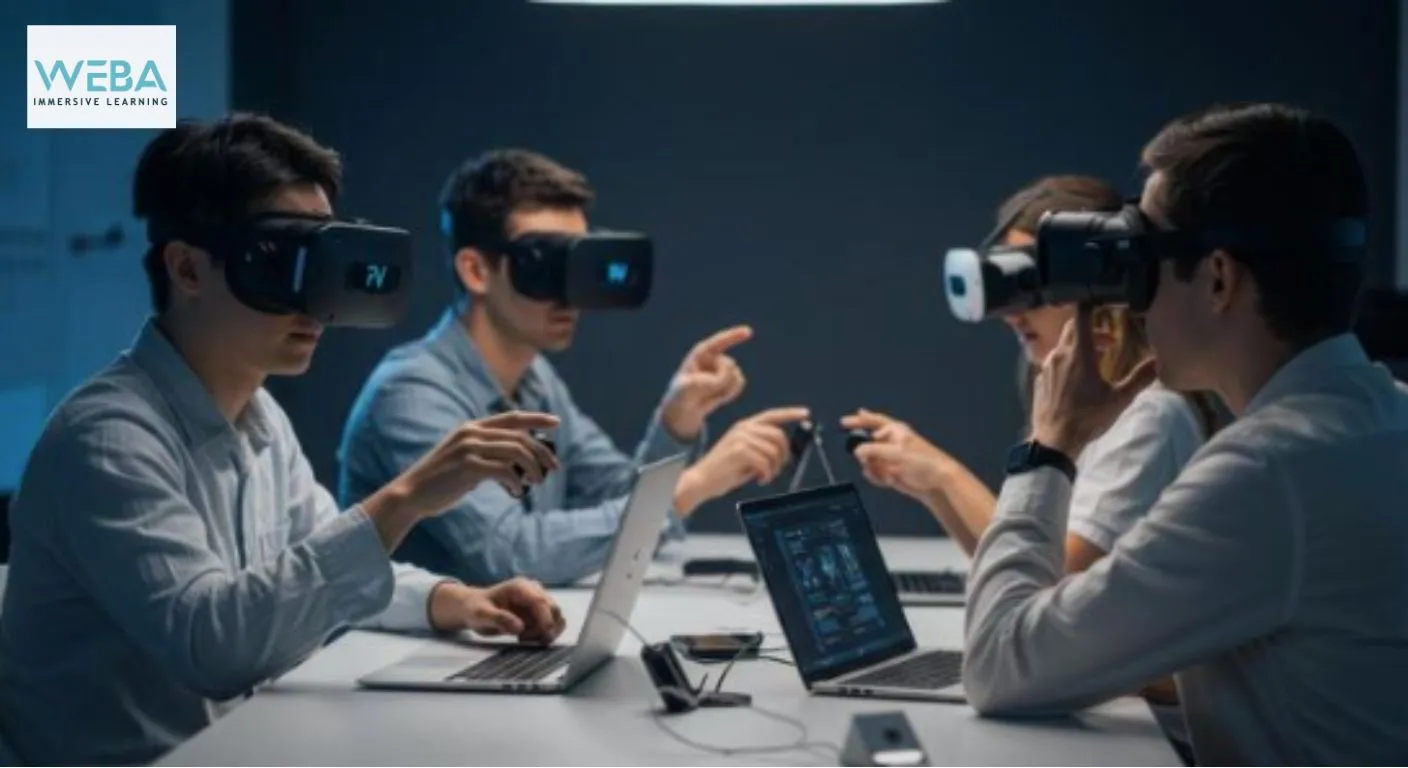
The simulation doesn't have to involve sophisticated virtual reality. It could be a branching scenario, an interactive workplace environment, a software simulation, or a decision-making exercise.
For example, a compliance course for managers could present a series of workplace conversations. The learner might need to respond to a complaint, handle a conflict, or decide whether an incident needs to be reported.
Each decision can influence what happens next.
This approach gives employees an opportunity to experience the consequences of their choices without putting an actual customer, colleague, process, or organization at risk.
Learning From Mistakes Without Real-World Consequences
People make mistakes while learning. That's normal.
The problem is that some mistakes can have serious consequences when they happen in the workplace.
Digital simulations create a safe space for employees to make those mistakes.
Imagine a new employee handling a suspicious email. They choose the wrong response and the simulation explains why that decision could create a security risk. The learner can then try again and choose a safer approach.
That process is more useful than simply being told, "Don't click suspicious links."
It creates a connection between the decision and its potential outcome.
The same principle can apply to workplace safety, financial controls, customer interactions, information security, and many other compliance-related subjects.
Short Learning and Simulation Can Work Together
Microlearning and simulations don't have to compete with each other.
They can complement one another.
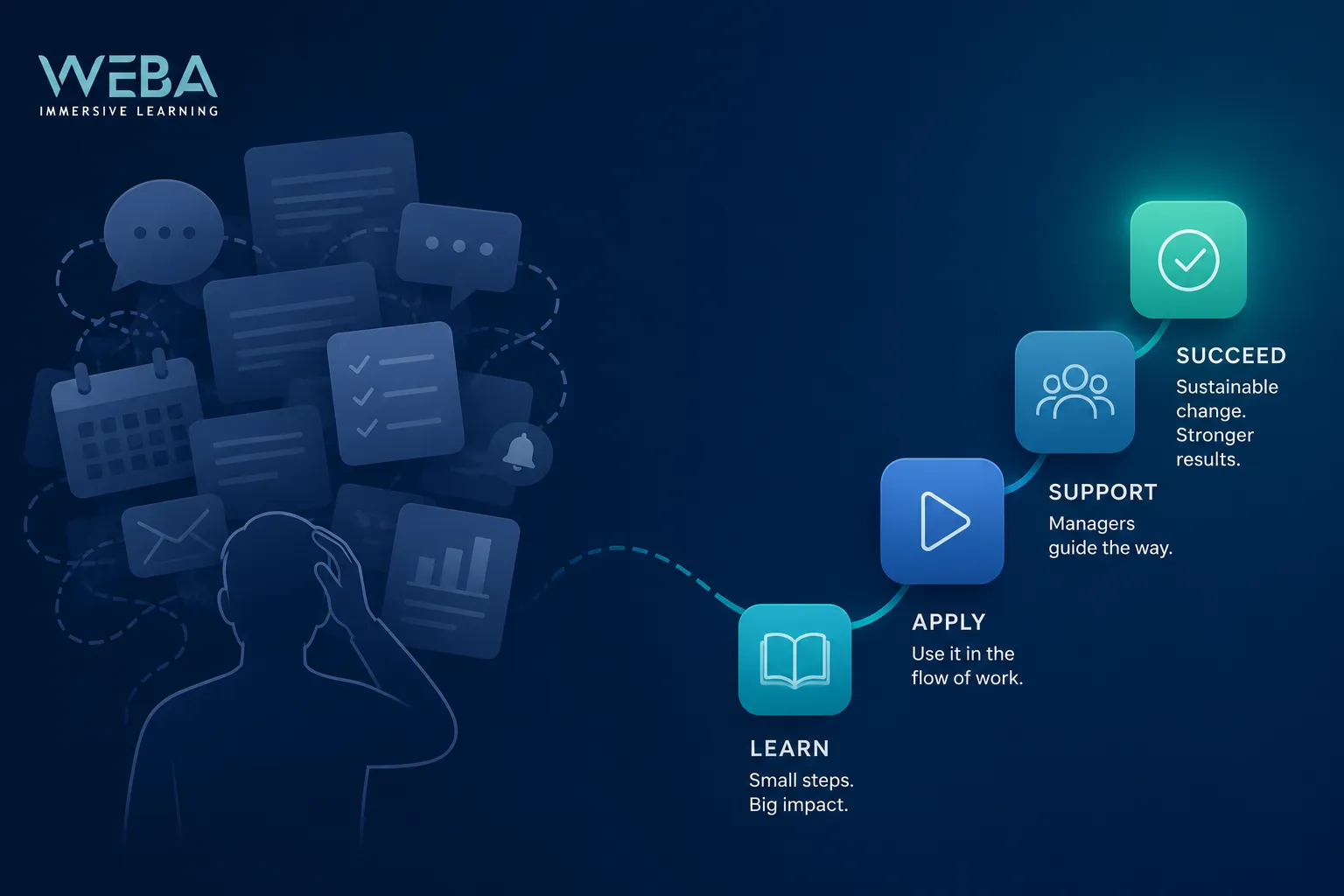
A short module can introduce a concept. A scenario can then give employees an opportunity to apply it. A follow-up activity can reinforce the key point several days later.
For example:
Step 1: Introduce the policy in a short learning module.
Step 2: Present a realistic workplace scenario.
Step 3: Ask the learner to make a decision.
Step 4: Explain the consequences and provide feedback.
Step 5: Reinforce the concept later with a short knowledge check.
This creates a more continuous learning experience rather than treating compliance as something employees encounter once a year.
Keep the Experience Relevant to the Job
Not every employee needs the same compliance training.
A finance employee, warehouse worker, sales representative, and senior manager may encounter very different risks and responsibilities.
Training becomes more useful when examples reflect those differences.
A generic cybersecurity question might have limited impact. A scenario showing an employee receiving an unusual payment request from a supposed customer may feel much more relevant to someone working in finance.
The closer the situation is to the employee's actual environment, the easier it becomes to understand why the training matters.
This is also where subject-matter experts become important. Learning designers need accurate information about workplace processes, while experienced employees can help identify situations that commonly cause confusion.
Don't Turn Every Course Into a Game
Interactive training can be engaging, but engagement should never become the only goal.
A compliance course doesn't need excessive animations, complicated game mechanics, or unnecessary technology.
The best design depends on the learning objective.
If employees simply need to understand a straightforward policy update, a short module may be enough. If they need to make decisions in complex situations, branching scenarios may be more appropriate. If they need to practice a technical process, a realistic simulation could offer greater value.
The technology should follow the learning requirement, not the other way around.
Measuring Whether Compliance Training Works
Completion rates are useful, but they don't tell the whole story.
Organizations should also consider whether employees can apply what they have learned.
Useful measures might include assessment performance, recurring errors, incident reports, audit findings, or changes in workplace behavior.
Learning data can also reveal where employees struggle. If a large number of learners consistently make the same incorrect decision in a scenario, that could indicate that the concept needs to be explained differently.
Training should evolve based on those observations.
Building a More Practical Compliance Culture
Compliance shouldn't feel like a yearly checkbox.
When learning is delivered in smaller pieces and reinforced through realistic practice, employees have more opportunities to understand how policies connect to their everyday responsibilities.
Webalearn approaches digital learning with a focus on practical experiences that connect training content with real workplace requirements.
The goal isn't to make compliance training flashy. It is to make it useful.
Employees should finish training knowing not only what the organization expects from them, but also what they should do when faced with a situation that tests that knowledge.
That is ultimately what effective compliance learning should achieve: less memorization, more understanding, and greater confidence when it matters.



























Sign in to leave a comment.