

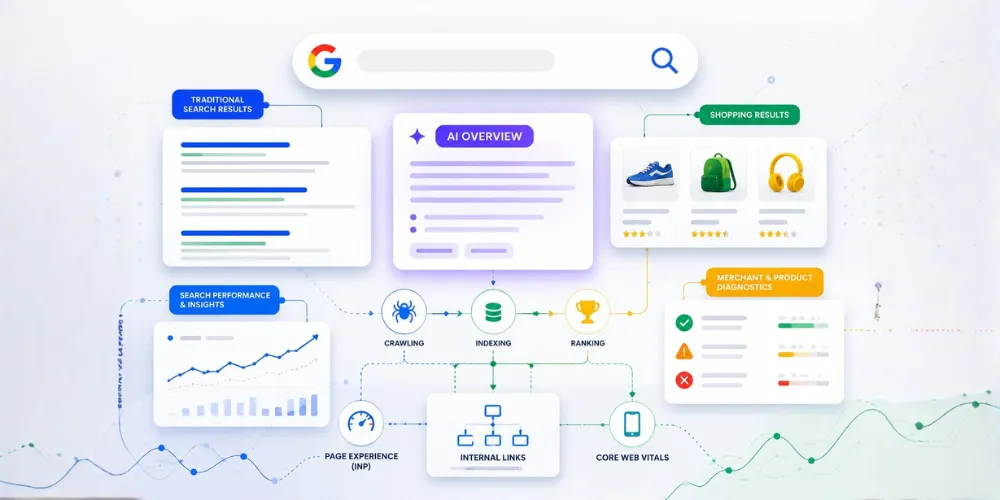
Search engines are no longer passive libraries that simply match keywords to pages. They are becoming intelligent systems that interpret intent, context, and credibility before deciding what deserves visibility. As AI-powered search engines reshape how information is discovered, content marketing is undergoing a fundamental transformation. Brands that continue to rely on outdated playbooks focused on volume and keyword density are finding it harder to compete, while those adapting to AI-driven evaluation are building long-term authority.
This shift is not about gaming algorithms. It is about aligning content with how AI systems understand expertise, usefulness, and trust.
The Shift from Keywords to Context
For years, content marketing revolved around identifying high-volume keywords and building pages around them. While keywords still matter, AI-powered search engines now prioritize context over repetition. Natural language processing models analyze how well content answers real questions, whether ideas flow logically, and if supporting information reinforces the main argument.
Search engines increasingly reward content that demonstrates depth instead of surface-level optimization. Articles that clearly explain concepts, acknowledge nuance, and offer informed perspectives are more likely to be surfaced in AI-generated summaries and conversational search results.
This evolution is forcing marketers to rethink how they structure content—from introductions that frame intent clearly to conclusions that offer actionable clarity.
Why Experience and Expertise Matter More Than Ever
One of the most visible changes in AI-driven search is the emphasis on real experience. Content written purely for ranking often lacks firsthand understanding, and AI systems are becoming better at identifying this gap. Articles that reflect lived experience, industry exposure, or practitioner insight stand out.
This is where Google’s E-E-A-T principles—Experience, Expertise, Authority, and Trustworthiness—become operational rather than theoretical. AI models evaluate signals such as depth of explanation, consistency of messaging across a site, and whether claims are supported by logical reasoning rather than exaggerated promises.
Institutions like the Boston Institute of Analytics have recognized this shift early. By focusing on practitioner-led insights, industry-aligned curriculum, and applied learning, they demonstrate how expertise-driven content naturally aligns with what AI search engines now value.
Content Is Becoming More Intent-Focused
AI-powered search engines are built to understand why a user is searching, not just what they typed. This has a direct impact on content marketing strategy. Instead of creating multiple thin pages targeting similar queries, brands are moving toward comprehensive, intent-driven resources.
For example, a single well-structured guide that addresses beginner concerns, intermediate challenges, and advanced use cases can outperform dozens of fragmented posts. AI systems favor content that anticipates follow-up questions and resolves them within the same journey.
This approach also improves engagement metrics—time on page, scroll depth, and return visits—which further reinforces visibility in AI-led rankings.
The Role of Authority in an AI-First Search Landscape
Authority is no longer built through backlinks alone. While links still matter, AI-powered search engines evaluate brand credibility through broader signals: content consistency, topical focus, and clarity of positioning.
Organizations that publish deeply within a defined domain—rather than chasing every trending topic—are gaining stronger visibility. This is especially evident in education-focused sectors, where learners increasingly rely on authoritative content to make informed decisions.
As interest in upskilling grows, especially in technology-driven fields, many learners explore digital marketing courses to understand how AI is reshaping search, advertising, and content ecosystems. Institutions that combine thought leadership with educational depth are better positioned to earn long-term trust.
Human-Led Content in an AI World
Paradoxically, as AI becomes more powerful, human-led content is becoming more valuable. AI-generated content often struggles with originality, lived insight, and strategic nuance. Search engines are increasingly cautious about amplifying content that feels generic or mass-produced.
Successful content marketing today blends AI efficiency with human judgment. AI tools may assist with research or structure, but the voice, perspective, and strategic framing must remain human. This balance is critical for brands that want sustainable visibility rather than short-term spikes.
Educational ecosystems have begun reflecting this reality. Growing demand for Digital marketing courses in Pune, for example, shows how professionals are seeking structured learning to understand both AI tools and the human strategy required to use them effectively.
Freshness and Relevance in AI Search
AI-powered search engines place greater emphasis on freshness when topics evolve rapidly. Content that acknowledges recent shifts—such as changes in search interfaces, the rise of conversational results, or new content formats—signals relevance.
However, freshness does not mean constant rewriting. Instead, it means updating core insights, refining examples, and ensuring content reflects current realities. Brands that maintain evergreen pillars while periodically refreshing context perform better than those chasing news cycles without depth.
This is particularly relevant in fast-moving digital disciplines, where outdated advice can quickly erode trust.
Structuring Content for AI Consumption
Structure matters more than ever. Clear headings, logical progression, and concise explanations help AI systems parse content efficiently. Well-structured content is more likely to be quoted, summarized, or referenced in AI-generated responses.
At the same time, writing purely for machines is a mistake. The most effective content balances technical clarity with human readability. This dual focus ensures that content serves both the algorithm and the audience—without compromising either.
Trust as the Ultimate Differentiator
In an AI-powered search environment, trust becomes the ultimate competitive advantage. Users are increasingly skeptical of shallow content, exaggerated claims, and anonymous advice. Brands that consistently publish transparent, experience-driven content earn credibility over time.
This trust is cumulative. Every well-researched article, every honest explanation, and every educational resource reinforces authority. Over time, AI systems recognize these patterns and reward them with sustained visibility.
Institutions like the Boston Institute of Analytics exemplify this approach by focusing on long-term value creation rather than short-term traffic tactics.
Conclusion: Preparing for the Next Phase of Content Marketing
Content marketing is no longer about chasing algorithms—it is about aligning with how AI understands value. As search engines become more conversational, contextual, and discerning, brands must elevate their content strategies accordingly. Depth, experience, and clarity are no longer optional; they are foundational.
The rapid growth of digital ecosystems, including increasing interest in digital marketing training courses in Pune, highlights how professionals are actively seeking to understand and adapt to this new reality. Those who invest in learning, authority, and human-led strategy will be best positioned to thrive as AI-powered search continues to evolve.































Sign in to leave a comment.