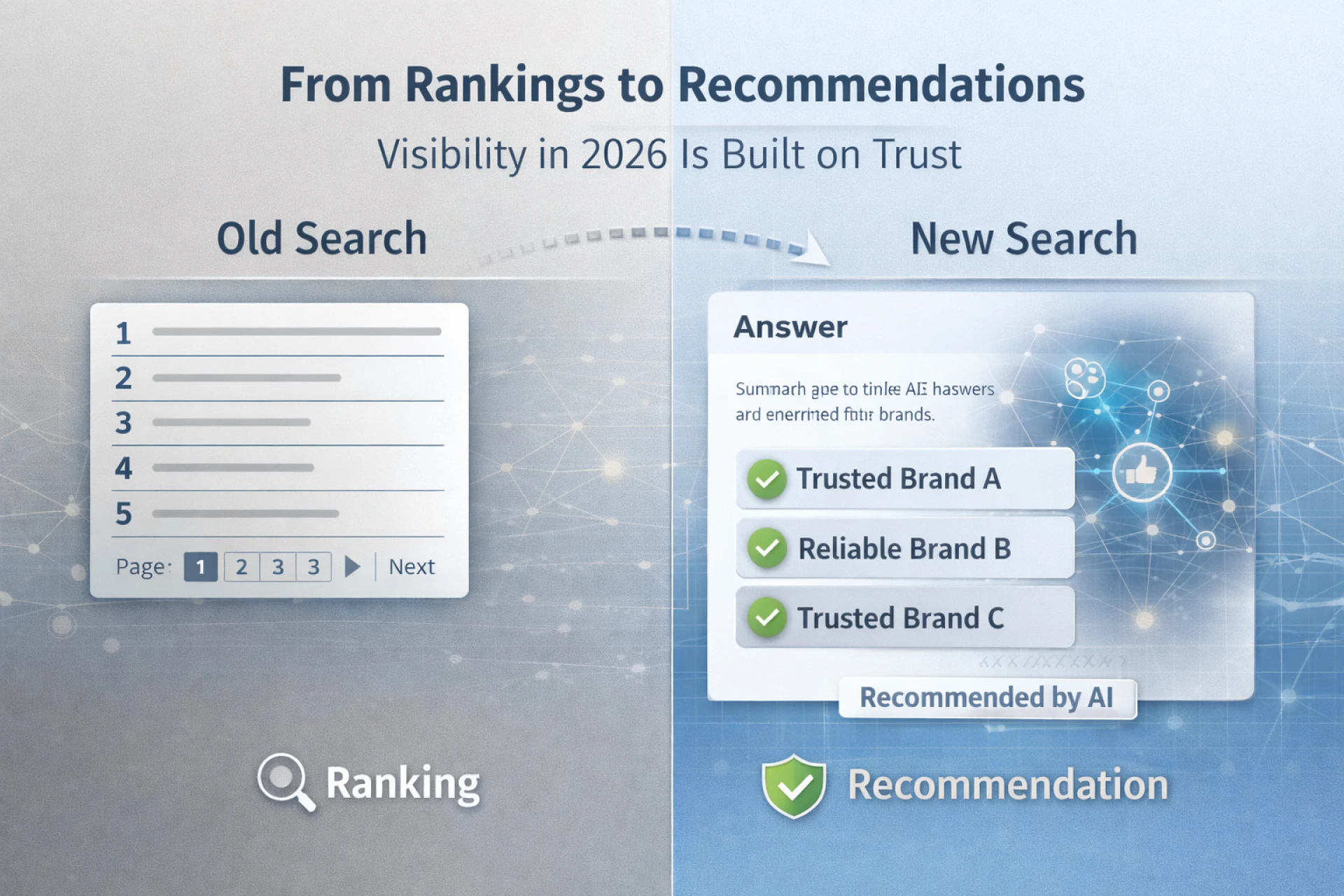

Search in 2026 no longer looks like a list of blue links competing for clicks. It looks more like a conversation. Users ask questions, and AI systems respond with direct answers, summaries, and recommendations, often without requiring a single click. This shift has quietly but fundamentally changed how visibility works online.
For years, success in search meant ranking on page one. Today, success increasingly means being recommended by AI systems that decide which brands, experts, and sources are trustworthy enough to reference directly. Rankings still exist, but they are no longer the only, or even the primary, gatekeepers of visibility.
Why Rankings Alone No Longer Guarantee Visibility?
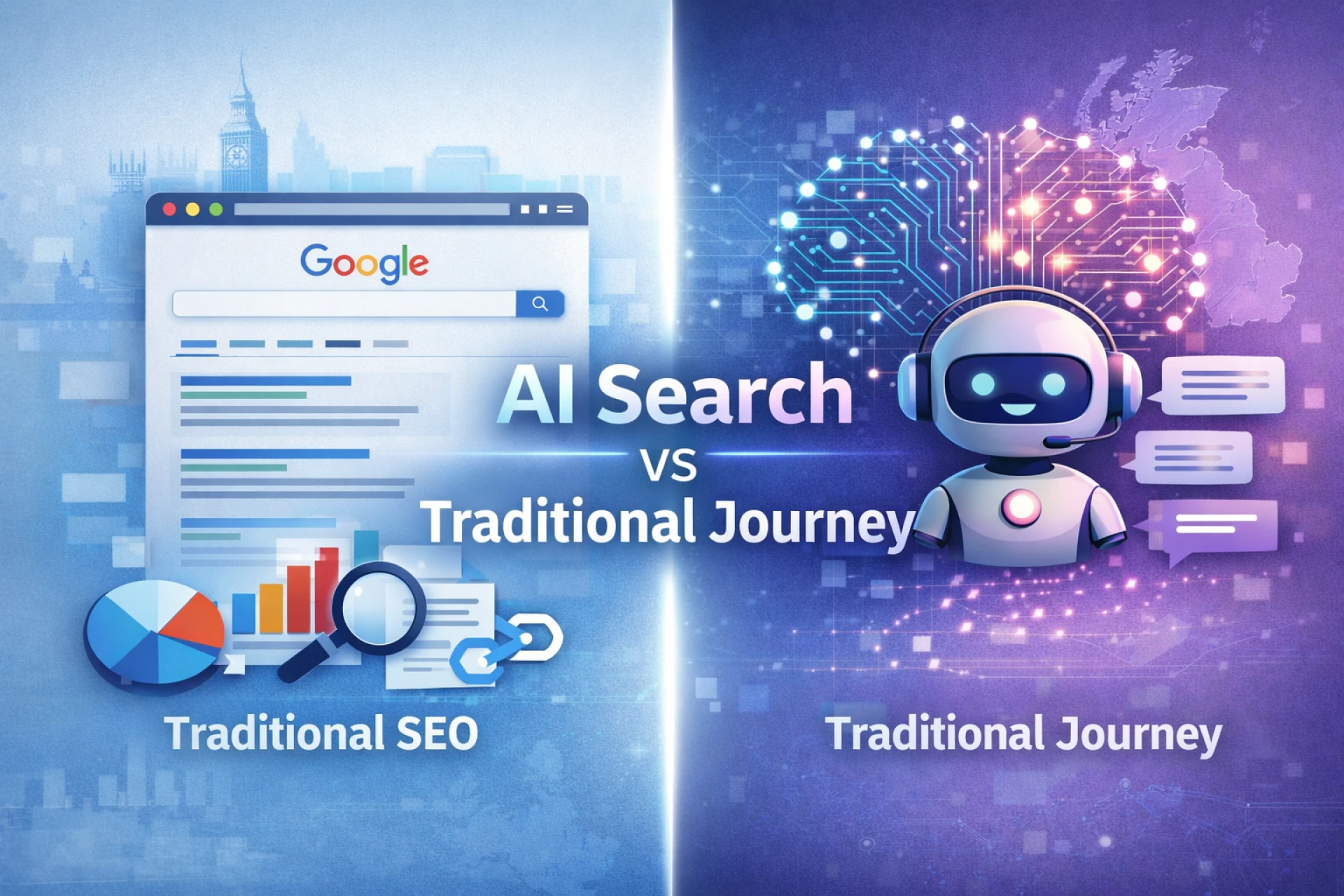
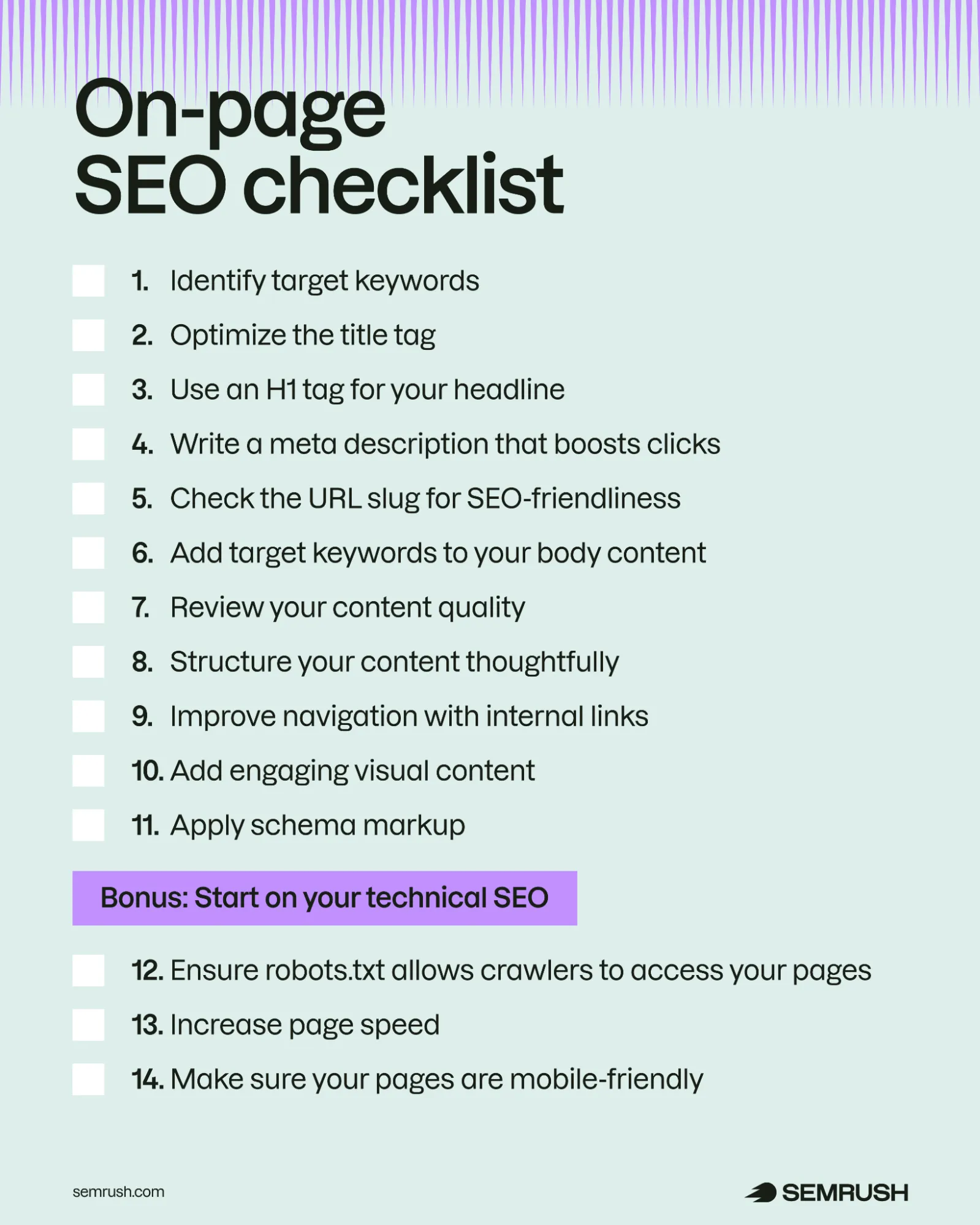
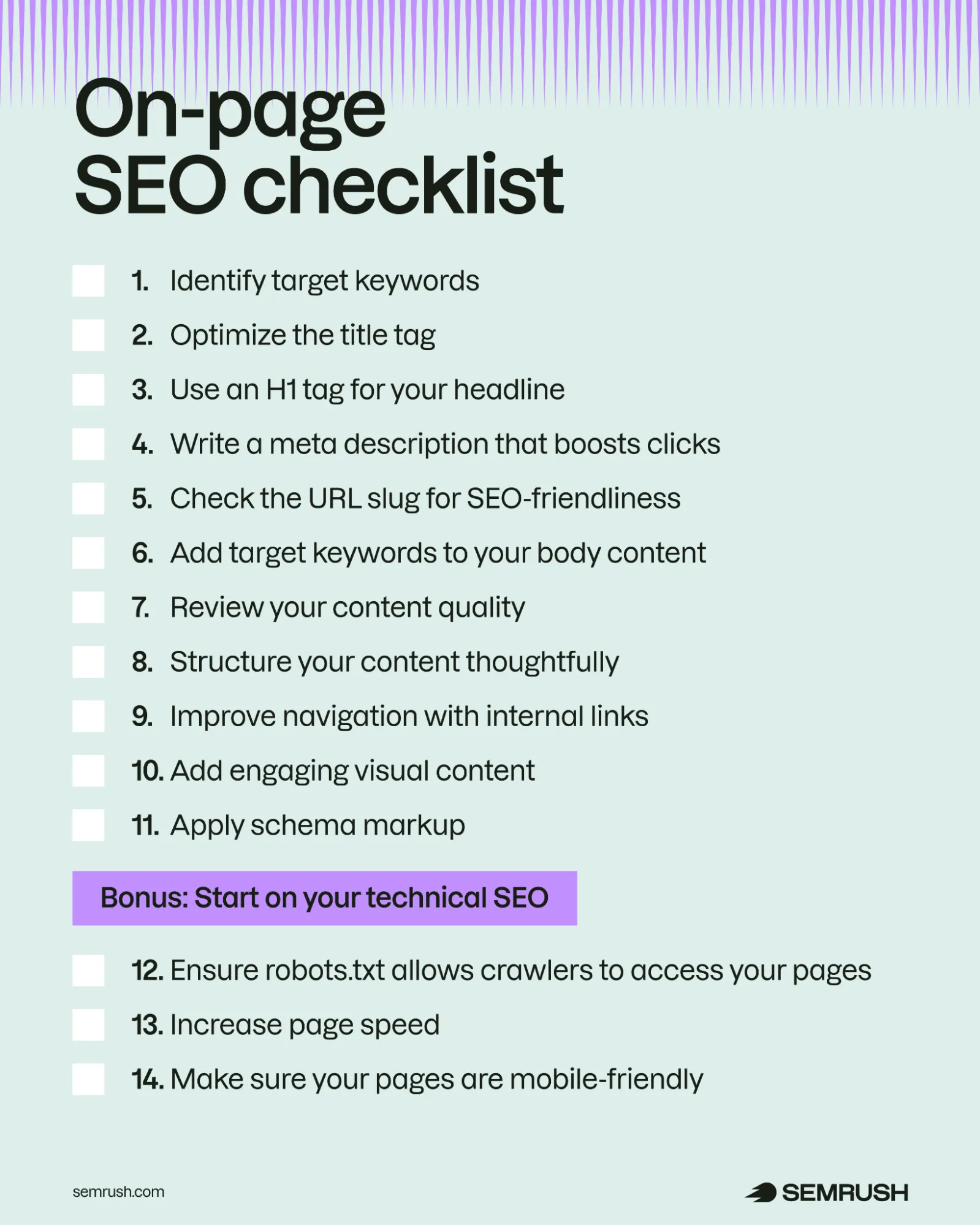
Traditional SEO focused on signals like keywords, backlinks, and technical optimisation to improve rankings. While these still matter, AI-driven search engines evaluate content differently. Instead of asking “Which page should rank highest?”, AI asks, “Which source is safe, accurate, and useful enough to answer this question?”
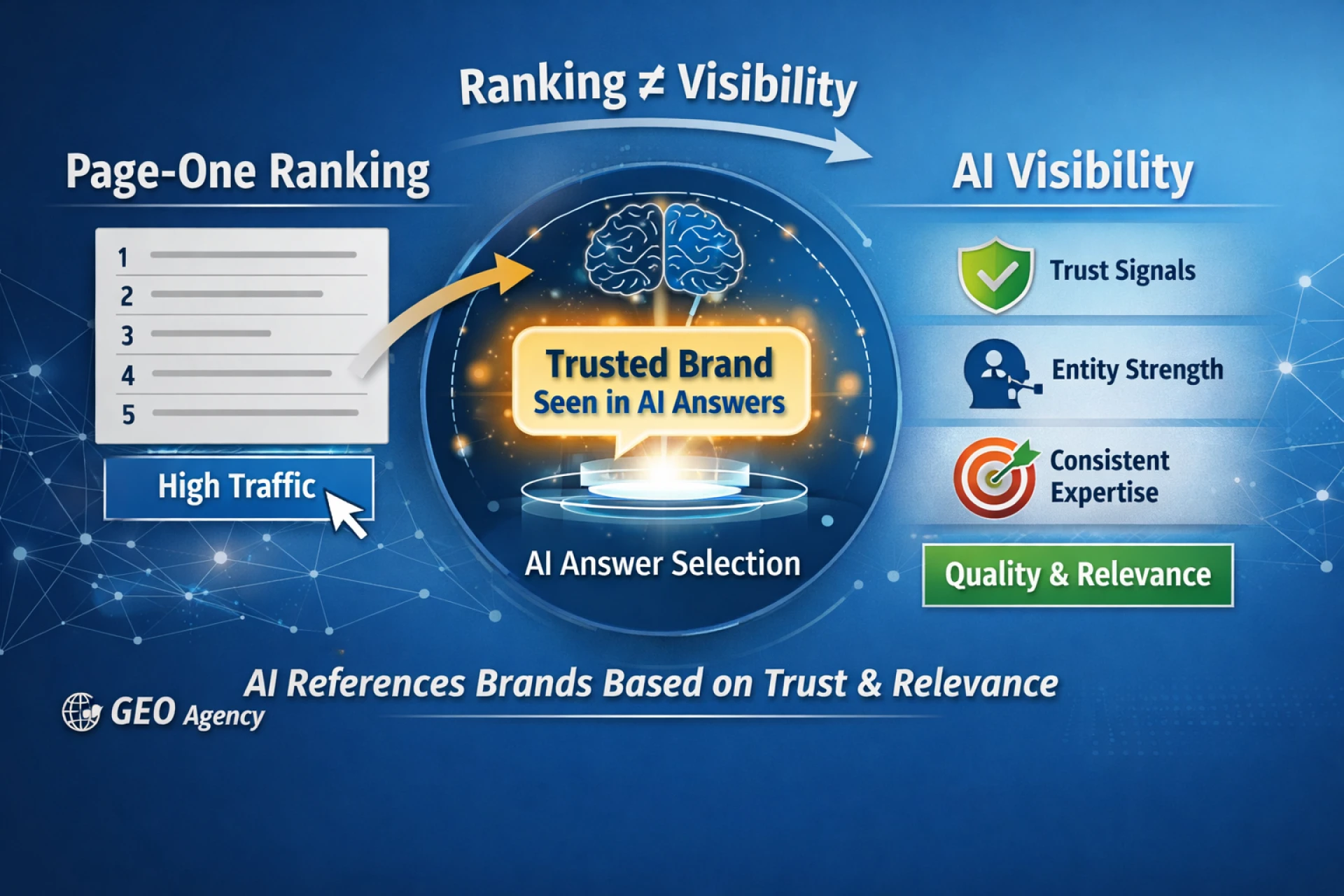
This is why many brands now appear in AI-generated answers even when they do not rank on page one. AI systems prioritise confidence and clarity over raw authority metrics. A well-structured, clearly written explanation from a credible source can outperform a higher-ranking but vague or promotional page.
For example, a niche SaaS blog explaining a specific workflow step-by-step may be cited in AI answers, while a larger competitor’s high-ranking landing page is ignored because it lacks depth or specificity.
How AI Decides What to Recommend?
AI engines act more like cautious editors than neutral crawlers. Every recommendation reflects on their reliability, so they apply strict filters before reusing content. Common signals AI evaluates include:
- Topical depth, where the content fully answers a question rather than skimming the surface
- Consistency, meaning the same entity provides aligned information across multiple pages and platforms
- Clear expertise, shown through confident language, examples, and factual accuracy
- Low risk, avoiding exaggerated claims, fluff, or unsupported opinions
If a piece of content feels incomplete, repetitive, or written purely to rank, it is unlikely to be reused, even if it performs well in traditional search results.
The Rise of Recommendations Over Results
In AI-led search experiences, users are not choosing from ten options. They are receiving one consolidated answer. This makes recommendations far more powerful than rankings ever were. Being mentioned once inside an AI response can drive more trust than appearing in position three or four on a results page.
This is especially visible in local search, product comparisons, and “how-to” queries. Instead of listing businesses, AI summarises the best option based on relevance, proximity, reviews, and clarity of information. Brands that present themselves clearly and consistently are far more likely to be selected.
What does this mean for Content Strategy in 2026?
Content now needs to be written with reuse in mind. That means structuring pages so AI can easily extract meaning, not just index keywords. Long paragraphs with no clear point, vague headings, and generic introductions reduce the chances of being referenced.
High-performing content in 2026 tends to:
- Answer one core question clearly before expanding
- Use examples to explain abstract ideas
- Maintain a consistent tone and point of view
- Avoid over-optimisation and unnecessary repetition
This is where many businesses turn to a geo agency or a generative engine optimisation consultant to realign their strategy. Instead of chasing rankings alone, they focus on building content ecosystems that AI engines can trust and reuse confidently.
Search Is Becoming Reputation-Based
The biggest shift in search is psychological. AI systems are not just ranking pages; they are evaluating reputations. Brands are treated as entities, not URLs. The more consistently an entity demonstrates expertise across its content, the more likely it is to be recommended.
This means every article, FAQ, and landing page contributes to a larger trust profile. A single weak or misleading piece can dilute credibility, while clear, well-explained content strengthens it over time.
Be the Best Answer, Not the Best Optimised Page
In 2026, winning search visibility is less about outsmarting algorithms and more about earning confidence. AI engines reward sources that reduce uncertainty for users. If your content helps AI answer a question clearly and safely, it becomes recommendation-worthy.
The brands that thrive in this new era are not chasing every keyword. They are focused on being genuinely helpful, precise, and reliable. Rankings may open the door, but recommendations are what keep brands visible in an AI-first world.
Conclusion
Search in 2026 is no longer a competition for rankings alone; it is a test of trust. As AI-driven systems increasingly shape how information is discovered and delivered, visibility depends on whether a brand can be confidently recommended, not just indexed.
The shift from rankings to recommendations rewards clarity, consistency, and genuine expertise. Content that explains, contextualises, and reduces uncertainty is far more valuable than content written purely to optimise for algorithms. Brands that adapt to this mindset will not only stay visible but also become default reference points in AI-generated answers.
In this new era of search, the goal is simple but demanding: be the most reliable answer in the room. When trust becomes the deciding factor, recommendations follow naturally.
























Sign in to leave a comment.