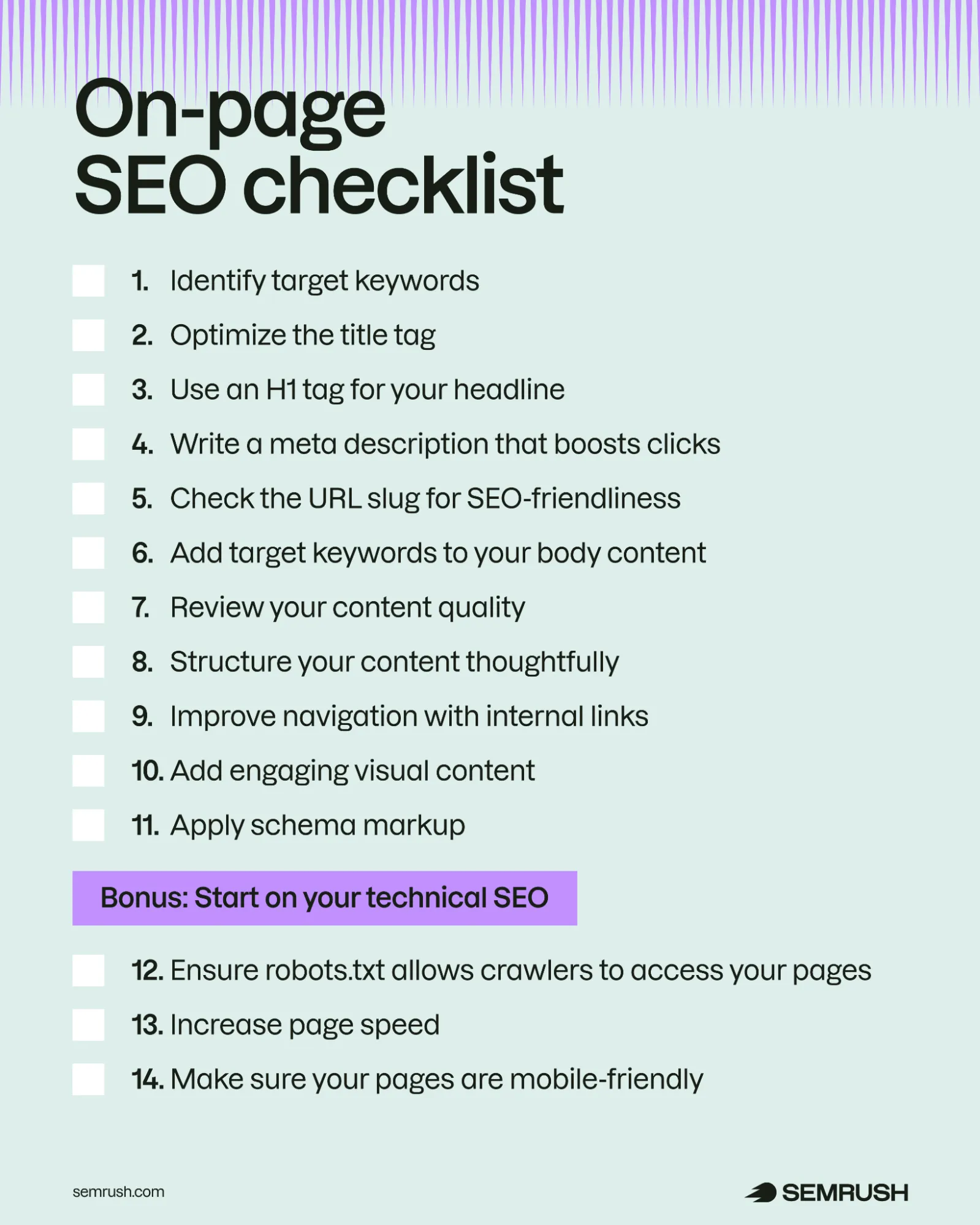

If your website is not ranking on Google in the UAE, the problem is rarely your budget — it is usually your on-page SEO.
On-page SEO refers to every optimisation you make directly within your own web pages: the titles, headings, content, images, links, and structure. It is the foundation of any successful digital marketing strategy, and it is entirely within your control.
For businesses operating in Dubai, Abu Dhabi, or across the wider UAE, getting on-page SEO right carries even greater importance. You are competing in a bilingual, mobile-first, hyper-local market where consumer search behaviour is distinctly different from Western markets. This guide walks you through every key element — practically and clearly.
Why On-Page SEO Matters More Than Ever in the UAE
The UAE digital economy has grown sharply in recent years. With one of the highest internet penetration rates in the world and a population that overwhelmingly discovers services through Google, businesses that invest in proper on-page SEO gain a sustainable competitive edge.
Unlike paid advertising, on-page SEO compounds over time. A well-optimised page that earns a top-three position on Google can drive consistent, free traffic for months or years after the initial work is done.
1. Start With Keyword Research That Reflects UAE Search Intent
Every optimised page begins with understanding what your audience is actually searching for — not what you assume they are searching for.
In the UAE, this means accounting for:
- Bilingual search behaviour — Many UAE residents search in both English and Arabic. If you are targeting Arabic-speaking audiences, keywords need to be researched and implemented in Arabic separately, not simply translated.
- Location-specific terms — Searches like "digital marketing agency Dubai" or "SEO company Abu Dhabi" are fundamentally different in intent from national-level terms. Target the specific Emirate or district where relevant.
- Expat search patterns — Dubai's large expat population uses highly specific, service-oriented queries. They are searching to find, compare, and decide — often within the same session.
Use tools like Google Keyword Planner, SEMrush, or Ahrefs to identify primary and secondary keywords. Each page should target one primary keyword, supported by a cluster of related terms.
2. Write Title Tags That Earn Clicks
The title tag is the most important on-page SEO element. It appears as the clickable headline in Google search results and tells both Google and your potential visitors exactly what the page is about.
Best practices for UAE businesses:
- Place the primary keyword as close to the beginning of the title as possible
- Keep it between 50 and 60 characters to avoid truncation in search results
- Add your city or Emirate for location-based pages (e.g., "Website Development Company in Dubai")
- Include your brand name at the end for recognition
- Write for the human reading it, not just the algorithm — a compelling title drives clicks
Every page on your site needs a unique title tag. Duplicate titles send confusing signals to Google and reduce your ability to rank individual pages.
3. Craft Meta Descriptions That Convert
Meta descriptions do not directly affect rankings, but they significantly affect click-through rate — and CTR is a meaningful signal Google uses to assess content relevance.
A strong meta description for a UAE business should:
- Be 150–160 characters in length
- Naturally include the primary keyword (Google bolds matching terms in results)
- Include a clear call to action: "Get a Free Audit," "Request a Quote," or "Learn More"
- Be unique for every page — generic auto-generated descriptions underperform
4. Structure Your Content With Proper Headings
Headings (H1, H2, H3) serve two purposes: they help Google understand the hierarchy and topics covered on your page, and they make your content easier to navigate for real readers.
The key rules:
- Every page has exactly one H1 containing your primary keyword
- H2 tags break the content into main sections — use secondary keywords naturally here
- H3 tags organise subsections within H2 blocks
- Headings should be descriptive and useful — avoid vague labels like "Introduction" or "Section One"
A well-structured page reduces bounce rate, which signals to Google that users found what they were looking for.
5. Optimise Your URLs
Clean, descriptive URLs are a small but important ranking signal — and they build user trust.
Compare these two URLs:
- ❌ yoursite.com/page?id=47&ref=012
- ✅ yoursite.com/services/seo-company-dubai
For UAE businesses, best practices include:
- Using lowercase letters with hyphens between words (never underscores)
- Including the primary keyword in the URL
- Keeping URLs as short and descriptive as possible
- Structuring URLs to mirror your site hierarchy
6. Create Content That Actually Serves the Reader
Google's algorithms in 2026 are sophisticated at distinguishing genuinely helpful content from thin pages written purely to rank. The E-E-A-T framework — Experience, Expertise, Authoritativeness, and Trustworthiness — is central to how Google evaluates content quality.
For UAE business websites, this means:
- Minimum word counts — Service pages typically need 600–1,000 words; in-depth guides 1,500 or more
- Primary keyword in the first 100 words — Signals relevance from the outset
- Natural keyword density — Around 1–2% is appropriate; above that, it reads as stuffing
- Short paragraphs and clear subheadings — UAE audiences skew heavily mobile; dense blocks of text perform poorly
- Locally relevant context — Mention specific areas, free zones, and regional market dynamics where applicable
- Regular content updates — Outdated pages lose rankings gradually; refresh key pages at least twice a year
7. Optimise Every Image
Images are frequently the biggest contributor to slow page load times — a confirmed Google ranking factor since Core Web Vitals became part of the algorithm.
For every image on your site:
- Compress before uploading using tools like TinyPNG or Squoosh
- Use descriptive, keyword-informed file names (e.g., seo-services-dubai.jpg, not IMG_4821.jpg)
- Write meaningful alt text — this supports accessibility and gives Google additional context
- Use modern formats like WebP for faster loading
- Always specify image dimensions in the HTML to prevent layout shifts
8. Build a Strong Internal Linking Structure
Internal links distribute authority across your site and help Google discover all of your important pages. They also keep users engaged — a longer session duration is a positive engagement signal.
Practical guidelines:
- Every key service or product page should receive links from at least two or three other relevant pages
- Use descriptive, keyword-rich anchor text — avoid "click here" or "read more"
- Link from high-traffic pages (homepage, blog posts) to pages you want to rank
- Ensure no important page is buried more than three clicks from the homepage
- Audit broken internal links regularly — they waste crawl budget and frustrate users
9. Pass Google's Core Web Vitals
Core Web Vitals are Google's technical performance benchmarks, and they directly affect rankings:
- LCP (Largest Contentful Paint): Main content should load in under 2.5 seconds
- CLS (Cumulative Layout Shift): Visual stability score should stay below 0.1
- INP (Interaction to Next Paint): Pages must respond to user inputs quickly
Run your site through Google's PageSpeed Insights regularly. UAE audiences access sites predominantly on mobile — if your mobile score is poor, your rankings will reflect it.
10. Don't Overlook UAE-Specific Technical Details
A few on-page factors are particularly important for businesses serving the UAE market:
- Hreflang tags — If your site serves both Arabic and English, implement hreflang tags correctly so Google serves the right language version to the right user
- NAP consistency — Your Name, Address, and Phone number should appear identically across all pages and match your Google Business Profile
- Trust signals — Include your UAE trade licence number, physical address, and local phone number on contact and footer pages
- Local area pages — If you serve multiple Emirates or districts, create individual location pages targeting those specific searches
Final Thoughts
On-page SEO is not a one-time task — it is an ongoing discipline. Algorithms evolve, competitors update their pages, and your own business offerings change. Businesses that treat on-page optimisation as a continuous process rather than a launch checklist consistently outperform those that do not.
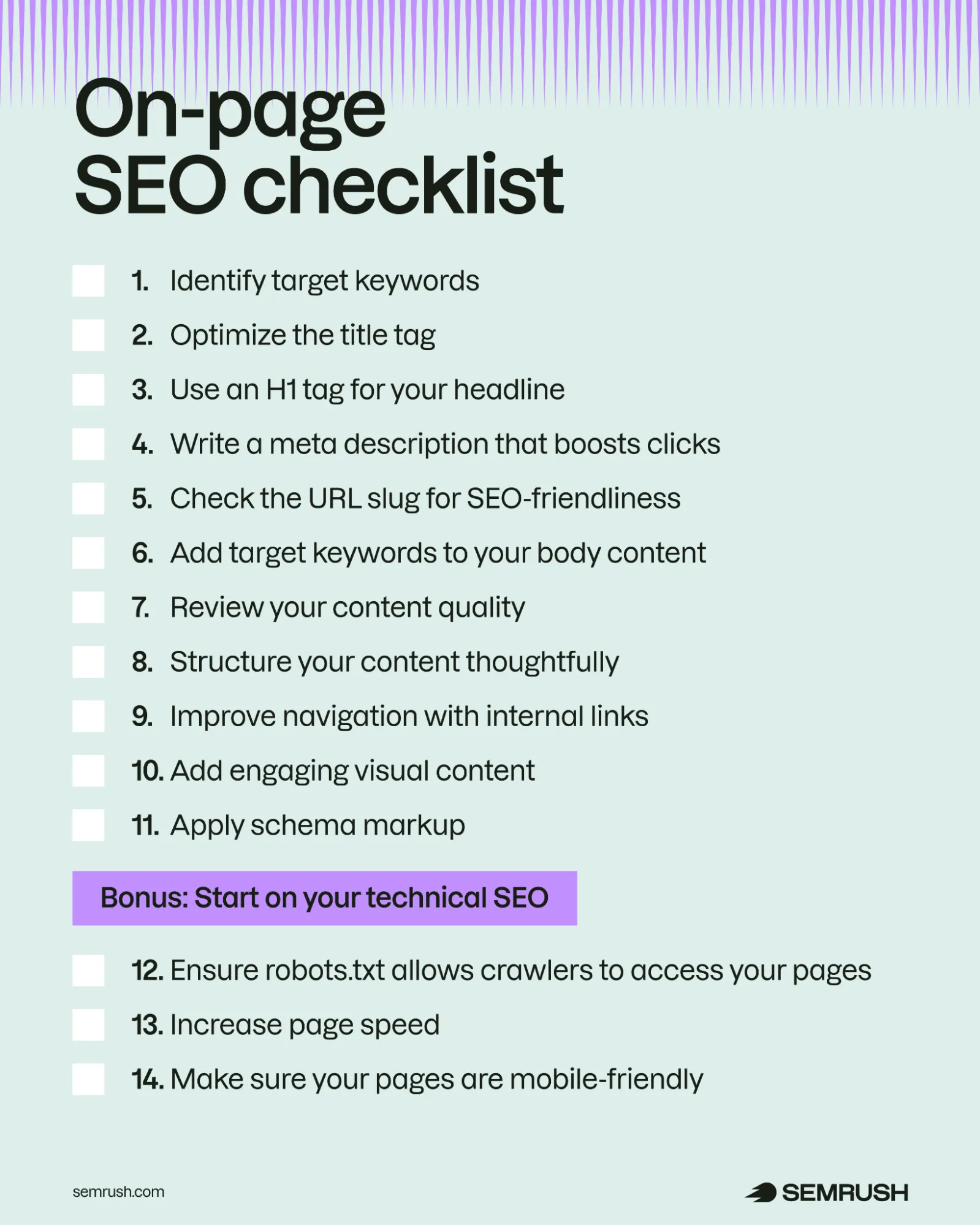
The good news is that every element listed in this guide is completely within your control. Start with a thorough audit of your existing pages, prioritise the highest-traffic pages first, and work systematically through the checklist.
For businesses looking for professional support with on-page SEO in the UAE, Digital Arabia offers free SEO site audits to help identify exactly where your website is leaving rankings on the table.
Frequently Asked Questions
How long does on-page SEO take to show results? On-page optimisations can begin influencing rankings within 4 to 12 weeks, depending on how competitive your target keywords are and how authoritative your domain already is. Technical fixes like page speed improvements can show impact faster.
Is Arabic on-page SEO different from English SEO? The principles are the same, but keyword research, content structure, and metadata must be completed separately in Arabic. Direct translation of English keywords often misses how Arabic speakers naturally search. Research native Arabic search terms independently.
How many keywords should one page target? Each page should have one clearly defined primary keyword and a supporting cluster of 3 to 5 related secondary keywords. Trying to rank one page for too many unrelated terms dilutes its relevance.
Do meta descriptions affect rankings? Not directly. However, a well-written meta description improves click-through rate, which is an indirect signal that Google uses when assessing content relevance and quality.
What is the most important on-page SEO element? The title tag carries the most direct ranking weight. Beyond that, content quality — particularly how well it serves genuine user intent — is the most important factor in 2026.
Should I optimise for voice search in the UAE? Yes. Voice search usage is growing significantly across the GCC. Optimise for conversational, question-based phrases and ensure your Google Business Profile is fully complete and accurate, as voice queries frequently surface local business results.

























Sign in to leave a comment.