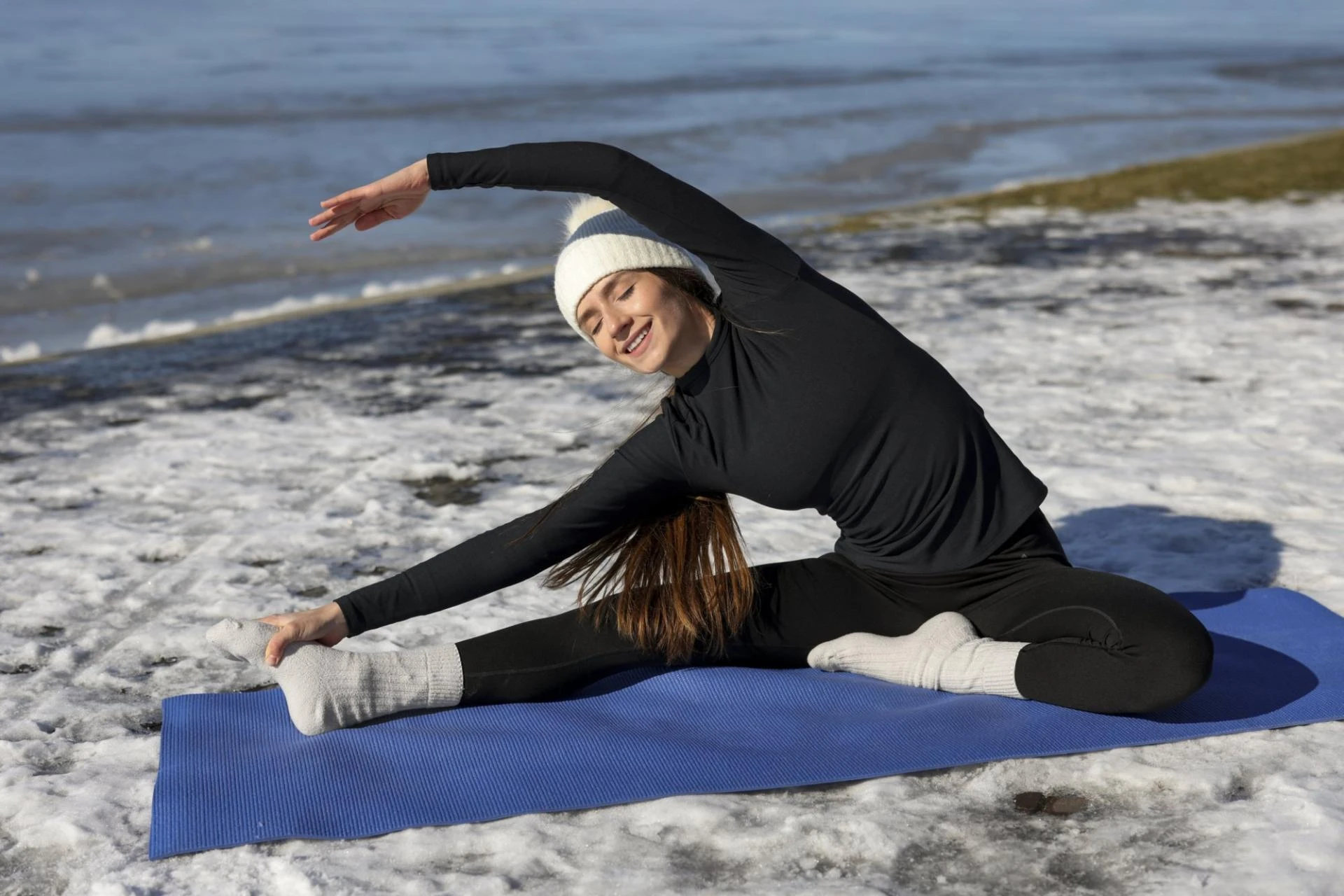

Yoga means yoking, union, coming together. It is the practice of uniting self with spirit, breath with body, individual with all beings. But for many of us in the modern West, yoga is now being packaged less as a path of connection and more as a strategy of self-care. Self-optimisation. Self-improvement. A yoga retreat is a ticket to inward retreat.
The self-care yoga trend
In a world of burnout, overstimulation, and pressure to perform, the language of self-care is seductive. We’re told we can finally rest and recharge: it’s our time, our priority. Yoga plugs neatly into this mindset. It’s promised to alleviate stress, give us glowing skin, toned muscles and help us sleep better. A private privilege, a personal upgrade.
There’s nothing wrong with this approach to yoga. For many, it’s a valid starting place: a way to feel better in the body, to ease anxiety, to switch off after work. But when we take only this slice, when our practice becomes a purely self-focused endeavour, something essential risks being lost. Yoga becomes another product, something we use for ourselves, instead of a discipline that can transform how we live with others.
Yoga as seva, yoga as union
The idea of yoga as union and yoga as service has always been in the yoga tradition. Texts like the Yoga Sutras of Patanjali and the Bhagavad Gita, two of the most well-known and influential teachings on yoga, present it as not just a way of being but a spiritual and ethical path. The practice requires restraint, generosity, selfless service, and surrender. Karma yoga, the yoga of action, is founded on seva, selfless service for the good of others. Bhakti yoga is devotional yoga that goes beyond the ego. Even asana, the physical practice of yoga now the most visible face of yoga in the West, was historically viewed as preparation for meditation. The practice of the asanas was a way to purify and strengthen the body, to sit still and focus the mind, so one could connect more deeply with spirit and, by extension, all beings.
Individualism and the yoga class
One of the ways modern yoga lessons encourage us to turn inwards is through their often exclusive language and ethos. “Focus on yourself.” “Leave the outside world behind.” “This is your time, your mat, your practice.” There’s comfort to be found in such mantras. They're a necessary balm in our busy lives. But they can also reflect the individualism of the culture around us. An individualism that values personal wellbeing over community.
There’s a risk that yoga, in its retreat into self-care, becomes another field in which we set individual goals, track personal progress, and cocoon ourselves in private bubbles. Collective problems (inequality, climate crisis, injustice) are left outside the studio doors, as though the practice were unrelated to the world we all live in.
From individual care to collective care
What would it look like if yoga shifted from being self-care centred to being a practice of collective care?
It might look like yoga studios that host free community classes for those who can’t afford it, making the practice accessible to all, rather than only to those with money to spend. It might look like weaving in activism and awareness into practice — meditating not just on personal peace, but on peace for the planet, for marginalised groups, for future generations. It might look like reclaiming yoga’s roots in service: teaching and encouraging practitioners to turn outward as well as inward, to act, to serve.
It might also look like taking on the yoga industry’s “wellness bubble”. The bubble that suggests yoga is only for certain bodies, only for those with time and money and certain lifestyles. Collective care is a recognition that yoga is for all of us, not only the few.
The question isn’t, or shouldn’t be, whether yoga can or should be a form of self-care. Of course it can, and often must be. The question is whether we allow the practice to end with self-care. Do we take what we cultivate on the mat — presence, patience, compassion — and bring it off the mat, into our families, workplaces, and communities? Do we use yoga to shore up the walls around us, or to break them down?
Back to union
Western yoga is at a crossroads. It can continue along the road of commodified, exclusive self-care, yoga as a private ritual of self-optimisation. Or it can remember its history and roots: union, service, and the recognition that we are all liberated or imprisoned together.
The choice isn’t abstract. It’s in how we teach and the spaces we make, in the language we use and the intentions we set. It’s in the question: when we emerge from practice, are we more self-absorbed or more connected?
The real promise of private yoga classes is never to be found in perfect poses or personal progress. It is to be found in the practice’s ability to crack open the illusion of separation. In remembering that care, at its deepest, is never only for the self. It’s for everyone.




























Sign in to leave a comment.