

With the web development landscape evolving faster than ever, staying up-to-date with the latest full-stack tools is no longer optional; it’s essential. Developers who adopt modern technologies are more productive, adaptable, and positioned to thrive in today's competitive tech world. Elevate your expertise with our Full Stack Developer Online Course, designed to help you master the industry's most in-demand tools and frameworks through hands-on, real-world training.
What is Full-Stack Development?
Full-stack development refers to building both the front end, what users see and interact with, and the back end, which powers the application through servers, databases, APIs, and logic.
A full-stack developer is proficient in all layers of development, from crafting interactive user interfaces to managing server-side logic and data storage. This versatility makes them key contributors to any modern development team.
Essential Full-Stack Tools to Learn
With a wide range of tools available, knowing where to start can be a challenge. Here’s a curated list of must-know tools across the stack that every full-stack developer should focus on:
1. Front-End Development Tools
These tools define the design, responsiveness, and interactivity of websites and applications, helping developers build intuitive and visually appealing user experiences.
Recommended Tools: React, Angular, Vue.js, HTML5, CSS3, JavaScript, Bootstrap, and Tailwind CSS.
2. Back-End Development Frameworks
The back end handles the application’s logic, data processing, and communication with the front end. These frameworks simplify building robust, scalable server-side applications.
Recommended Tools: Node.js, Express.js, Django, Laravel, Ruby on Rails, and Spring Boot.
3. Databases & Data Storage
Data is central to every application. Full-stack developers must be proficient in both SQL and NoSQL databases to ensure reliable data storage and retrieval.
Want hands-on practice? Our Best Training & Placement Program provides real-world projects and expert guidance to help you gain job-ready experience.
Recommended Tools: MongoDB, MySQL, PostgreSQL, Redis, Firebase.
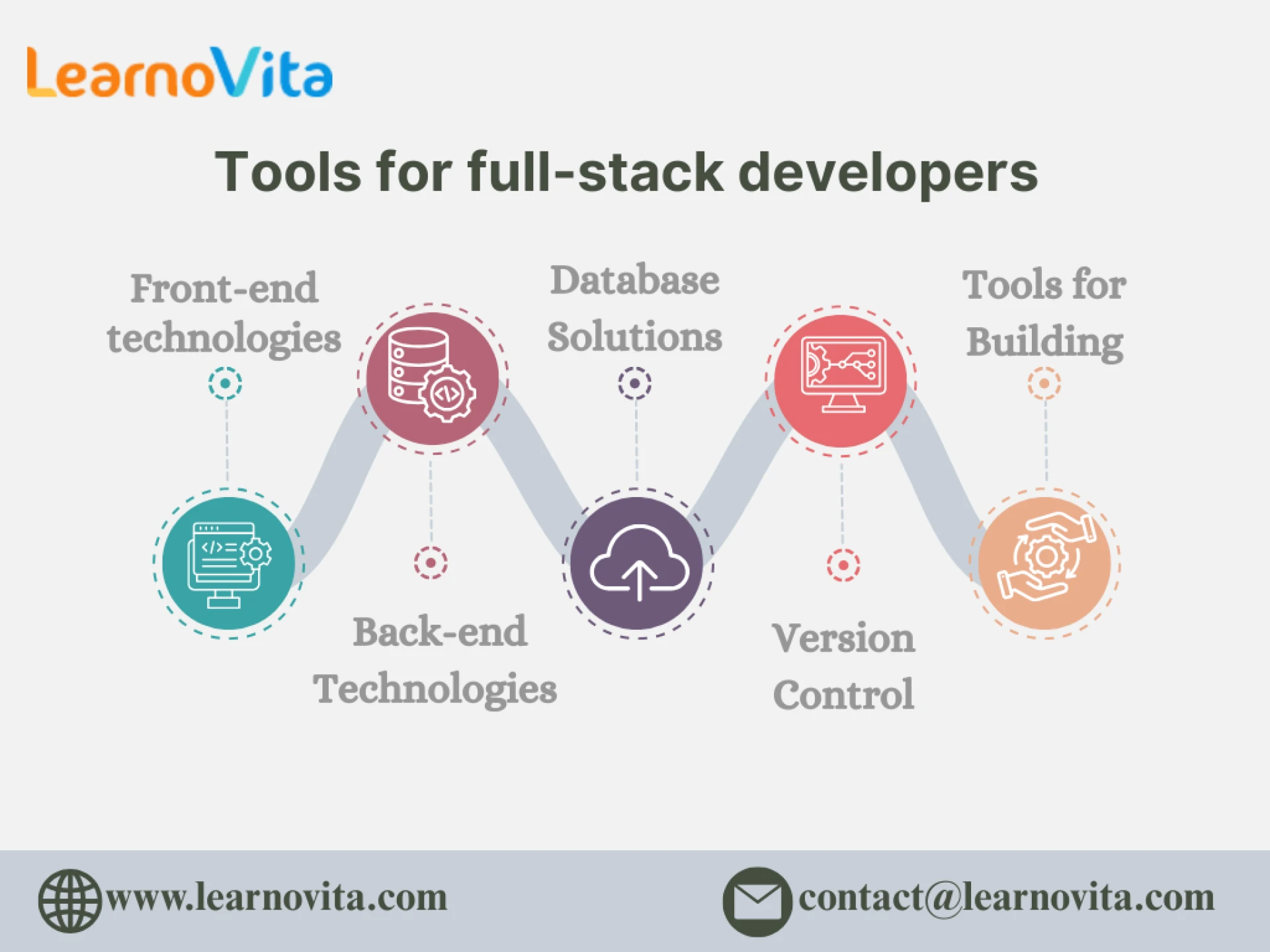
4. Version Control Systems
Version control tools help developers manage code, collaborate with teams, and maintain organized project histories throughout the development lifecycle.
Recommended Tools: Git, GitHub, GitLab, and Bitbucket.
5. Build & Deployment Tools
These tools automate everything from building and testing to deploying applications, making the software delivery process faster and more efficient.
Recommended Tools: Docker, Jenkins, Webpack, Vite, Netlify, Vercel, Heroku, and CI/CD pipelines.
Conclusion
Becoming a successful full-stack developer goes beyond just knowing how to code; it requires using the right tools to build, manage, and deploy powerful, scalable web applications. From front-end frameworks to deployment automation, the right stack sets you apart in today’s digital workforce. Ready to build a future-proof career? Join our Full Stack Developer Online Course and gain the practical skills and confidence needed to excel in today’s fast-paced tech environment.
























Sign in to leave a comment.