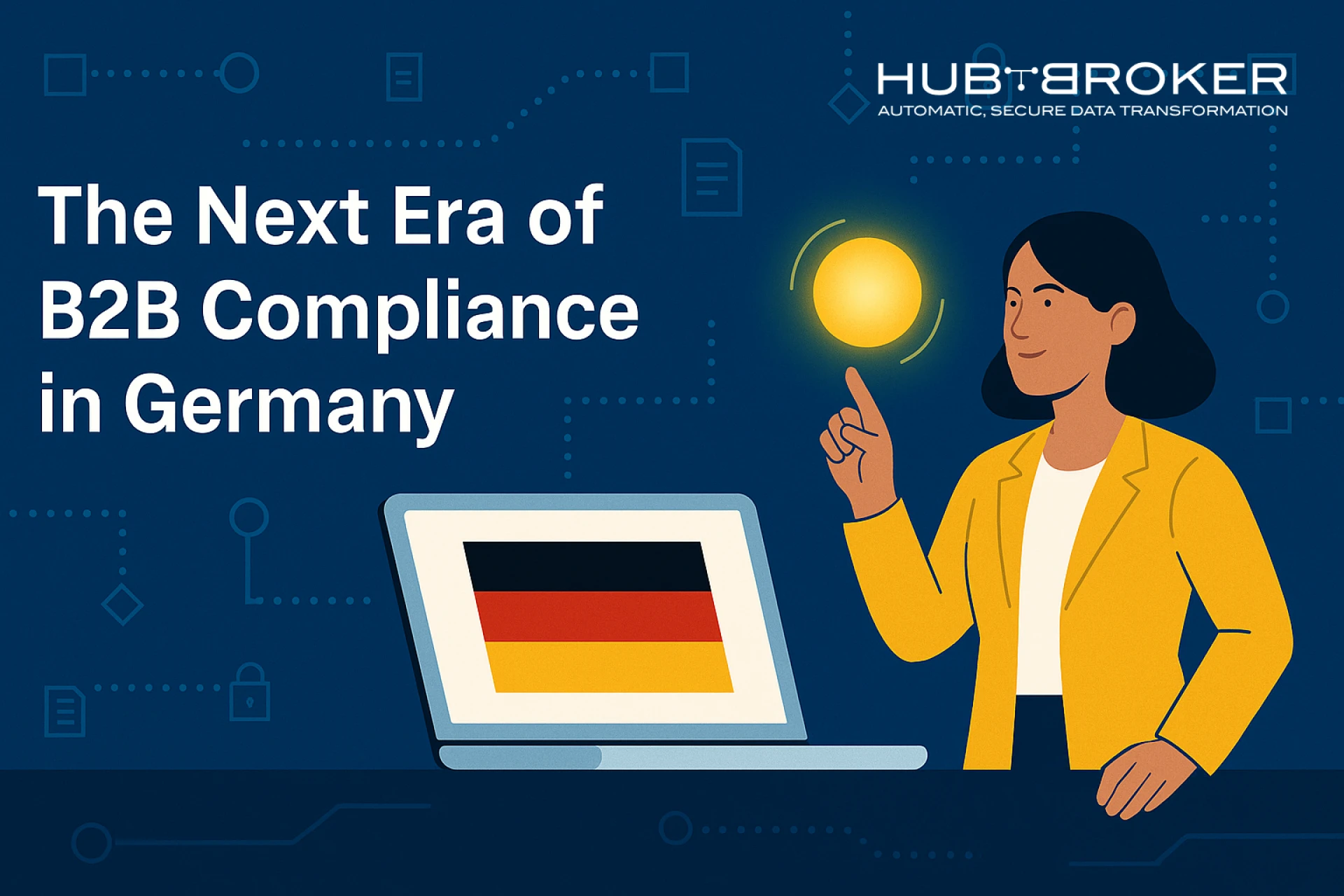

The way businesses exchange invoices in Germany is changing—fast. With the nation moving toward mandatory B2B e-invoicing from 2026 onward, companies of every size are stepping into a new era of digital compliance. What once felt like a future plan is now becoming a reality, pushing organizations to rethink how they handle invoicing, reporting, and cross-border document exchange.
And in the middle of this transformation is a technology framework that is shaping the next generation of digital workflows: the Peppol Access Point in Germany, supported by service providers like HubBroker.
How the 2026 E-Invoicing Mandate Redefines B2B Compliance
Key rules and what companies must prepare for
Germany's new mandate introduces a major shift: all domestic B2B invoices must be issued electronically in structured formats. Businesses will no longer be able to rely on PDF or paper invoices. Instead, companies must send e-invoices that are compliant with EU standards (EN16931) and follow approved formats like XRechnung or Peppol BIS.
Organizations will need to:
- Update their invoicing systems
- Ensure ERP platforms can generate structured invoices
- Adopt compliant exchange methods, such as a certified Peppol Access Point
- Prepare for validation checks before invoices are accepted
This shift is not just an IT upgrade—it's a process transformation.
The shift from traditional invoices to structured formats
Structured invoices contain machine-readable data, enabling automation, faster approvals, and reduced errors. Unlike PDFs, these formats eliminate manual tasks and support the flow of accurate financial data straight into ERP or accounting systems. Germany's compliance model is steering businesses away from documents and toward data.
Germany's Move Toward Real-Time and Standardized Reporting
Why real-time validation is becoming the norm
As digital compliance strengthens, Germany is moving toward near real-time validation of invoice data. This means that invoices can be checked for accuracy and compliance before they ever reach the buyer. It reduces fraud, minimizes rejected invoices, and aligns Germany with growing EU transparency standards.
The alignment with EU-wide digital tax reforms (ViDA)
Germany's transition is not happening in isolation. The EU's ViDA (VAT in the Digital Age) initiative is pushing all member states toward standardized digital reporting and e-invoicing. Germany's 2026 mandate aligns with this broader EU vision, helping businesses operate more smoothly across borders.
Peppol's Expanding Role in Germany's B2B Ecosystem
Why Peppol is growing as the preferred compliance network
Peppol has quickly become one of the most trusted networks for sending and receiving e-invoices across Europe. Its standardized structure, high security, and interoperability make it ideal for German businesses preparing for the 2026 mandate.
As more companies look for a reliable way to exchange structured invoices, Peppol Access Point solutions are gaining traction fast.
Benefits of using Peppol Access Point solutions for businesses
Using a Peppol Access Point offers advantages such as:
- Seamless cross-border invoice exchange
- High data accuracy
- Built-in compliance with Peppol standards
- Fewer manual processes
- Faster processing and payment cycles
A Peppol certified service provider ensures companies meet both German and EU requirements while keeping document exchange secure and efficient.
Integration of XRechnung, Peppol BIS, and PINT Standards
How companies will manage multi-standard requirements
Germany prefers XRechnung while many global partners favor Peppol BIS or its newer incarnation, PINT (Peppol International Invoice). Businesses operating across borders need flexible mapping and transformation tools or platforms that automatically convert between standards.
The increasing need for interoperability in German supply chains
German supply chains are diverse, involving domestic SMEs and multinational corporations. Interoperability is crucial. Systems must talk to each other—even when invoice formats or ERP systems differ. Networks like the Peppol e-invoicing network make that possible by standardizing communication rules.
Automation and AI in Future B2B Compliance Workflows
Intelligent document processing for invoices and orders
AI-driven tools are becoming essential in the new digital compliance environment. Intelligent document processing (IDP) can automatically read, classify, and validate invoice data—even when businesses still receive PDFs from partners that are not fully compliant.
Reduced manual work and faster financial operations
Automation reduces discrepancies, speeds up approval workflows, and improves cash flow management. When combined with networks like Peppol, automation creates a seamless, end-to-end digital path from invoice creation to payment.
Impact on ERP, EDI, and Accounting Systems After 2026
Why system upgrades and API-based integrations are essential
To remain compliant, companies must ensure that their ERP and EDI systems can generate and exchange structured invoices. Modern API-based integrations will replace outdated manual upload workflows.
This integration helps companies maintain audit trails, validate data instantly, and automate reporting.
Preparing legacy systems for new compliance rules
Older systems may struggle to support structured formats or Peppol networks. Businesses must consider whether to upgrade, integrate add-ons, or use cloud middleware solutions that fill this void.
Challenges German Companies Will Face During the Transition
Digital readiness gaps for SMEs
Many SMEs still rely on PDFs and manual accounting. These companies will need support to meet the new compliance demands, which may feel overwhelming without proper guidance.
Handling increased data exchange and validation complexity
New regulations bring with them more data validation requirements and compliance rules that place more strain on internal IT teams than ever. Solutions like certified Peppol Access Point providers help simplify and automate the exchange process more easily and cost-effectively.
What the Future Looks Like for German B2B Compliance
Long-term shift toward full digital tax ecosystems
By 2026 and beyond, Germany is setting the stage for a fully digital financial environment where invoices, tax reporting, and compliance are linked together seamlessly.
Opportunities for automation-driven growth
Businesses that adapt early will experience faster operations, improved cash flow, and accuracy, as well as expanded cross-border trading capabilities. Digital compliance doesn't just represent regulatory obligations--it offers businesses a chance to modernize.
Final Thoughts
Germany's 2026 mandate marks an exciting new phase in B2B digital compliance. Through structured e-invoices and real-time validation networks like Peppol's support services, companies now have the chance to transform outdated workflows into efficient automated ecosystems that benefit them both internally and externally.
Partnering with the right Peppol Access Point in Germany—such as experienced providers like HubBroker—can help businesses navigate this transition smoothly and stay ahead of the compliance curve.



























Sign in to leave a comment.