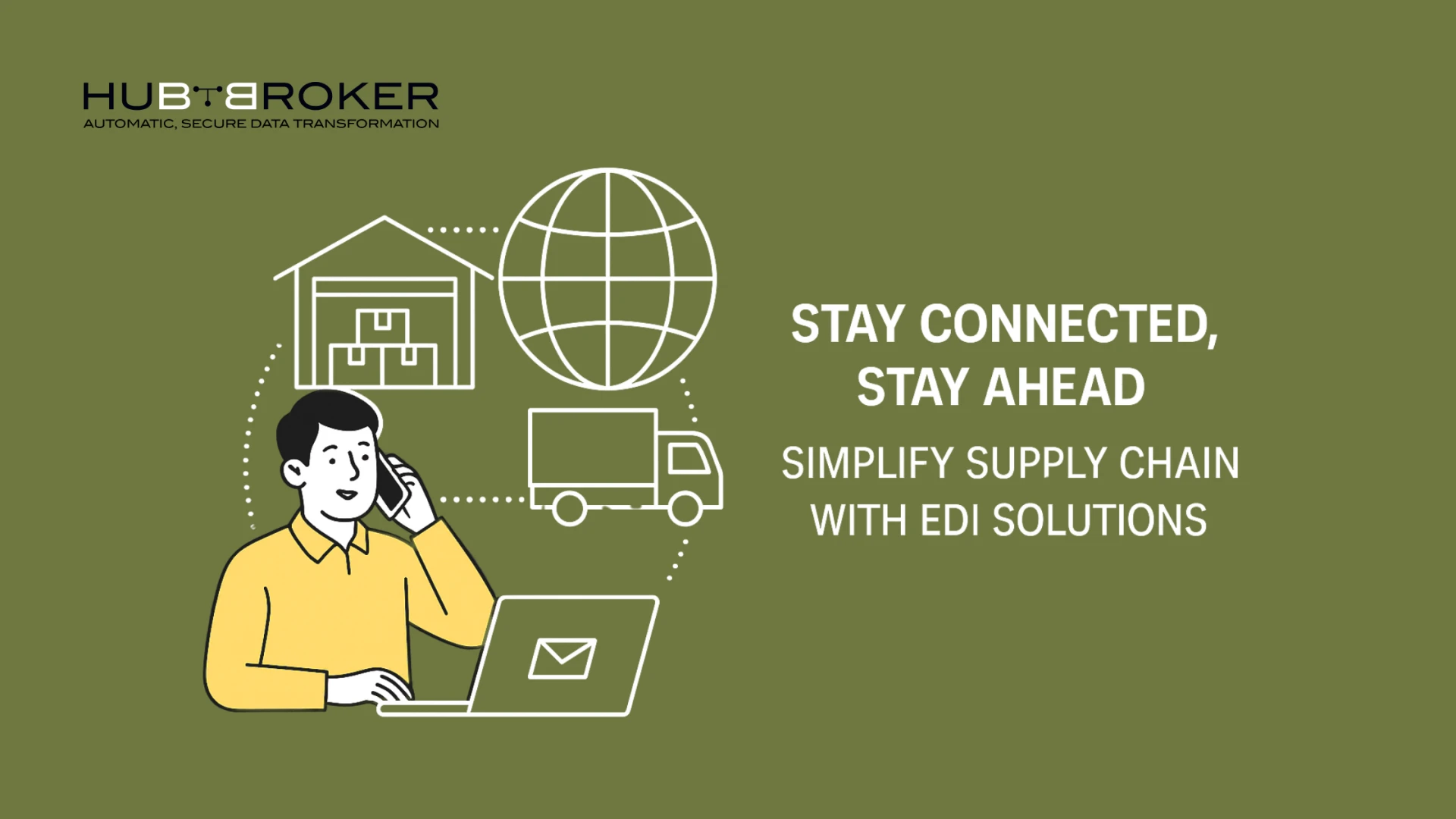

Business communication in our fast-moving world cannot afford any delays; supply chains especially need speedy processes that don't stall due to missing documents or invoices. That is where EDI Software Solutions comes into play -- offering speed, accuracy and automation all at the same time! In this article, we look at how EDI makes supply chains simpler while becoming the foundation for efficient B2B operations.
What Is EDI Software and Why Is It Vital for Supply Chains?
Understanding EDI in the Context of B2B Transactions
EDI (Electronic Data Interchange) is the digital language that allows businesses to exchange essential documents like purchase orders, invoices, and shipping notices electronically. Instead of relying on emails or paper-based systems, EDI lets companies send information in real-time, from one computer system to another — no human hands involved.
Imagine placing an order, and in mere seconds, it appears in your supplier's system without needing to email or manually input. That is the power of electronic data interchange (EDI).
Key Functions of EDI in Supply Chain Operations
EDI Software Solutions automate the exchange of a wide range of documents across trading partners. These include purchase orders, advance shipping notices (ASN), invoices, and inventory updates. The goal is simple: make data flow smooth, standardized, and error-free across the entire supply chain.
Communication Challenges in Traditional Supply Chains
Manual Processes and Human Errors
Before automation, most businesses used manual processes like emailing PDFs or faxing documents. While it got the job done, it often led to misplaced orders, data entry errors, and mismatches. Human mistakes — like typing in the wrong item number — were all too common.
Delays and Disconnected Systems
Another big issue? Time delays. Manual approval cycles, lack of real-time updates, and systems that don't talk to each other create bottlenecks. Businesses often find themselves chasing down order statuses or shipment confirmations — wasting both time and money.
How EDI Enhances Communication Across the Supply Chain
Real-Time Data Exchange Between Partners
With EDI, your supply chain doesn't need to wait. Orders, shipping notices, and invoices are shared instantly. Real-time communication keeps everyone — suppliers, manufacturers, logistics teams—on the same page.
Automated Document Flow (Orders, Invoices, ASN, etc.)
Instead of a team member manually entering invoice details, EDI automates it. Every document follows a predefined format so that systems can interpret and process them automatically. This dramatically reduces turnaround time and the chance of errors.
Improved Visibility and Tracking for All Stakeholders
One of the biggest wins with EDI is visibility. Stakeholders can see where goods are, when they were shipped, and what stage of processing they're in — without needing to make a single call or send a follow-up email.
Industry Use Cases: EDI in Action
Retail and E-Commerce
Retailers rely on electronic data interchange (EDI) for everything from managing inventory levels and orders to tracking delivery statuses automatically. Scanning items at checkout triggers an order directly with suppliers through EDI; E-commerce businesses use it too for updating warehouses, managing returns and streamlining drop shipping operations.
Manufacturing and Logistics
Manufacturers rely on Electronic Data Interchange (EDI) to schedule production runs, manage materials and coordinate with logistics providers. Logistics firms likewise utilize EDI for sending shipment confirmations, customs documentation updates and tracking updates directly to customers and partners in real time via EDI transmissions.
Benefits of Using EDI Software in Supply Chain Communication
Faster Order Processing and Fewer Errors
No more waiting days for documents to be received and entered manually. With automation, orders are processed in minutes, not hours. And since there's less manual input, there's less room for mistakes.
Cost Savings Through Automation
Automation saves more than time - it saves money too. Businesses that adopt Electronic Data Interchange (EDI) often experience reduced labour costs, paper usage reduction and fewer shipment errors, as well as improved inventory control; over time, these savings add up significantly.
Stronger Partner Relationships and Collaboration
When everything flows smoothly, partnerships thrive. EDI builds trust by improving reliability and transparency. Suppliers and buyers can rely on each other's systems to exchange accurate, timely data — strengthening business relationships.
Choosing the Right EDI Software for Your Supply Chain
Key Features to Look For
Look for EDI software that supports major document standards (like ANSI X12, EDIFACT), offers integration with your current systems, and provides real-time alerts and reporting. User-friendly dashboards and flexible configuration options are also a plus.
On-Premise vs. Cloud-Based EDI Tools
On-premise EDI offers control but requires in-house infrastructure and IT support. Cloud-based EDI solutions, like the one provided by HubBroker, are more scalable and easier to maintain — ideal for businesses wanting faster deployment with less technical overhead.
Integration with ERP and TMS Systems
Integration between your ERP (Enterprise Resource Planning) and TMS (Transportation Management System) and your EDI tool ensures an uninterrupted supply chain experience. Your EDI solution should work harmoniously with both systems to form an end-to-end data pipeline in real-time.
Final Thoughts
EDI Software Solutions have become essential tools for running an efficient supply chain. By automating data exchange, eliminating delays, and increasing transparency, EDI allows businesses to move quicker and smarter - whether in retail, logistics or manufacturing industries. A quality EDI solution can give your organization a truly competitive edge by changing how partners communicate.






















Sign in to leave a comment.