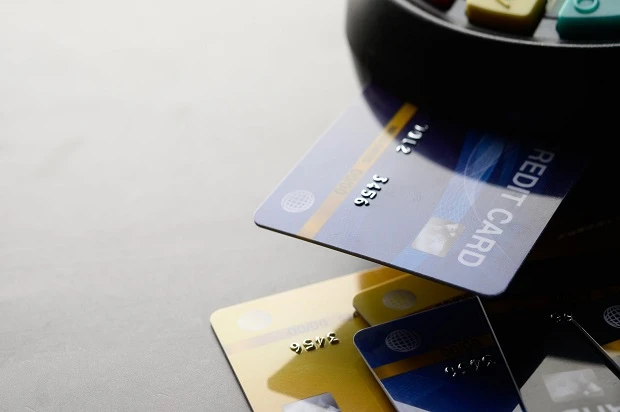

Overview of Indian Credit Card Industry and Market Size
Indian Credit Card Industry was valued at ~XX INR Crore in FY’22, expanding at a CAGR of XX% in between FY’17 and FY’22 on the basis of revenue generated with massive expansion in the adoption of credit card as the mode of payment due to rising industry valuation, trend of contactless payments and the emergence of credit card lending startups going beyond the typical credit card issuance model. The primary factors driving the market growth is the emergence of instant payment anytime and anywhere, rising internet penetration in the country, growing awareness among the users, controlled, secured and efficient transactions with convenience of use and a highly rewarding experience provided by the market players to their users. The volume of digital payments in India grew by 33% during the financial year 2021-2022. These payments are assisted by advanced technology and are, therefore, quick, simple and convenient. When these payments are assisted by credit products, they boost the purchasing power of people. Digital lenders like LazyPay have made these payment facilities widely accessible to all kinds of Indian residents in all major tier-I and tier-II cities. On the other hand, consumers too are increasingly being drawn to digital payments due surging adoption of contactless payments post COVID-19 which is also contributing in the growth of credit card market by increasing their userbase. The smartphone penetration rate in India is projected to increase from 54% in 2020 to 96% in 2040. As more and more people across India, including people in rural areas, use smartphones, they get increasingly exposed to digital payment modes. Gen-Zs and millennials are already comfortable with using them as they grew up with technology. Merchants are linking themselves to new-age online payment gateways to allow more and more consumers to access and shop for their products easily. Thus, as digital payment modes are forming the bridge between multiple consumers and merchants, they’re undergoing exponential growth. For instance, virtual cards like LazyCard by LazyPay are receiving 99.5% acceptance all over India. Besides the apps of digital lenders like LazyPay can be downloaded on both Android and iOS devices. The best part of digital payments is that they can be carried out instantly anytime anywhere and even on the move. However, especially when people are travelling, it often becomes a hassle to follow the OTP and remember the PIN. Thankfully, new-age digital payments have removed these hassles to speed up the process further. For instance, LazyPay’s Buy Now Pay Later facility allows people to shop at 250+ partner merchants in a flash by skipping PINs and OTPs.
To learn more about this report Download a Free Sample Report
Overview of Indian Credit Card Industry and Market Size
In the wake of the pandemic, the National Payments Corporation of India (NPCI) encouraged customers and providers of emergency services to adopt digital payment systems, ensuring the safety of contactless transactions. As a result, transactions increased to some extent. However, reduced international travel due to restrictions imposed during the 2020 - 2021 period negatively impacted credit card usage during that time. Revenue levers are likely to be hard to pull as several customers are unwilling to use credit cards frequently. Therefore, various cost management strategies need to be adopted by issuers to attract customers and attain a competitive and robust future for the credit cards market.
Indian Credit Card Industry Segmentation, 2022
By Purpose of Usage: Credit Card market in India can be segmented on the basis of Purpose of Usage: ATM Withdrawals and non- ATM Purposes where number of credit cards issued for non-ATM purposes accounted for the highest market share of XX% as compared to the ATM withdrawals on the basis of revenue generated in the year 2022. Attributed to the fact that after Covid-19, there is an increase in online shopping rather than going to the stores which in turn increased the credit card usage.
By Type of Credit Card: Credit Card market in India can be segmented on the basis of Type of Credit Card: Personal Credit Card and Commercial Credit Card where Personal Credit card are dominating the Indian credit card industry with market share of XX% when compared to the commercial credit card on the basis of revenue contribution in 2022. This is due to the fact that Credit card companies often offer 0% APR on purchases and/or balance transfers for a limited period of time with better promotional incentives in case of personal cards.
By Payment System Operator: Credit Card market in India can also be segmented on the basis of Payment System Operator: VISA, Mastercard, Rupay, American Express, etc. where VISA is dominating the market with a share of XX% since 2017 whereas market share of Mastercard has declined in 2022 as RBI had barred Mastercard in 2021 from enrolling new customers for not storing their data in India.
Average Ticket Size of Loan Disbursement: Credit Card market in India can also be segmented on the basis of Average Ticket Size of Loan Disbursement: <25,000, 25,000-50,000, 50,000-1,00,000, >1,00,000. Ticket size between Rs 50,000 to Rs 1,00,000 captures the major market share pf XX% in 2022 on the basis of revenue contribution. This is attributed to the rise in disposable income of consumers and better living standards.
Business Model Analysis of Newgen Cards
The business model of New Generation Credit Card players particularly revolved around being able to provide an extension of credit to individuals with no prior notable history of having used credit through organized sources, hence lacking a bureau-recorded credit score
Business Model Analysis Of BNPL Cards
The business model of BNPL players revolves around revenues earned from sellers and revenues earned from customers. Typically, there is a transaction fee which a vendor has to burden as part of offering BNPL as an alternative payment method to regular credit and debit cards, along with wallets and COD.
Business Model Analysis Of Loan EMI Cards
The Bajaj Finserv EMI card lets a person pay for a purchase in affordable EMI. As per research conducted, this card is mainly used for high ticket purchases such as electronics. Customers can visit any store of their choice which is affiliated with Bajaj Finserv, select a repayment tenor as per their choice, share the EMI network card details and complete the purchase process by submitting an OTP which is sent to the customer's mobile.
Government Initiatives in the Indian Credit Card Industry
With India on its path towards becoming digitally enhanced country which is majorly fueled by various initiative taken by Government of India in the recent years such as launch of Digi locker as a part of Digital India Initiative and PMJDY scheme among others. Government of India is focusing on complete digitalization of financial services in the country which helps in keeping the track of each activity happened at ease hence encouraging citizens to opt for these online services and is continuously promoting them.
There are several steps/initiatives taken by government to facilitate the Credit card issuance.
Visit this Link: – Request for custom report
Key Segments Covered in Indian Credit Card Industry
Indian Credit Card Market
By Purpose of Usage
Shopping/ Non-ATM PurposeATM WithdrawalsBy Payment System Operator
Regular VISAPeer to Peer MastercardRupayAmerica ExpressOthersBy Type of Credit Card
Personal Credit CardCommercial Credit CardBy Average Ticket Size of Loan Disbursement
Less than Rs. 25,000Between Rs 25,000- Rs. 50,000Between Rs. 50,000- Rs. 100,000More than Rs. 100,000Business Model Analysis of NewGen CardsBusiness Model Analysis of BNPL CardsBusiness Model Analysis of Loan EMI CardsOverview of India Credit Card Industry
Comparison of Indian Credit Card Industry with Other CountriesValue Chain Analysis of Credit CardsScope for the Credit card in Semi-Urban and Rural IndiaKey Target Audience
Credit Card Issuing BanksNew Gen Credit Cards PlayersTraders Loan EMI Credit Cards PlayersBanking Institutions Payment System OperatorsRegulatory Bodies BNPL Credit Cards PlayersFinTechsVarious International Digital Lending Platforms and PlayersNew Entrants in Credit Card SpacePotential Credit Card UsersRequest free 30 minutes analyst call
Time Period Captured in the Report:
Historical Period: FY’2017-FY’2022Forecast Period: FY’2022-FY’2027FIndian Credit Card Industry Players/Ecosystem
Credit Card Issuing Banks
HDFC BankSBIICICIAxis BankIDFC BankRBLIndusInd BankCitibankBank of BarodaStandard Chartered BankKotak BankSouth Indian BankNew Gen Credit Cards
SliceOneCardUniPay CardLoan EMI Credit Cards
Bajaj FinservTata CapitalHDFC EasyEMIHome Credit IndiaCards BNPL Credit Cards
SimplZestMoneyLazyPayCASHePostPeAmazon Pay LaterFlipkart Pay LaterOla PostpaidPaytm PostpaidFlexmoneyICICI PayLaterPayment System Operators
VisaMastercardAmerican ExpressRupayUPIKey Topics Covered in the Report
Overview and Genesis of Indian Credit Card MarketIndia Credit Card Industry CycleOverview of Credit Card Services/ ProductsConsumption Expenditure and Borrowing TrendsEmerging business models- Loan against Credit CardsSocio-Demographic Outlook of IndiaEconomic Outlook of IndiaBank Loan RatesFinancing Options in IndiaOverview of India’s Banking IndustryDigital Payment Growth v/s Cash Payment GrowthIndia Credit Card Industry IntroductionComparison of Indian Credit Card Industry with Other CountriesEcosystem of Entities in the Indian Credit Card IndustryValue Chain Analysis of Credit CardsIndia Credit Card Market Sizing on the basis of number of credit cards outstanding, Number of Credit Cards Issued by Issuer Bank. Credit Card Transaction by Volume & Value and Annual Credit Card Spend and Monthly TransactionsIndia Credit Card Market Segmentation (By Purpose of Usage, By Payment System Operator, By Type of Credit Card, By Average Ticket Size of Loan Disbursement).Business Model Analysis of NewGen CardsCross Comparison of Major Players in the NewGen Cards SegmentBusiness Model Analysis of BNPL CardsCross Comparison of Major Players in the BNPL Cards SegmentBusiness Model Analysis of Loan EMI CardsCross Comparison of Major Players in the Loan EMI Cards SegmentTrends and DevelopmentsGrowth Drivers of the Indian Credit Card IndustryRestraints and ChallengesAlternative Assessment for NIP (No-Income-Proof) Customers for Credit Card OfferingsCollection risks associated with credit cardKey Metrics of Credit Card Issuers in IndiaGovernment Initiatives in the Indian Credit Card IndustryPradhan Mantri Jan Dhan Yojana (PMJDY)Pradhan Mantri Jan Dhan Awas Yojana (PMAY)Initiatives to Promote Access to Data & InnovationRegulatory SandboxLaunch of India StackRecognising P2P LendersIncrease in number of Fintech start-upsGrowth of Digital Lending,Credit Growth in Rural IndiaEvaluation of KYC NormsCompany profile of major Bank players operating in the ecosystem (Bank Overview, About the Company, Business Model, Product Offered, Key Features, Strengths, Recent Developments and Key Takeaways)Company profile of major FinTechs players operating in the ecosystem (Company Overview, About the Company, Revenue Model, Funding and Investors, Key Features, Fee Structure, Product Offered, Strengths, Recent Developments, Key Takeaways and Financials)Analyst RecommendationsIndustry SpeaksFor More Insights On Market Intelligence, Refer To The Link Below: –
Related Reports by ken Research: –
























Sign in to leave a comment.