
GCC Foodservice Market Trends & Summary
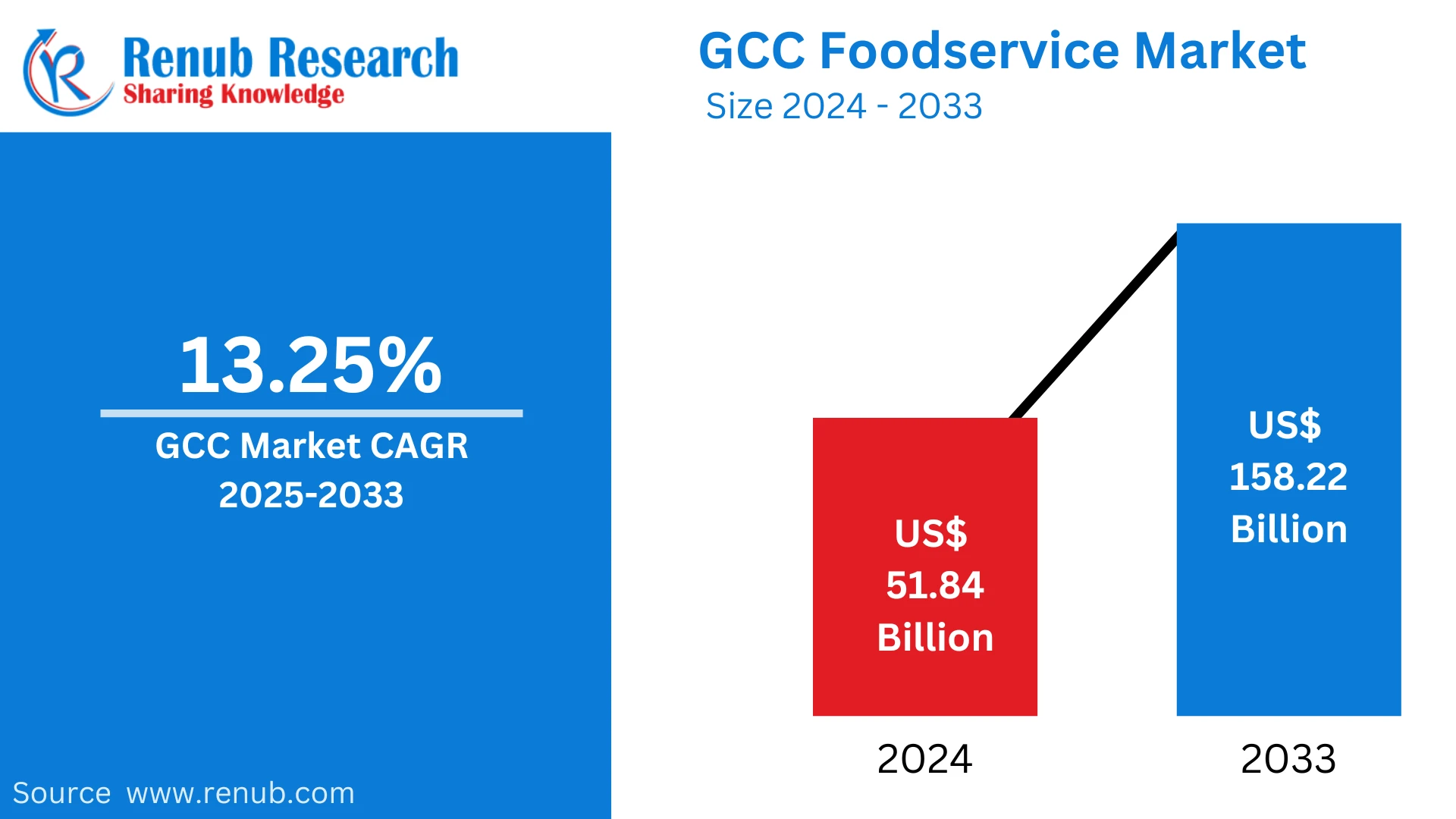
The GCC foodservice market is projected to grow from USD 51.84 billion in 2024 to USD 158.22 billion by 2033, achieving a compound annual growth rate (CAGR) of 13.25% between 2025 and 2033. Several key factors are driving this growth, including the rise in tourism, rapid urbanization, increasing consumer demand for convenience, a stronger focus on health-conscious options, advancements in technology, a thriving meal delivery market, and a diverse cultural landscape.
GCC Foodservice Industry Overview
The foodservice industry in the Gulf Cooperation Council (GCC) has experienced significant growth, driven by a variety of factors including a booming tourism economy, increasing disposable incomes, and evolving consumer preferences. The region caters to a diverse demographic, featuring a large youth population and a rising number of expatriates, which has led to a thriving marketplace for various foodservice offerings, ranging from quick-service restaurants to upscale dining.
There has been a notable shift in consumer demands, with an increasing preference for convenience and health-conscious eating. This shift has contributed to a growing market for grab-and-go items, food delivery services, and healthier menu options. Furthermore, technological advancements in foodservice, such as cloud kitchens and digital ordering platforms, are transforming the ways consumers interact with food providers.
As the demand for diverse culinary experiences continues to surge, numerous international food brands are entering GCC markets, particularly in Saudi Arabia, the United Arab Emirates, and Qatar. The expansion of this sector is further bolstered by tourism, particularly from high-profile events like Expo 2020 in Dubai and various international sporting competitions. A surge in dining out and food delivery services is also noted, driven by increased disposable incomes, particularly among younger demographics. Consequently, the GCC foodservice industry is poised for continued growth, shaped by both domestic and international consumer trends.
While the industry maintains a strong connection to traditional Middle Eastern cuisine, there is a pronounced shift toward a broader range of culinary options. In 2022, the region consumed approximately 0.45 million metric tons of meat, reflecting a growing interest in both traditional and international meat-based cuisines. This has led to the popularity of hybrid menus that combine regional dishes with global culinary influences, particularly evident in the rise of fusion restaurants. Quick-service restaurants like TGI Friday's, KFC, and Burger King are adapting their menus to incorporate local flavors while retaining international favorites.
Moreover, the coffee and café culture has emerged as a significant trend within the GCC foodservice landscape, especially in the UAE, where coffee consumption exceeds six million cups daily. Consumers are spending unprecedented amounts on coffee, contributing to the proliferation of both local specialty coffee shops and global café chains, each offering unique experiences and high-quality products. In Dubai alone, over 13,000 cafés and restaurants cater to approximately 3.5 million residents, illustrating the competitive and densely populated nature of the market.
Request customization in the report: https://www.renub.com/request-customization-page.php?gturl=gcc-foodservice-market-p.php
GCC Catering Services Market – Key Driver
The surge in air traffic across the Gulf Cooperation Council (GCC) nations has significantly fueled the demand for inflight catering services. As major attractions such as the Burj Khalifa in Dubai and the Sheikh Zayed Grand Mosque in Abu Dhabi draw an increasing number of international tourists, the region is witnessing an explosion of air travel. This trend is further amplified by the influx of Muslim pilgrims participating in religious events like Hajj and Umrah, which annually contribute to millions of additional passengers. In response, numerous airlines have formed strategic partnerships with catering service providers to meet the diverse and evolving culinary needs of these travelers. Consequently, the rising flow of tourists has not only expanded the market but has also led to the enhancement of inflight dining experiences, marking a substantial growth opportunity for catering services in the historical context of the GCC.
GCC Catering Services Market – Growth Opportunity
The rapidly expanding medical sector in the GCC is creating significant opportunities for specialized catering services, particularly in hospitals. Catering for patients is a vital aspect of healthcare delivery, as it ensures that individuals receive nutritious, balanced meals that support their recovery process. These meals must be prepared with the utmost care to meet strict health and hygiene standards while accommodating specific dietary needs based on medical conditions. The aftermath of the COVID-19 pandemic has heightened awareness regarding the importance of nutrition, prompting a shift towards healthier and fresher food options in healthcare settings. As a result, hospitals are increasingly collaborating with professional catering companies to develop curated meal plans that cater to individual patient requirements. This growing demand for hospital catering services underscores the critical role of food in patient care and affirms the potential for growth in the dietary management segment of the catering industry across the GCC region.
GCC Foodservice Market Overview by Regions
The Gulf Cooperation Council (GCC) foodservice market is divided into distinct segments by countries, including Bahrain, Kuwait, Oman, Qatar, Saudi Arabia, and the United Arab Emirates, along with the Rest of GCC. This regional breakdown reflects diverse consumer preferences, economic conditions, and cultural influences shaping each market.
United Arab Emirates Foodservice Market
The foodservice industry in the United Arab Emirates (UAE) is experiencing significant growth, driven by a combination of factors such as a burgeoning population, rising tourism numbers, and increasing disposable incomes. The UAE's cosmopolitan lifestyle attracts a diverse expatriate community, fostering demand for a wide array of culinary experiences that range from upscale fine dining restaurants to vibrant fast-food establishments. Major urban centers like Dubai and Abu Dhabi serve as crucial hubs for both international food brands and local foodservice enterprises.
The tourism sector plays a vital role, especially during globally recognized events like Expo 2020, which has fueled the demand for a variety of dining options, coffee shops, and food delivery services. Furthermore, there is a distinctive market shift towards health-conscious dining and sustainable practices, as consumers increasingly seek out organic, plant-based, and environmentally sustainable options. As this trend continues to evolve, it is anticipated that the UAE’s foodservice sector will thrive through innovation and the ongoing pursuit of diverse culinary offerings.
Saudi Arabia Foodservice Market
In Saudi Arabia, the foodservice industry is undergoing rapid development, spurred by a youthful demographic, urbanization, and an increase in disposable incomes. The Vision 2030 plan, aimed at diversifying the nation’s economy, has catalyzed the growth of the foodservice sector, transforming it into a dynamic industry that offers a plethora of dining choices. With an expanding middle class and a surge in domestic and international visitors and pilgrims, there is a substantial demand for various dining experiences, from casual eateries to high-end restaurants.
Large metropolitan areas such as Riyadh, Jeddah, and Mecca are witnessing a flourishing of both local and international fast-food franchises. Moreover, consumer preferences are shifting towards healthier eating habits and convenience-oriented services, such as food delivery. Reflecting broader global trends, there is also a growing interest in locally sourced and sustainable ingredients among consumers, driving operators to enhance their offerings and align with ecological practices.
Bahrain Foodservice Market
In Bahrain, the foodservice market is steadily expanding, fueled by the nation’s affluent yet compact population and an uptick in tourism. The country’s diverse demographic—comprising a notable expatriate community—encourages a strong appetite for an array of culinary experiences, spanning from traditional Arabic cuisine to global fast food and upscale dining establishments. Increased consumer spending on dining out and food delivery services is a direct result of a growing middle class and rising disposable incomes.
Bahrain’s position as a regional business hub and its thriving tourist industry, particularly during high-profile events such as the Formula 1 Grand Prix, bolster market growth. There is a marked rise in demand for organic, low-calorie, and locally sourced food options, driven by a health-conscious consumer base increasingly focused on sustainability. Collectively, these evolving preferences and economic drivers are propelling the expansion of Bahrain's foodservice industry.
Kuwait Foodservice Market
The foodservice sector in Kuwait is experiencing steady growth, characterized by a young, urban populace and increasing disposable income levels. A rise in the number of working professionals is driving demand for quick-service restaurants, fast food outlets, and meal delivery options, as customers seek convenience in their dining experiences.
Kuwait’s considerable expatriate population fosters a quest for diverse culinary experiences, with a marked interest in international cuisines. Concurrently, there is a notable increase in health-conscious dining choices, prompting foodservice providers to introduce low-calorie, organic, and nutritious menu alternatives. Sustainability is becoming a decisive factor in consumer decision-making, leading to greater emphasis on eco-friendly packaging and sourcing practices. As Kuwait's economy continues to diversify, the foodservice industry is set to flourish, supported by urbanization, rising disposable incomes, and the evolution of consumer tastes.
Request a free sample copy of the report: https://www.renub.com/request-sample-page.php?gturl=gcc-foodservice-market-p.php
Key Industry Developments
- May 2022: CKE Restaurants Holdings, Inc., the parent company of Hardee’s, formed a strategic partnership with Universal Pictures to promote the movie "Jurassic World Dominion." As part of this initiative, the company introduced new movie-themed burger products to the market.
- January 2022: Halwani Bros. Co. invested approximately USD 53 million in a non-binding agreement with Aquat Food Industries Co. This agreement aims to supply locally produced food products necessary for operating Albaik restaurants in Egypt.
- December 2021: Riyadh International Catering Corporation, the franchisee of McDonald's restaurants in Saudi Arabia, opened its 200th branch on Riyadh Boulevard. This expansion is expected to boost the company's revenue.
- July 2021: Yum! Brands acquired Dragontail Systems Limited, a technology solutions provider for the food industry. This acquisition aims to accelerate the company’s global digital and technology initiatives, enhancing the customer and employee experience while strengthening restaurant unit economics and providing a competitive advantage.
- June 2021: ALBAIK, one of Saudi Arabia's popular restaurant chains, opened its first branch in the UAE. The entry into the UAE market was made in partnership with ServQuest, a company established by National Holding, Abu Dhabi, dedicated to operating and expanding ALBAIK across several restaurant brands nationwide.
GCC Foodservice Market Segmentation
Foodservice Types – Market breakdown from four perspectives:
- Cafes & Bars
- Cloud Kitchens
- Full-Service Restaurants
- Quick-Service Restaurants
Outlet Types – Market breakdown from two perspectives:
- Chained Outlets
- Independent Outlets
Location – Market breakdown from five perspectives:
- Leisure
- Lodging
- Retail
- Standalone
- Travel
GCC Countries in the Foodservice Market
- Bahrain
- Kuwait
- Oman
- Qatar
- Saudi Arabia
- United Arab Emirates
- Rest of GCC
Company Analysis for the GCC Foodservice Sector
- Al Tazaj Fakeih
- Alamar Foods Company
- ALBAIK Food Systems Company SA
- Galadari Ice Cream Co. LLC
- Herfy Food Service Company
- Kudu Company for Food and Catering
- LuLu Group International
- Riyadh International Catering Corporation
- Shahia Food Limited Company
About the Company:
Renub Research is a Market Research and Consulting Company. We have more than 15 years of experience especially in international Business-to-Business Researches, Surveys and Consulting. We provide a wide range of business research solutions that helps companies in making better business decisions. We partner with clients in all sectors and regions to identify their highest-value opportunities, address their most critical challenges, and transform their businesses. Our wide clientele comprises major players in Healthcare, Travel and Tourism, Food Beverages, Power Energy, Information Technology, Telecom Internet, Chemical, Logistics Automotive, Consumer Goods Retail, Building, and Construction, Agriculture. Our core team is comprised of experienced people holding graduate, postgraduate, and Ph.D. degrees in Finance, Marketing, Human Resource, Bio-Technology, Medicine, Information Technology, Environmental Science, and many more.
Contact Us:
Company Name: Renub Research
Contact Person: Rajat Gupta
Phone No: (D) +91-120-421-9822 (IND)
Email: [email protected]


























Sign in to leave a comment.