
Introduction
Data analytics is no longer limited to dashboards, reports, and historical analysis. With the rapid growth of artificial intelligence, especially Generative AI, analytics has entered a new phase of intelligence and automation. Generative AI enables systems to do more than analyze existing data—it can generate insights, predictions, and even new datasets.
For developers and data professionals, this shift is redefining how analytics applications are built and used. From automating data workflows to enabling natural language interaction with data, Generative AI is making analytics smarter, faster, and more scalable. This evolution is not only transforming business outcomes but also changing the technical skills required in modern data analytics roles.
What Is Generative AI in Data Analytics
Generative AI refers to advanced AI models that learn patterns from large datasets and generate new outputs such as text, code, predictions, and synthetic data. In data analytics, these models extend traditional techniques by enabling automated insight generation, trend forecasting, and scenario simulation.
Unlike conventional analytics systems that depend on predefined queries and static visualizations, Generative AI-powered platforms allow developers to build interactive analytics experiences. Users can ask questions in natural language, receive dynamic reports, and explore insights without complex query logic. This makes analytics systems more flexible and user-friendly.
Key Applications of Generative AI in Data Analytics
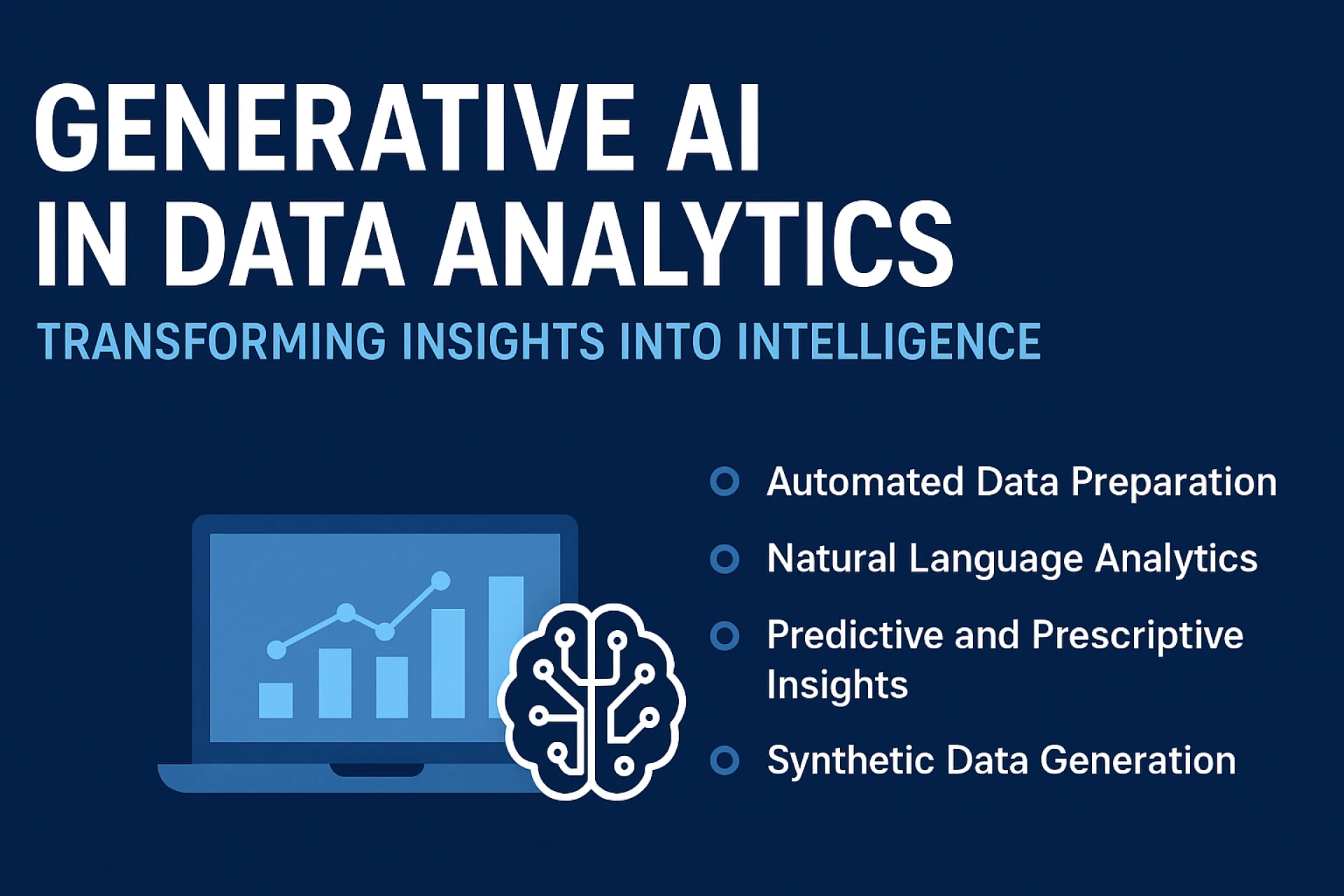
1. Automated Data Preparation
Data preparation often consumes the majority of analytics development time. Generative AI can automatically clean datasets, detect anomalies, handle missing values, and standardize formats. This reduces manual effort and improves data reliability for downstream analytics.
2. Natural Language Querying
Generative AI enables natural language interfaces for analytics systems. Developers can integrate conversational analytics features that allow users to query datasets using simple questions instead of SQL or scripts.
3. Predictive and Prescriptive Analytics
By learning from historical data, Generative AI models can forecast trends and suggest optimal actions. These capabilities help businesses anticipate outcomes and make proactive, data-driven decisions.
4. Synthetic Data Generation
Generative AI can create realistic synthetic datasets that maintain statistical accuracy without exposing sensitive information. This is highly useful for testing analytics pipelines, training models, and ensuring privacy compliance.
5. Intelligent Reporting and Visualization
Generative AI can dynamically generate summaries, dashboards, and visual explanations tailored to different users. This improves communication between technical teams and business stakeholders.
Impact on Business and Analytics Systems
Generative AI shifts analytics from reactive reporting to real-time intelligence. Organizations can respond faster to market changes, customer behavior, and operational risks. Developers can build analytics systems that continuously learn and adapt rather than relying on static logic.
Industries such as finance, healthcare, retail, marketing, and manufacturing are adopting Generative AI to optimize performance, reduce costs, and enhance innovation. As adoption grows, developers with Generative AI and analytics expertise gain a strong competitive advantage.
Skills Developers Need for AI-Driven Analytics
The integration of Generative AI into analytics has expanded the required skill set. Developers and analysts must understand:
- data analytics fundamentals
- machine learning concepts
- prompt design and model interaction
- data modeling and pipelines
- ethical and responsible AI practices
This demand has increased interest in Data Analytics Training in Chennai, where learners look for practical, industry-aligned programs covering analytics, AI integration, and real-world use cases.
Training providers like Credo Systemz help bridge the gap between traditional analytics skills and next-generation AI-powered analytics development.
Challenges and Ethical Considerations
Despite its benefits, Generative AI introduces challenges such as biased outputs, lack of transparency, and over-dependence on automated insights. Developers must ensure human validation, clear governance, and responsible AI usage.
Building trustworthy analytics systems requires balancing automation with control, accuracy, and explainability.
Conclusion
Generative AI is redefining data analytics by enabling automated insight generation, predictive intelligence, and intelligent interaction with data. For developers, it opens new possibilities to build powerful, adaptive, and user-friendly analytics systems.
As AI-driven analytics adoption accelerates, professionals with Generative AI skills will lead innovation. With increasing access to Data Analytics Training in Chennai, learners can prepare for future-ready careers and contribute to the next generation of intelligent analytics solutions.
























Sign in to leave a comment.