

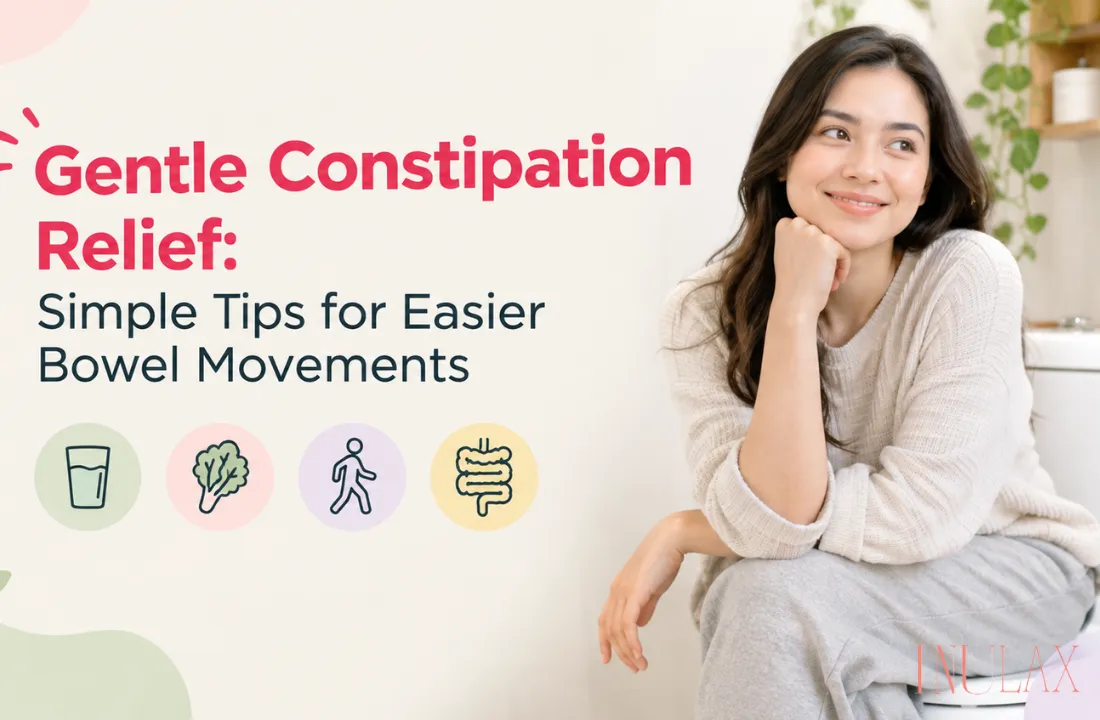
Looking for gentle constipation relief? I believe the best place to start is with simple, everyday habits that can help soften stools, support regular bowel movements, and keep your digestive system working comfortably.
Constipation is something many people experience from time to time. It can happen after a change in diet, a less active routine, not drinking enough fluids, traveling, or simply ignoring the urge to use the bathroom. While occasional constipation is usually manageable, that uncomfortable feeling can make it difficult to focus on anything else.
Fortunately, there are several gentle steps you can take to encourage easier bowel movements.
What Does Constipation Feel Like?
Constipation does not necessarily mean that you have to have a bowel movement every day. Everyone has a different normal pattern. However, common signs include having fewer than three bowel movements a week, passing hard or dry stools, straining when using the bathroom, or feeling as though you have not completely emptied your bowels.
The goal of constipation relief is not simply to make you go to the bathroom. It is about helping your body develop comfortable and regular bowel habits.
1. Add More Fiber Gradually
One of the simplest ways to support better bowel movements is to pay attention to your fiber intake.
Fiber helps add bulk to stool and can make it easier to pass. Good sources include fruits, vegetables, beans, lentils, whole grains, nuts, and seeds. Pears, apples with the skin, berries, oatmeal, broccoli, and beans are all easy foods to include in everyday meals.
For adults, the National Institute of Diabetes and Digestive and Kidney Diseases recommends around 22 to 34 grams of fiber per day, depending on age and sex. However, increasing fiber too quickly can cause bloating or gas, so I would make the change gradually.
A simple approach is to add one extra serving of a fiber-rich food to your meals and see how your body responds.
2. Drink Enough Fluids
Fiber works best when you are also getting enough fluids. Without adequate liquid, increasing fiber may not provide the result you are hoping for.
Water is an easy choice, but other fluids can contribute to your daily intake as well. Your individual needs can vary depending on factors such as your activity level, overall health, and environment.
Instead of waiting until you feel thirsty, try keeping water nearby throughout the day. Small, consistent habits can be easier to maintain than trying to drink a large amount all at once.
The NIDDK recommends drinking plenty of water and other liquids when increasing fiber to help make stools softer and easier to pass.
3. Keep Your Body Moving
When life gets busy, physical activity can easily become an afterthought. However, regular movement may also help support healthy bowel function.
You do not necessarily need an intense workout. A walk around the neighborhood, some gentle stretching, light gardening, or another activity you enjoy can be a good starting point.
If you have been inactive, start slowly and increase your activity as you feel comfortable. Regular physical activity is one of the lifestyle measures recommended by the NIDDK for helping relieve and prevent constipation.
Sometimes, even a short walk can be a helpful way to break up a long period of sitting.
4. Do Not Ignore the Urge
Have you ever felt the need to use the bathroom but decided to wait because you were busy?
It is understandable, but regularly ignoring the urge to have a bowel movement can contribute to constipation. When you feel the need to go, try to give yourself enough time rather than repeatedly putting it off.
Creating a regular bathroom routine may also help. The NIDDK notes that trying to have a bowel movement around the same time each day, such as after breakfast, may help encourage regularity.
Giving yourself a calm environment can make the experience more comfortable too.
5. Make Your Meals More Constipation-Friendly
Sometimes, small changes to your meals can make a noticeable difference.
Instead of relying heavily on highly processed foods with little fiber, try building meals around vegetables, fruits, whole grains, beans, and other naturally fiber-rich foods.
For breakfast, you might choose oatmeal with fruit. At lunch, consider adding beans or vegetables to your meal. For snacks, fruit or a small serving of nuts can be an easy option.
You do not have to completely change your diet overnight. Adding nutritious foods gradually can make healthier eating feel much more realistic.
6. Be Careful With Laxatives
When constipation becomes uncomfortable, it can be tempting to reach immediately for a laxative. Some over-the-counter options can be useful, but they are not necessarily the first step for occasional constipation.
The NIDDK explains that health professionals may recommend certain laxatives for short-term use, depending on the situation. It also recommends speaking with a health professional if constipation continues or if you need laxatives regularly.
If you take prescription medicines or supplements and suspect they may be contributing to constipation, do not stop taking them on your own. Talk with your healthcare professional about your options.
When Should You Talk to a Doctor?
Occasional constipation is usually not a cause for alarm, but persistent or unusual symptoms should not be ignored.
According to the NIDDK, you should seek medical attention promptly if constipation occurs with symptoms such as blood in the stool, rectal bleeding, constant abdominal pain, vomiting, fever, inability to pass gas, unexplained weight loss, or lower back pain.
You should also talk with a healthcare professional if your constipation does not improve with self-care.
Making Constipation Relief a Gentle Habit
For me, the most practical approach to gentle constipation relief is to focus on consistency rather than quick fixes. Eating enough fiber, drinking adequate fluids, staying active, and responding to your body's natural signals can all support healthier bowel habits.
Small changes can add up. Rather than trying to overhaul your entire routine at once, start with one or two habits that feel realistic for you and build from there. Your digestive health is part of your overall well-being, and sometimes the gentlest approach is simply giving your body the support and routine it needs.

























Sign in to leave a comment.