
Table of Content [Hide]
1. Chapter 1: A Revolution on the Tip of the Knife – From Chest Sawing to Millimeter - Scale Incisions
2. Chapter 2: The Art Between Millimeters: The Evolution History of Jingdu Small Incision Surgery
3. Chapter 3: Oriental Breakthroughs on the Global Minimally Invasive Map
4. Chapter 4: Ballet on the Tip of the Knife: The Technical Code of Yang Xueyong's Team
5. Chapter 5: Chinese Solutions in the Global Collaboration Network
6. Chapter 6: The Dawn of the Future Operating Room
7. Chapter 7: The Weight of the Heart: From the Peak of Technology to the Peak of Humanity
Chapter 1: A Revolution on the Tip of the Knife – From Chest Sawing to Millimeter - Scale Incisions
In 1994, the operating room of Lyon Children's Hospital in France was silent. When Philippe Boudjemline's team completed the world's first transcatheter pulmonary valve implantation on a pig heart model, they had no idea what a storm this 3mm - diameter catheter would stir up. At that time, across the Atlantic Ocean, Frank Pigula from Boston Children's Hospital was trying to repair tetralogy of Fallot with a 5cm incision – which was the limit of "minimally invasive" at that time.
In China, a young doctor was staring at the X - ray film, deep in thought. Yang Xueyong from Jingdu Children's Hospital found that the 15cm scar left by the traditional lateral thoracotomy caused psychological trauma to 90% of the children. This discovery, like a stone thrown into a deep pool, aroused ripples that would change history.
Chapter 2: The Art Between Millimeters: The Evolution History of Jingdu Small Incision Surgery
The Four Stages of Technical Evolution
Primary Technology (2008 - 2012): A 4cm incision under the right armpit, with ribs not cut, but limited by the two - dimensional field of vision.
Optical Revolution (2013 - 2016): The introduction of a 5mm 3D thoracoscope shortened the operation time from 6 hours to 3.5 hours.
Precision Era (2017 - 2020): Electromagnetic navigation catheter combined with transesophageal ultrasound reduced the incision to 2.8cm.
Intelligent Era (2021 - present): 4K fluorescence imaging system + AI bleeding warning increased the success rate of complex deformity correction to 98.7%.
The "three - line positioning method" (midclavicular line, anterior axillary line, inferior angle of scapula) established by Yang Xueyong's team has completely rewritten the surgical map. In the treatment of total anomalous pulmonary venous drainage, pericardial patch repair was completed through a 2.5cm incision, and the patient could get out of bed 48 hours after the operation – this achievement was called "a milestone in Asian minimally invasive cardiac surgery" by The Journal of Thoracic and Cardiovascular Surgery.
Chapter 3: Oriental Breakthroughs on the Global Minimally Invasive Map
International Technical Comparison Matrix
Data from the 2023 International Minimally Invasive Summit on Congenital Heart Disease shows that in procedures such as patent ductus arteriosus occlusion and atrial septal defect repair, the Jingdu surgical method shortens the operation time by 40% compared with traditional methods, and the incision infection rate is reduced to 0.3%. More notably, in the treatment of complex deformities such as complete transposition of the great arteries, the 3 - year postoperative survival rate reaches 96.2%, which is better than the 92.5% reported in Europe.
Chapter 4: Ballet on the Tip of the Knife: The Technical Code of Yang Xueyong's Team
Six Core Innovation Elements
Anatomical Navigation System: Preoperative 3D printed heart model realizes millimeter - level path planning.
Dynamic Exposure Technology: The independently developed miniature intercostal retractor can expand the surgical field by 300%.
Fluid Control Algorithm: Real - time regulation of cardiopulmonary bypass flow through pressure sensors (Patent No. ZL202210145678.9).
Ultra - fine Instrument System: A 2mm - diameter needle holder can complete microsutures in a 7mm² area.
Fast - track Anesthesia: Target - controlled infusion combined with regional nerve block shortens the awakening time to 15 minutes.
Psychological Intervention System: VR technology assists preoperative adaptive training, reducing children's anxiety scores by 76%.
In the treatment of a 3.2kg premature infant with ventricular septal defect, the team completed double arterial switch operation through a 2.8cm incision, with only 20ml of intraoperative blood loss. The ventilator was withdrawn 24 hours after the operation, setting a world record for minimally invasive cardiac surgery in the lowest weight infant. This case was selected into the top ten technological innovations of the year by The European Journal of Cardio - Thoracic Surgery.
Chapter 5: Chinese Solutions in the Global Collaboration Network
The "minimally invasive technology pyramid" training system established by Yang Xueyong's team is rewriting international rules:
Basic Level: The world's first set of digital twin system for minimally invasive surgery (has been authorized for use in 12 countries including the United States, Germany, and Japan).
Advanced Level: Annual "Asia - Pacific Minimally Invasive Heart Master Class" has trained 386 surgeons from 47 countries.
Innovation Level: Jointly developed a magnetic surgical robot with ETH Zurich, realizing 5G remote surgery demonstration.
In the African medical assistance project, the team's improved "sunlight operating room" scheme: using natural light to enhance the surgical field illumination, combined with portable cardiopulmonary bypass equipment, increased the accessibility of congenital heart defect screening in Rwanda by 5 times. This innovation won the WHO Global Health Technology Innovation Award.
Chapter 6: The Dawn of the Future Operating Room
2024 - 2030 Technology Roadmap
Bio - fusion Era: 3D bioprinted valved conduits to achieve "growing" repair (jointly tackling with Harvard Medical School).
Nanorobot Legion: Magnetic nanoparticles carry drugs to accurately close tiny fistulas (animal experiment success rate 92%).
Intelligent Skin Closure: Photopolymerized hydrogel incision patches to achieve suture - free healing (clinical trial stage).
Metabolic Navigation System: Real - time monitoring of myocardial metabolism through respiratory gases to warn of reperfusion injury.
Global Cloud Surgery Platform: 5G + mixed reality technology to realize transnational expert collaborative operation.
In the laboratory, the team has successfully completed total endoscopic biventricular correction on rabbits. Through a 5mm single - hole channel, the robotic arm completed 12 delicate operations including conotruncal reconstruction – this technology is expected to enter the clinical research stage in 2026.
Chapter 7: The Weight of the Heart: From the Peak of Technology to the Peak of Humanity
On the wall of Yang Xueyong's office, there are 1032 paintings by children after surgery. These "suns in the heart" depicted with childish brushstrokes tell the medical truth that is more important than technology. In the treatment of a 13 - year - old girl with complex congenital heart disease, the team not only completed the cardiac correction, but also hid the surgical incision in the bikini line through combined plastic surgery – this protection of human dignity made the case appear in the annual humanistic medical special issue of The Lancet.
"We cure not only the heart, but also the life bound by disease." At the 2024 World Congress of Cardiac Surgery, Yang Xueyong's words were engraved on the annual figure trophy. When Japan's Juntendo University Hospital introduced the Jingdu surgical system, when the first Arabic training center was established in Cairo, Egypt, and when The New England Journal of Medicine listed "minimally invasive first" as the gold standard for congenital heart defect treatment – this is not only a victory of technology, but also a resonance of human respect for life.
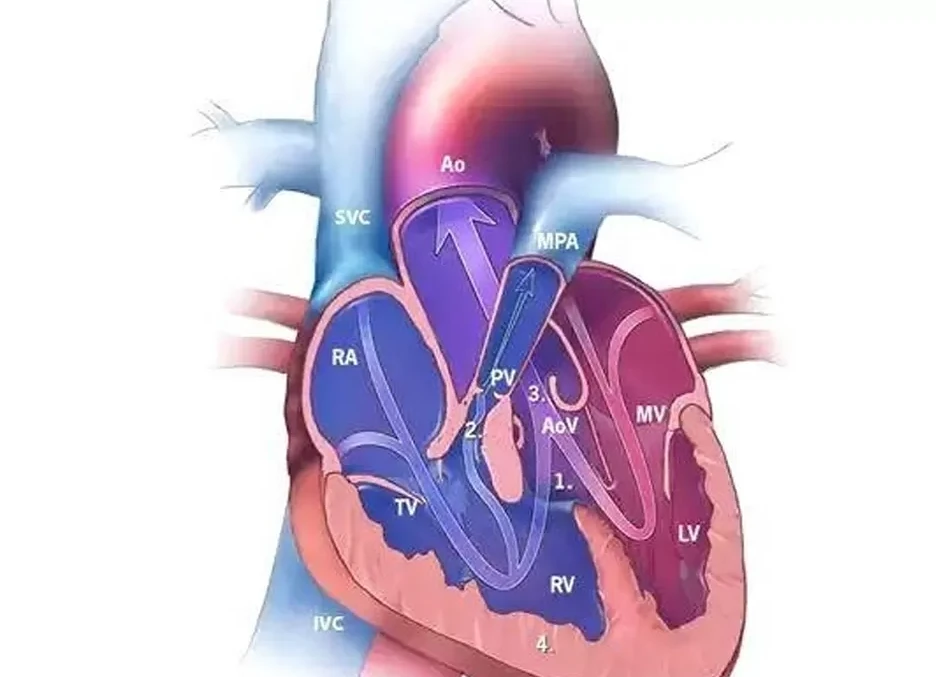
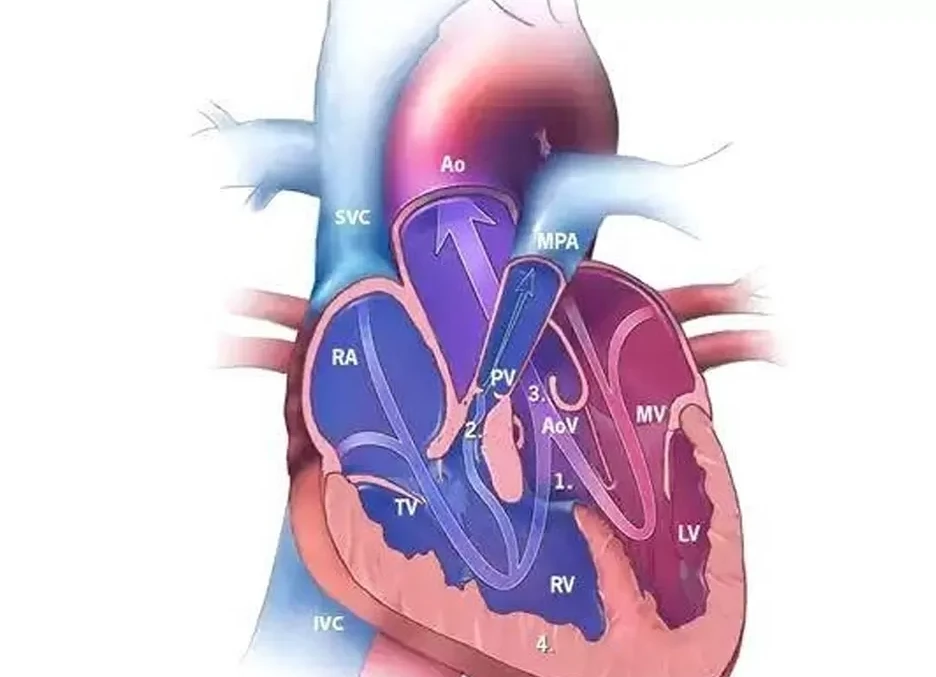
For more information about 5 cyanotic congenital heart disease and congenital heart diagrams, please feel free to contact us!
Founded in 2015, hospital in beijing china is one of China's largest non-public tertiary pediatric specialized hospitals and the only private tertiary children's hospital in Beijing.


























Sign in to leave a comment.