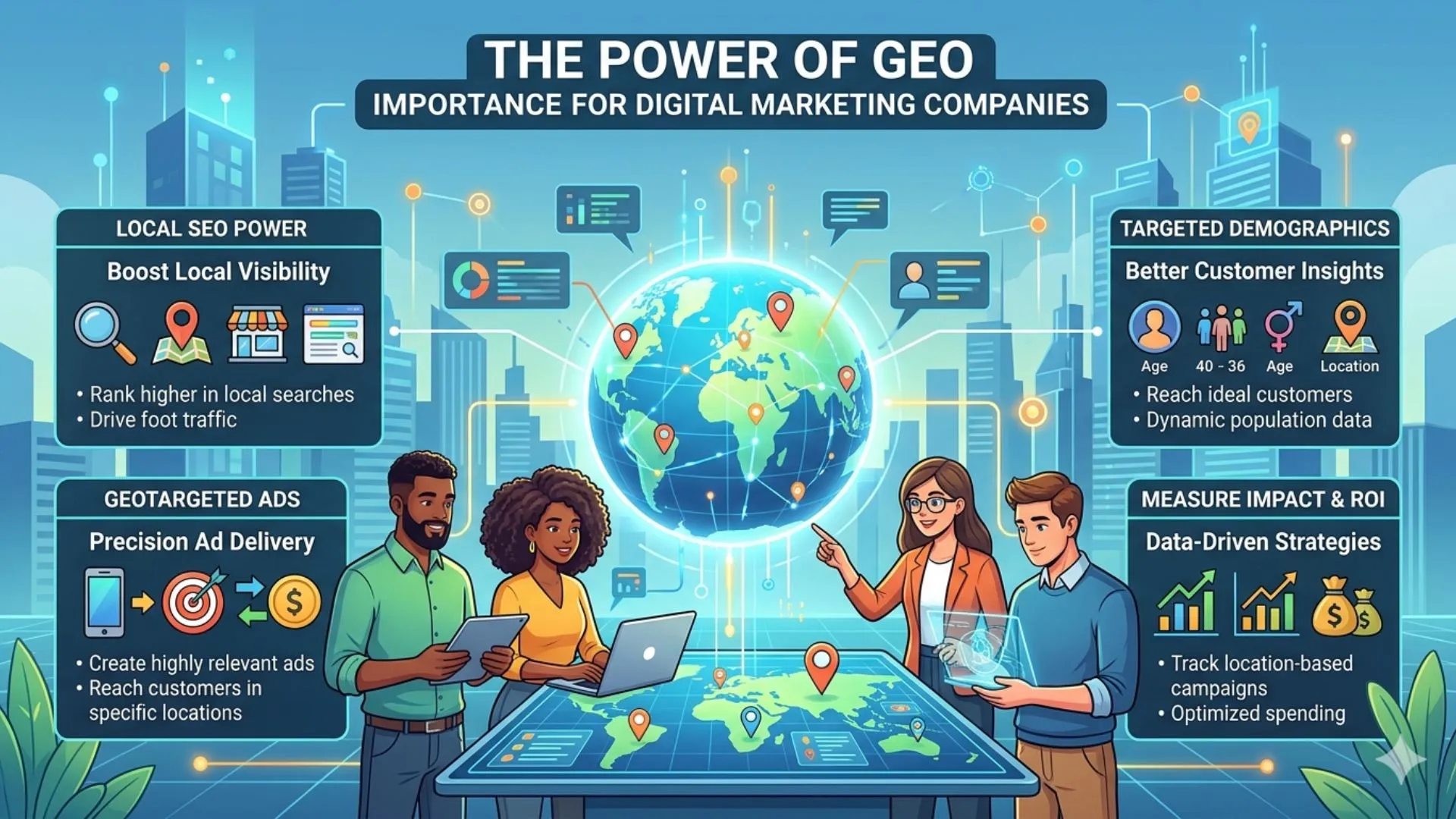

The digital marketing industry is experiencing one of the biggest transformations since the rise of Google search and social media advertising. The rapid adoption of generative AI tools such as ChatGPT, Google Gemini, Perplexity AI, and Microsoft Copilot is changing how people search for information, discover brands, and make purchasing decisions. Instead of browsing through pages of search results, users increasingly expect direct answers generated by AI systems.
This shift has introduced a new marketing discipline called Generative Engine Optimization (GEO). For digital marketing companies, GEO Tools for SEO Professionals are becoming essential not only for visibility but also for long-term competitiveness in an AI-driven internet ecosystem.
As businesses and consumers rely more on AI-generated recommendations, marketing agencies that understand GEO will have a significant advantage in attracting clients, building authority, and maintaining online relevance.
What Is GEO?
Generative Engine Optimization refers to the process of optimizing content, websites, brand signals, and digital authority so that AI-powered search engines and generative AI systems can recognize, understand, and recommend a business in their responses.
Traditional SEO focuses on improving rankings in search engine results pages. GEO focuses on increasing visibility inside AI-generated answers.
For example, instead of typing:
“Best digital marketing agencies in Europe”
users may now ask AI tools:
“Which digital marketing agencies specialize in AI-driven B2B lead generation?”
The AI engine analyzes data from multiple online sources and generates a summarized response. Companies that are properly optimized for GEO have a greater chance of appearing in those recommendations.
This evolution is changing how online visibility works.
Why GEO Matters for Digital Marketing Agencies
Digital marketing agencies operate in a highly competitive environment where visibility and credibility directly influence client acquisition. As AI-generated search becomes more common, agencies that fail to adapt may lose exposure in the exact channels where potential clients conduct research.
Businesses are increasingly using AI tools to ask questions like:
- “What is the best SEO agency for SaaS companies?”
- “Which marketing firms specialize in LinkedIn advertising?”
- “Who offers AI marketing automation services?”
- “What are the top content marketing agencies for B2B brands?”
AI systems provide immediate recommendations instead of directing users through traditional search result pages.
If an agency is not recognized by these systems, it risks becoming invisible during crucial early-stage research processes.
For marketing companies, GEO is therefore no longer optional. It is becoming a critical part of digital positioning.
AI Search Is Changing Customer Behavior
The rise of generative AI has fundamentally changed user behavior online.
In traditional search, users typically explored multiple websites, compared content manually, and spent time reviewing alternatives. With AI-powered search, users now expect instant summaries and curated recommendations.
This means buyers may never click through dozens of websites anymore. Instead, they trust AI-generated answers to narrow down choices quickly.
For digital marketing companies, this creates both a challenge and an opportunity.
The challenge is that traditional SEO traffic patterns may decline over time. The opportunity is that agencies that optimize for GEO can become part of AI-generated recommendations before competitors.
This creates visibility during the earliest stages of the decision-making process.
GEO Helps Agencies Build Authority
Authority has always been important in digital marketing, but GEO increases its importance even further.
AI systems prioritize businesses that demonstrate expertise, consistency, trustworthiness, and industry relevance. Agencies with strong authority signals are more likely to appear in AI-generated answers.
Key authority factors include:
- High-quality educational content
- Expert insights and research
- Consistent brand mentions
- Strong backlink profiles
- Positive reviews and testimonials
- Thought leadership articles
- Conference participation
- Case studies and success stories
- Active professional presence on platforms like LinkedIn
Generative AI engines analyze these signals across the web to determine which companies deserve visibility.
This means agencies must think beyond rankings and focus on becoming recognized industry entities.
GEO and Content Strategy
Content remains one of the most powerful components of GEO.
However, AI-driven discovery requires a different approach than traditional keyword-focused SEO. Instead of writing only for search engines, agencies must create content designed to answer real-world questions clearly and comprehensively.
Effective GEO content includes:
- Detailed guides
- FAQ pages
- Industry explainers
- Research-based articles
- Comparison content
- Step-by-step tutorials
- Data-driven insights
- Trend analysis
- Client success stories
For example, a blog titled:
“How AI Is Transforming B2B Lead Generation”
is more valuable in an AI-search environment than generic promotional content.
AI systems prefer informative, structured, and authoritative material that directly addresses user intent.
Structured Information Improves AI Understanding
Generative AI systems process structured information more efficiently.
Digital marketing agencies should organize website content using:
- Clear headings and subheadings
- Schema markup
- FAQ sections
- Bullet points
- Concise summaries
- Logical page architecture
- Internal linking structures
This helps AI models understand the context of services, expertise, and specialization areas.
For example, an agency specializing in healthcare SEO, SaaS advertising, or AI-driven analytics should clearly communicate these focus areas across all digital channels.
The clearer the structure, the easier it becomes for AI systems to identify expertise.
GEO Strengthens Brand Visibility Beyond Google
One of the most important aspects of GEO is that it extends visibility beyond traditional search engines.
AI-powered platforms are becoming independent discovery ecosystems. Users increasingly rely on conversational AI tools for recommendations, explanations, and research.
This means digital marketing agencies must optimize their presence across the broader web ecosystem rather than depending solely on Google rankings.
Important GEO visibility channels include:
- Industry publications
- Business directories
- Podcasts
- Social media discussions
- YouTube educational content
- Research platforms
- Online interviews
- Guest articles
- Community forums
When AI systems repeatedly encounter a brand across credible sources, they gain stronger confidence in recommending it.
This creates a new form of digital authority.
GEO Encourages Better Educational Marketing
Generative AI systems reward businesses that genuinely educate users.
This aligns perfectly with the best practices of modern inbound marketing. Agencies that publish valuable insights instead of purely promotional material are more likely to gain AI visibility.
Educational marketing content helps AI systems understand:
- What problems the agency solves
- Which industries it serves
- What services it specializes in
- Which technologies it uses
- How it differentiates itself
This improves the likelihood of being recommended in conversational AI results.
In many ways, GEO rewards clarity, expertise, and usefulness more than aggressive advertising.
Early GEO Adoption Creates Competitive Advantage
Many digital marketing companies are still heavily focused on traditional SEO strategies. While SEO remains important, relying exclusively on old search models may become risky as AI-generated search continues expanding.
Early GEO adoption offers agencies several advantages:
- Increased visibility in AI-generated answers
- Stronger brand recognition
- Higher authority positioning
- Better organic lead generation
- Reduced dependence on paid advertising
- Competitive differentiation
Just as agencies that mastered SEO early gained substantial market advantages, agencies investing in GEO today may become future leaders in AI-driven digital marketing.
GEO and the Future of Client Acquisition
Client acquisition strategies are evolving rapidly.
Potential clients no longer rely solely on Google searches or referrals. Many now use AI tools to shortlist agencies, compare service providers, and identify experts within specific industries.
For example, a startup founder may ask:
“Which agencies are best for scaling SaaS companies using AI marketing?”
If an agency appears in the AI-generated response, it gains immediate credibility and awareness.
This makes GEO directly connected to future business growth.
Marketing agencies that ignore AI visibility may eventually struggle to compete against firms that actively optimize for generative search environments.
The Relationship Between SEO and GEO
GEO does not replace SEO entirely. Instead, the two strategies increasingly work together.
SEO still helps websites gain discoverability, backlinks, traffic, and authority. GEO builds on those foundations and adapts them for AI-generated environments.
A strong GEO strategy often includes:
- Traditional SEO optimization
- Technical website improvements
- High-quality content marketing
- Brand authority development
- Digital PR
- Structured data implementation
- AI-friendly content formatting
Agencies that combine SEO and GEO effectively can maximize visibility across both traditional and AI-driven search ecosystems.
Conclusion
Generative Engine Optimization is becoming one of the most important developments in the future of digital marketing. As AI-powered search tools reshape how users discover information and evaluate businesses, digital marketing agencies must adapt to remain visible and competitive.
GEO helps agencies improve AI discoverability, strengthen authority, enhance educational marketing strategies, and increase exposure during critical stages of the customer journey.
The agencies that invest in GEO today are preparing themselves for the future of online visibility. In the years ahead, success will not depend only on ranking well in search engines. It will depend on whether AI systems recognize, trust, and recommend your brand when users ask important questions.
For digital marketing companies, GEO is quickly becoming a foundational strategy for sustainable growth in the AI era.

























Sign in to leave a comment.