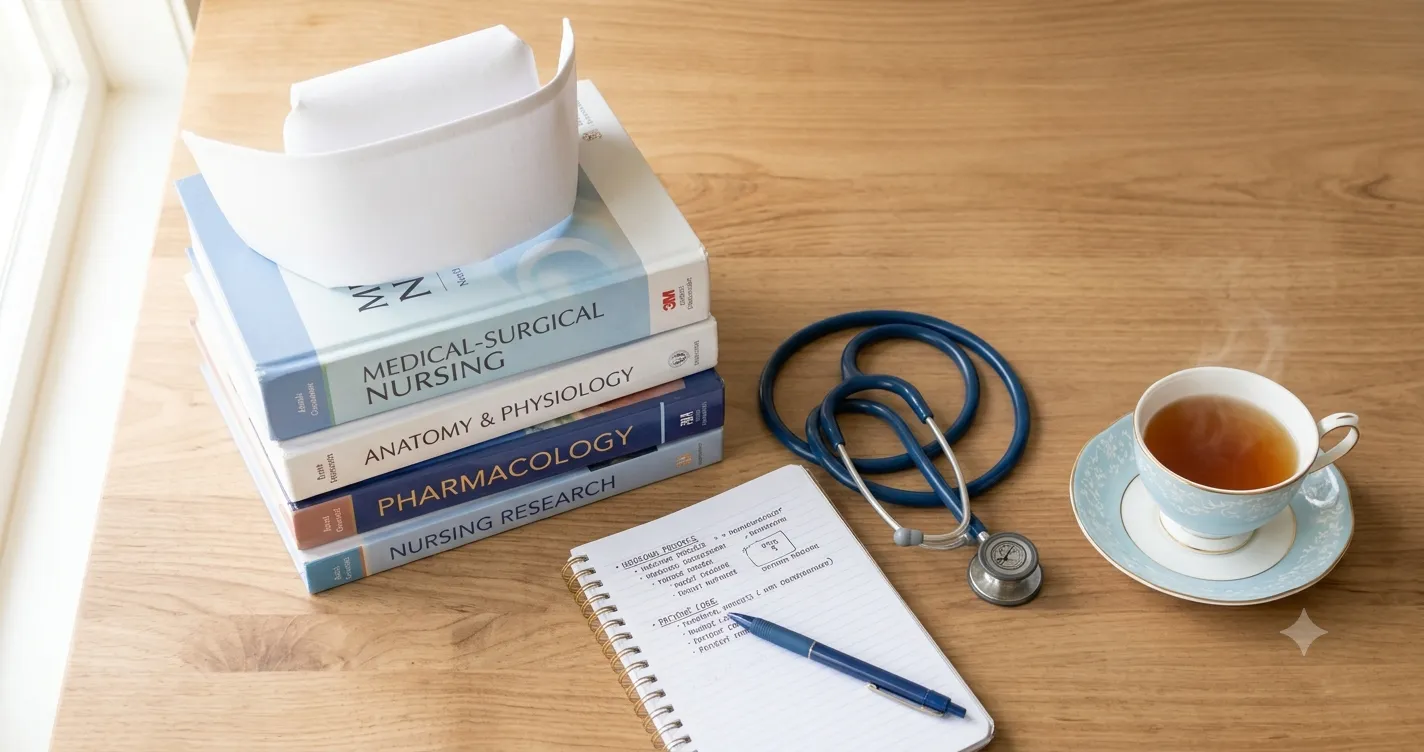

How to Pick the Right GNM Nursing Books for Your Course
Joining a General Nursing and Midwifery program is often the first real step many students take toward a career in healthcare. It's a three-and-a-half-year journey packed with theory classes, hospital postings, and hands-on training, and getting the right study material from day one makes the whole experience a lot smoother. Yet for most first-year students, the very first challenge isn't a tough exam or a clinical rotation — it's figuring out exactly which GNM Nursing Books to buy in the first place.
Walk into any medical bookstore near a nursing college and you'll find shelves packed with similar-looking titles from different publishers, various editions, and confusing overlaps between subjects. This guide is meant to simplify that decision-making process so you can focus your energy on actual studying rather than guessing which book to trust.
Why Book Selection Deserves Careful Thought
GNM is a diploma-level course, but that doesn't make it any less rigorous than a degree program. Students are expected to understand human anatomy, basic pharmacology, patient care procedures, and community health concepts, often within a fairly compressed timeline compared to a full nursing degree. This means the quality of your GNM Nursing Books directly affects how efficiently you grasp these subjects.
A textbook that explains concepts in a roundabout or overly technical way can slow you down significantly, especially when you're also managing hospital duty hours. On the other hand, a well-structured book with clear language, diagrams, and summary points can save you hours of confusion during revision.
Subject-Wise Book Recommendations
1. Anatomy and Physiology
This subject forms the base of your entire nursing education, so it deserves a book that explains body systems clearly, with labeled diagrams and simple language. Avoid overly dense textbooks meant for degree-level students, since GNM syllabi are usually structured a bit differently in terms of depth and pacing.
2. Fundamentals of Nursing
Since this subject introduces core nursing skills and procedures, it's worth picking one of the more detailed and well-reviewed GNM Nursing Books available, rather than a shortcut guide. The procedures you learn here will be tested repeatedly throughout your practical exams and clinical postings.
3. Microbiology and Community Health Nursing
These subjects tend to have a lot of classification-based content, so look for books that use tables, flowcharts, and bullet-point summaries instead of long paragraphs. This makes last-minute revision far less stressful.
4. Pharmacology
As with any nursing course, pharmacology content changes as new drugs get approved and older classifications get revised. Always check the edition year before buying, and avoid picking up secondhand copies that are more than a few years outdated.
5. Medical-Surgical Nursing
This is typically one of the more content-heavy subjects in the GNM syllabus. Many students find it useful to pair a detailed textbook with a smaller quick-revision guide closer to exam time, since the syllabus covers a wide range of conditions and nursing interventions.
6. Midwifery and Child Health Nursing
Given the practical, hands-on nature of this subject, look for books that include real case-based examples and step-by-step procedural explanations. Since midwifery forms a major part of the GNM identity, investing in a genuinely good reference here pays off well beyond just exams.
How to Choose the Right Edition
- Cross-check with your syllabus — GNM syllabi can vary slightly between states and nursing councils, so always confirm the book's content matches what your institution is actually teaching.
- Prefer updated editions — Especially for pharmacology and microbiology, an outdated edition can leave gaps in your knowledge that show up during practicals or exams.
- Value clarity over bulk — A thinner book that explains things clearly is often more useful than a thick one packed with unnecessary detail you'll never be tested on.
- Get input from seniors — Second and third-year students usually know exactly which GNM Nursing Books align best with your institution's exam pattern and practical requirements.
- Don't skip the practical manuals — Procedure and practical record books are just as essential as theory textbooks and are often required separately during clinical assessments.
Managing the Cost of Nursing Books
Buying a full set of books fresh every semester can add up quickly, so here are a few ways students typically manage this:
- Buy from seniors — Secondhand books from students who've already cleared a subject are usually in decent condition and significantly cheaper, as long as the edition still matches your syllabus.
- Share reference books — For subjects that don't need daily use, splitting the cost of one reference book among two or three classmates is a common and practical approach.
- Focus your budget wisely — If money is tight, prioritize subjects like Medical-Surgical Nursing and Fundamentals of Nursing first, since they carry the most academic and clinical weight.
- Check hostel or college libraries — Most nursing colleges maintain a set of standard textbooks in their library, which can reduce how many personal copies you actually need to buy.
Where to Find Reliable Copies
When purchasing GNM Nursing Books, it's best to stick to recognized publishers rather than photocopied or unbranded versions, which often have missing pages, blurry diagrams, or printing errors. College bookstores located near nursing campuses usually stock syllabus-matched titles, and several verified sellers now also offer these online. If you're ordering online, it helps to check recent reviews or ask in student forums to confirm you're getting an authentic, up-to-date copy.
Building Better Study Habits Around Your Books
Simply owning the right books isn't enough — how you engage with them matters just as much for actual learning. A few habits worth building:
- Summarize as you read — After finishing a chapter, try writing a short summary in your own words. This reinforces memory far better than passive reading alone.
- Pair theory with practicals — Cross-reference your practical manual steps with the theory explained in your main textbook so procedures make logical sense, not just rote memory.
- Use diagrams actively — For subjects like anatomy, try redrawing diagrams from memory instead of just staring at labeled illustrations.
- Practice with old question papers — Combining textbook study with previous years' exam papers helps you identify which topics get tested most frequently.
Final Thoughts
Choosing the right GNM Nursing Books early in your course can genuinely shape how confident and prepared you feel throughout your training. Instead of grabbing whatever's cheapest or most easily available, take a little time to match books to your actual syllabus, verify the edition is current, and prioritize subjects that carry real academic and clinical importance. Combined with consistent study habits, a well-chosen set of nursing books can make a noticeable difference — not just in your exam results, but in how ready you feel once you step into real patient care.




























Sign in to leave a comment.