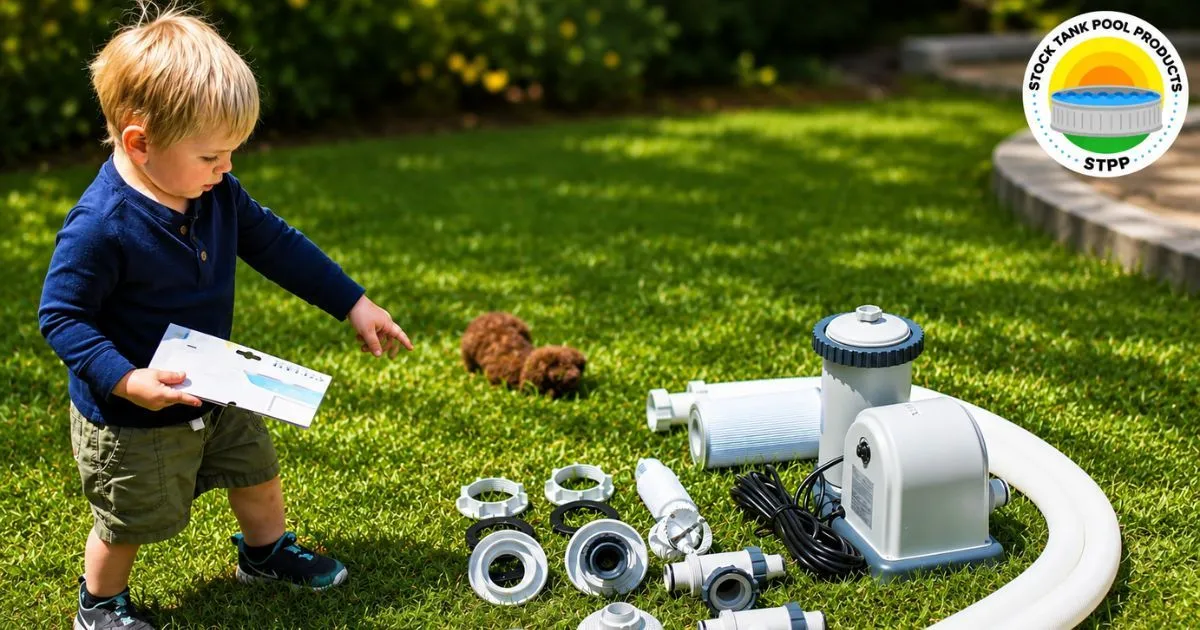

I built my first stock tank pool off a Pinterest photo and a free Saturday.
It looked amazing for about three weeks.
Then the water turned cloudy. My pump kept losing prime. And rust started creeping around a fitting I'd installed myself.
That's when I started asking what stock tank pool installers actually do differently. Turns out, the gap between a pool that lasts one summer and one that lasts for years has nothing to do with the tank. It's everything that happens before and during setup.
Here's what I wish someone had told me first.
What a Stock Tank Pool Installer Actually Does
It's Not Just "Set the Tank and Fill It"
I assumed installation meant placing the tank and hooking up a hose.
A real install covers a lot more:
- Site inspection — soil, drainage, slope
- Ground prep — a stable, compacted base
- Plumbing — running lines for the pump and filter
- Pump and filtration setup — matched to tank size
- Leak prevention — sealed fittings, done right the first time
- Water startup — balanced chemistry before anyone swims
I skipped most of this. I paid for it in week four.
DIY vs. Hiring It Out
DIY is cheaper. You keep full control.
Professional installation costs more, but you save time and skip the mistakes that cost more to fix later.
My rule of thumb now: flat yard, smaller tank, go DIY. Sloped lot or bigger build, call someone.
Choosing the Right Tank First
I went with galvanized steel for the look. It resists dents well, but I do check it for rust spots now.
Poly tanks skip that worry entirely, though they can fade after a few brutal summers.
Sizing It to Your Yard
- 6 ft — fine for one or two people
- 8 ft stock tank pool — the size most families land on
- 10 ft stock tank pool — better if you host often
Round or Oval?
Round tanks are easier to plumb and clean. I'd pick round again.
Oval fits narrow yards better, but plan your pump placement more carefully.
Site Prep Is Where I Went Wrong
A full 8-foot tank weighs about as much as a loaded SUV.
I didn't grasp that until mine was full and the ground underneath started to shift slightly on one side.
What a Sloped Yard Actually Needs
- Precise slope measurement before digging
- A compacted gravel base
- Real drainage planning underneath
Where You Should Never Put One
- Decks — a filled 8-foot tank weighs roughly 3,000 kg (6,000+ lbs). That's far more than a standard residential deck is built to hold, and it can collapse the structure.
- Over soft soil
- Near tree roots
- Anywhere close to utility lines
Any of these can shift, crack, or worse.
Getting the Pump and Plumbing Right
This is where most DIY installs quietly fail. Mine included.
Sizing the Pump
For a roughly 700-gallon 8-foot tank, aim for 500–1,000 GPH. That turns the water over fully every 2 to 4 hours.
I started with the wrong pump. Undersized pumps leave water cloudy no matter how much you clean.
A properly matched DIY stock tank pool kit removes this guesswork completely.
Drilled vs. No-Drill
- Drilled — cleaner look, permanent, needs careful sealing
- No-drill rim setup — faster, reversible, good for first-timers
What Actually Causes Leaks
- Poor seals
- Air leaks at the pump intake
- Mismatched fittings
I had two of these three. Fixing them fixed everything else.
Water Chemistry That Protects the Tank
Chlorine vs Hydrogen Peroxide
Chlorine is simple and effective, but it can speed up rust if it sits concentrated against bare metal.
Hydrogen peroxide is gentler on metal and skin – but only the right kind.
Skip the 3% bottle from the grocery store. Pool care uses 35% pool-grade peroxide, diluted properly for tank use. The grocery-store version is too weak to sanitize and isn't formulated for this.
My Weekly Routine Now
- Test pH and sanitizer
- Skim debris, brush the walls
- Check and rinse the filter
- Rebalance as needed
Keeping the Water Clear
Good filtration handles circulation, debris, and algae — the three things that turn water green.
A stock tank pool vacuum speeds up manual cleanup, especially after a windy day or a pool party.
I replace my cartridge every few weeks depending on use.
Problems Professional Installers Prevent
| Problem | Why It Happens | Prevented By |
| Ground settling unevenly | Poor base compaction | Gravel base + leveling |
| Pump losing prime | Air leak at intake | Correct fittings, sealed properly |
| Green water | Weak circulation or chemistry | Right pump size + testing |
| Rust at fittings | Chlorine touching bare metal | Sealed, insulated connections |
| Epoxy bubbling | Trapped moisture under coating | Full cure time before filling |
| Poor circulation | Undersized or clogged pump | Matched GPH + regular cleaning |
When I'd DIY vs. When I'd Hire
Good Candidates for DIY :
Flat yard, Smaller tank, Simple no-drill setup.
When I'd Call a Pro :
Sloped yard, Large tank, Permanent plumbing’ Anything electrical near water.
Questions I'd Ask an Installer :
Experience with stock tanks specifically. Plumbing method. Warranty. Equipment they recommend.
What Professional Installation Costs
DIY usually runs $500–$1,000 in equipment and materials.
Professional installation tends to fall between $2,000 and $5,000+, depending on site conditions, landscaping work, and plumbing complexity.
The gap feels big until you factor in what a bad install ends up costing in repairs.
What I Keep on Hand Now
Pump kit. Filtration system. A good vacuum. A cover. Test strips. Basic maintenance tools.
Once I stopped piecing together random parts, things got a lot easier. Stock Tank Pool Products carries kits actually sized for stock tanks rather than generic above-ground pools – that alone would've saved me my first month of troubleshooting.
Frequently Asked Questions
1. Are stock tank pool installers worth the cost?
For sloped yards or larger tanks, yes – the upfront cost usually prevents far more expensive repairs later.
2. Can I install a stock tank pool myself?
Yes, especially on flat ground with a smaller tank and a no-drill setup.
3. How long does professional installation take?
Most jobs run one to two days depending on site prep.
4. What size pump is best for an 8-foot stock tank pool?
Somewhere in the 500–1,000 GPH range, giving full turnover every 2 to 4 hours.
5. How often should I clean my stock tank pool?
Weekly testing and skimming, with a filter check every few weeks.
6. Can I install plumbing without drilling the tank?
Yes – rim-over hose setups are a common no-drill option.
7. How do I prevent rust in a galvanized stock tank pool?
Keep sanitizer balanced, avoid concentrated chlorine touching bare metal, and rinse seasonally.
8. What's the best way to keep a stock tank pool clean?
Consistent filtration, regular vacuuming, and weekly testing.
Final Thoughts
Whether you DIY or hire it out, planning is what actually matters. The right tank. A level site. Correctly sized plumbing. A chemistry routine that protects your investment.
Get those right, and the pool becomes the easy part of summer instead of the project that eats it. If you're gathering pump kits or accessories for your own build, Stock Tank Pool Products is worth checking before you buy anything piecemeal.

























Sign in to leave a comment.